How a For-Hire Truckload Carrier Successfully Assesses Drivers
Paper Transport purposefully narrowed its driver applicant pool, but somehow that has led to reduced turnover and exponential growth. How did they do it?
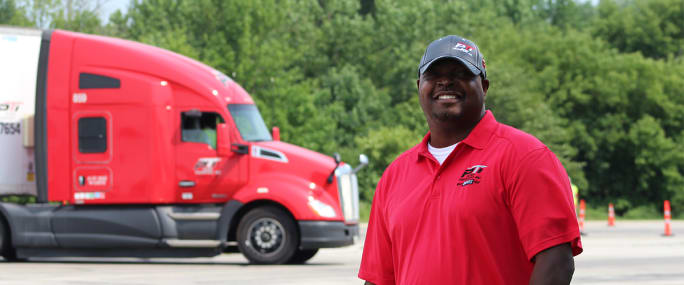
Paper Transport has grown from 250 drivers to 950 drivers, with an annual growth rate of about 17%.
Photo: Paper Transport
3 min to read
In the freight cycle of 2018, the tremendous pressure on carriers to add drivers forced a for-hire truckload fleet based in Wisconsin to think critically about how it would find not just qualified applicants, but drivers who fit into the carrier’s culture.
Ad Loading...
“The driver market was extremely rough at that point in time,” says Ben Schill, CEO of Paper Transport. “We were kind of in … the rat race of hiring drivers, and then losing drivers early in tenure. It was all about recruiting.”
Since 2010, Schill says the company has been in growth mode. The carrier has grown from 250 drivers to 950, with an annual growth rate of about 17%. With that kind of rapid growth, the struggle to recruit and then on-board drivers was snowballing into a greater challenge.
Ad Loading...
“Orientation classes went from a couple of drivers a week to 15 drivers a week,” Schill says.
Fun Fact: PTI's inexpereienced hires reported 23% lower "dirty" inspections per driver
Challenge: Driver turnover
Paper Transport was investing heavily in new hires, so it wanted to make sure they were investing in the drivers who would uphold the fleet's values of safety and stick around for the long haul. Paper Transport couldn’t find anything in their own fleet data that pointed to any change in particular the fleet could make to improve retention.
Paper Transport: Potential Drivers Must Take a Driver Assessment
The answer Paper Transport landed on was to implement a driver assessment to weed out applicants who don’t fit the mold.
Paper Transport requires all potential drivers (both fresh to the industry and experienced drivers) to take an assessment by JOBehaviors. The 100-question survey takes about 15 minutes and asks drivers to answer questions that give the fleet an idea of the kind of driver they are.
The result is a score between one and five stars. Drivers who score above three stars are in the top 50% of what the fleet considers the “right” driver for the company. The "right" driver for Paper Transport is an individual who has a desire to be a part of something bigger than themselves, has a focus on safety, maintains professionalism, and has the right attitude with customers and office staff.
Ad Loading...
“It's not saying that these other drivers are bad drivers,” Schill explains of those who score below three stars. “But what it is saying is these are the drivers that possess the behaviors and values that you want at Paper Transport, and that this is going to be your better shot in terms of who you should pursue.”
The assessment has nothing to do with driving skills. In fact, the process can weed out applicants who have years of experience. About 50% of all applicants don’t move forward in the process. This in turn has narrowed the application pool significantly. But Schill says it has only helped build a workforce of drivers who stick around.
There is also a 20% non-participation rate of applicants who simply don’t take the survey.
“At first that was looked at as a major hurdle, but my perspective was that if you’re serious about the company you want to work for, but you’re not going to take a 15-minute survey on the front end… Well, then you’re probably not the driver who will take a 15-minute pre-trip or post-trip inspection of the equipment, or take the extra time that’s needed to do your job professionally." So he was OK with losing a chance to hire those otherwise qualified drivers.
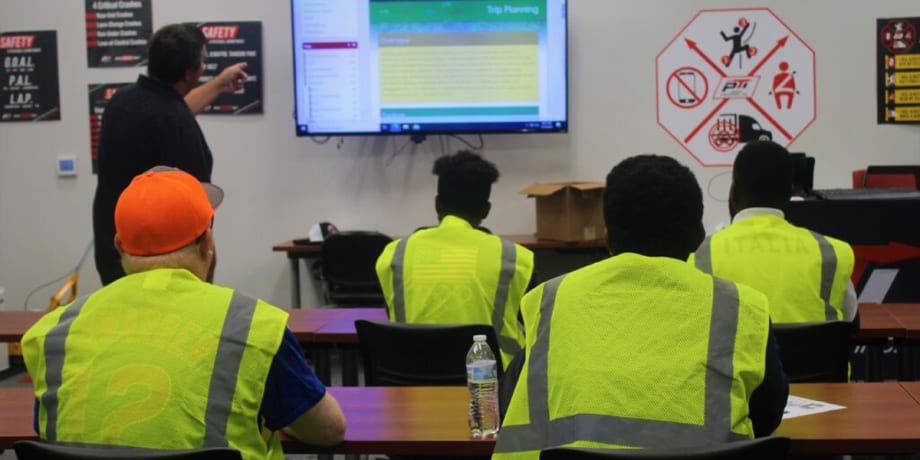
The "right" driver for Paper Transport is an individual who has the desire to be a part of something bigger than themselves and a focus on safety.
Photo: Paper Transport
The assessment continues to be at the front of the application process. It allows Paper Transport hiring staff to “cut through the noise” and focus on applicants who are not only qualified but also are a fit for the operations.
Ad Loading...
“It was really a leap of faith,” Schill says. “I think most people try to tiptoe into it. I didn’t feel like we would actually be able to see any benefits if we didn’t jump in full force and give it a try.”
The new card combines fuel discounts with telematics-based purchase controls. Geotab’s analysis also points to potential savings from choosing lower-priced fuel stops.
Trucking and logistics teams have plenty of data. The problem is getting the right information in front of the right people soon enough to act. Better-connected data can help teams spot trouble earlier and make smarter decisions before small problems become big ones.
At Insight 2026, Trimble executives argued that fleets may need to redesign workflows to get more from AI as it introduced new products and enhancements. AI’s value will depend on how fleets combine automation with their people's knowledge.
An ELD can prove compliance, but it cannot always prove what happened on the road. Discover how uniting accurate ELD data with AI-powered dash cam video can help your fleet strengthen compliance, defend against liability, protect drivers and reduce operational costs.
Private fleets are putting their own trucks on demanding customers and high-cost lanes as companies seek greater control over service, costs, and capacity.
For fleet managers and collision repair professionals keeping heavy-duty trucks on the road, getting the color right the first time isn't just about appearance — it's about efficiency, turnaround time, and bottom-line results. Discover how today's digital color tools are transforming the repair process from guesswork to precision.
Carriers whose updates were due on or after June 1 have more time, while FMCSA works to stabilize its new registration system and warns of phishing sites impersonating its new carrier registration system, Motus.
Cargo theft is no longer just the cost of doing business. It's a multi-billion-dollar criminal enterprise exploiting vulnerabilities across your fleet, drivers, and supply chain.