




Prevent Truck Cab Corrosion: Keep De-Icing Compounds at Bay
Truck cab corrosion of the penetrating kind is almost a thing of the past, but de-icing chemicals can lodge in obscure places and cause structural damage year-round.

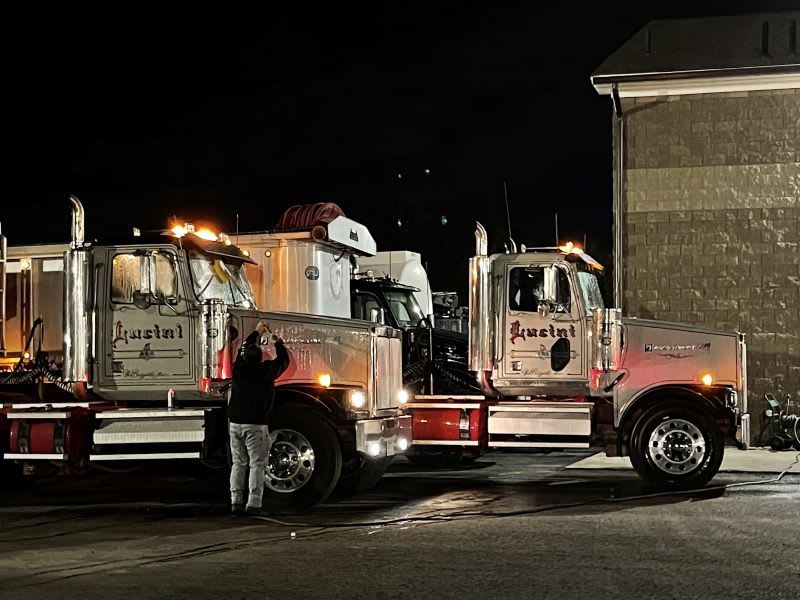
Regular washes help keep these decade-old cabs in nearly show-room shape. Don’t give those corrosive de-icing chemicals time to take hold on metal surfaces.
Photo: Darry Stuart
You’d have to admit that truck OEMs are generally doing a much better job today at keeping their cabs from literally rotting away. Coating and pre-paint treatments are much better than they were 20 or 30 years ago. But the industry is seeing a new type of invasive corrosion, brought into cabs on drivers’ boots and even in the air.
The highly corrosive road de-icing compounds find their way into places we can’t reach and inexorably begin eating away at our expensive trucks. Evidence of corrosion has been found in tractor and trailer braking systems and even in the deeper recesses of HVAC systems. It’s thought that corrosion is the result of airborne magnesium- and calcium-chloride dust that is inhaled into the various systems and then comes to rest there.
“That stuff is drawn into the air circulating fan, circulated through the HVAC system, and pushed back out into the cab interior,” says Tim May, regional sales manager at Minimizer and chair of the S.17 Cab and Controls Corrosion Control task force at the ATA’s Technology & Maintenance Council.
“We’re starting to see it even in seatbelt retractor mechanisms and in the door jambs that house some darned expensive sensors.”
How De-Icing Compounds Corrode Truck Cabs from the Inside Out
Minimizer’s May suggests there are many ways chloride-laden moisture can enter the cab, including on the soles of drivers’ boots and shoes and even along CB antenna wires that are passed through door jambs.
“When the antenna wire is routed through the door opening, it prevents the rubber seals from seating properly,” he says.
“Water flows along the outside of the wire, enters the cab and drips down to the floor, where it flows to the lowest point and collects. There, it begins eating away at whatever it lands on.”
It can access the cab interior from the other direction as well, wicking up through the floor from the underside of the cab on bolts such as seat mounts. Left unchecked, this could result in weakened seat mounts and corroded floor panels, especially on older trucks.
Dried-out windshield sealing rubbers can also serve as ingress points for moisture. The rubber contracts and becomes less pliable with age and exposure to the sun’s UV rays. Water can seep in this way, and like the antenna wire, it can create a pathway for moisture to leak into the cab and down into areas that are seldom seen or inspected.
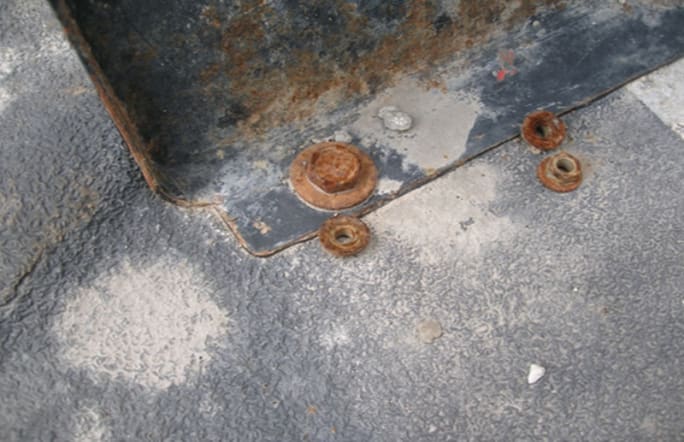
Corroded seat mounting bolts have been found on older trucks. Left unchecked, this could result in weakened seat mounts and corroded floor panels.
Photo: Tim May
Corrosion of Aftermarket Accessories on Trucks
When cabs are built, they are acid washed before painting to achieve as moisture-free surface as possible, and they are coated several times for good coverage and a thicker coating. Today’s coating processes will last a good long time — or until someone breaks the surface of the paint by drilling through the cab wall to attach some post-assembly component such as a light bar or a grab-handle. Once the paint is broken, rust is inevitable.
Often, items bolted to the cab are of dissimilar metals, aluminum on steel, for example. When dissimilar metals come into contact with electrolytes such as condensation, rainwater, or other sources such as oil, dirt and airborne particles, it can produce an electrochemical reaction that destroys metal and reduces its strength and thickness.
While it’s never a good idea to drill through a painted surface and join together two dissimilar metals, measures can be taken to reduce the effect of this galvanic corrosion. Insulate the two metals electrically with a non-conductive material such as a rubber grommet or a polyester/plastic film tape such as Mylar.
“Fleets are notorious for not using a 3-cent rubber gasket or a grommet when hanging stuff like muffler mounts and lights,” says limited-time fleet maintenance executive Darry Stuart, who is also an active member of TMC. “On trailers, we use Mylar tape, but after a while, that gets eaten away too.”
Corrosion's Role in Post-Accident Truck Repairs
Cabs can get beaten up pretty good after a crash, and putting them back together requires a little extra care if long-term corrosion protection is a consideration. Joints and seams can be opened up during the crash can allow water inside, corroding the surfaces from the inside.
Firewalls can be potential assess points for moisture too, particularly in older trucks where gaskets and seals may have dried out. The firewall is like Swiss cheese, there are so many holes. After a crash, bends or twists in the metal surface can reduce the effectiveness of the seals around the holes.
It’s basically impossible to prevent corrosion entirely, especially today with the harsh chemicals used for road de-icing. However, technicians can be trained to spot it developing before it becomes a serious problem.
Wash trucks regularly, especially during the winter when the chemicals are used. Those chemicals linger on road surfaces, and the dust kicked up by tires, even in summer, is a threat to the metallic surfaces of the truck. Regular washes with non-corrosive wash products can help.
“There’s so much of that stuff around now, it’s like living by the seashore,” Stuart says. “There’s enough corrosive material in the air that it will corrode anything it comes into contact with, even brake valves and evaporators inside the cab.”
More Maintenance

Color Match Smarter: Tools That Restore & Perform
For fleet managers and collision repair professionals keeping heavy-duty trucks on the road, getting the color right the first time isn't just about appearance — it's about efficiency, turnaround time, and bottom-line results. Discover how today's digital color tools are transforming the repair process from guesswork to precision.
Read More →
Wrong Repair Prompts Recall of Freightliner, Western Star 4x2 Trucks
DTNA is recalling more than 2,400 trucks that received an incompatible software fix instead of the hardware repair required to address brake valve corrosion.
Read More →
Truck Drivers Need More Than Another Alert
Fleets have more visibility into truck health, safety events, and driver activity than ever. The next challenge is turning all that information into useful guidance for the person who has to decide what to do next.
Read More →
The Maintenance Checks Trucking Fleets Should Prioritize Before Fall Freight Picks Up
Making it through August isn’t the same as being ready for the next several months of operation. Find out what systems may have suffered from summer heat and need to be checked out before fall.
Read More →
What Three Fleets Are Doing Differently When Buying Truck Parts in 2026
With freight improving but costs still climbing, fleet maintenance executives explain how they're balancing price, quality, and supplier relationships.
Read More →
Paccar Recalls 2027 Trucks Built This Summer for Possible Electrical Problem
The nearly 6,000 Kenworth and Peterbilt trucks in the recall could potentially lose engine power, among other things.
Read More →
Will API PC-12 Oil Change Trucking Fleet Maintenance?
The new API PC-12 heavy-duty engine oil category reflects the changing demands of modern diesel engines. But fleets like Foodliner are looking to getting their own data before making decisions on adopting the new oils and questions such as extending oil drain intervals.
Read More →
Brake Safety Week to Focus on Drums and Rotors
Commercial vehicle inspectors are focusing on truck brakes during CVSA's Brake Safety Week, August 23-29.
Read More →Possible Battery-Cable Fires Prompt Recall of 15,000+ International MV and HV Trucks
On the recalled vehicles, manufacturing variations can cause the battery interconnect cable to contact the auxiliary stud and hold down the bracket.
Read More →
Rush, MCT Team Up to Grow Refrigeration Service Network
The joint venture will operate MCT's network of Carrier Transicold dealerships and mobile service locations, with the companies promising greater service capacity and uptime for refrigerated fleets.
Read More →