




5 Ways AI Can Help Trucking
What is artificial intelligence, and how can you use it in your fleet?


The concept of AI has been around since the 1950s, but only in the past decade have computing power and vast amounts of data brought it into everyday use.
Photo: Gettyimages.com/KENGKAT
When people start talking about artificial intelligence, it’s easy to get bogged down in terms like neural nets, algorithms, machine learning, and more. But you don’t really need to understand all that to take advantage of AI.
In essence, artificial intelligence is simply the capability of a machine to imitate intelligent human behavior.
Artificial intelligence “is really a set of capabilities that allow a computer to do something that would have required human intelligence in the past — or something that would have taken far too long for a human to do,” explains Brian Stuelpner, vice president of strategy, planning and architecture for Schneider. “Things like conducting analysis or making very complicated decisions in a fraction of the time. We use it a lot to take over mundane and repetitive tasks, so that people can move on to something of higher value.”
Michael Phillippi, vice president of technology at Lytx, describes AI as “acting as a kind of purpose-built brain, designed to learn and conduct particular tasks. Just like people learn over time, and get better at certain jobs, AI also gets better over time by integrating data from multiple sources. In the context of AI, we refer to that as machine learning.”
However, AI is not some sort of magic silver bullet.
“AI isn’t a panacea,” says Ray Ghanbari, chief technology officer for SmartDrive. “How well it works is really driven by the quality of the training data that it has been built around,” just as a human student’s learning will be affected by the teaching materials provided, he says. “With really compelling training data and a skilled data scientist who’s effectively tuning and training the model, AI can be quite powerful — but it’s not a turnkey, push-a-button and it just works.”
Stuelpner says there’s a misconception that humans are removed from the picture in artificial intelligence.
“With the AI that we’ve deployed, there’s a lot of training that goes into trying to bring the human knowledge that we have and digitize it so the computer can understand what we do. So it’s not taking the person out. It’s actually just reshaping the role of the person.”
With those caveats in mind, we’ve highlighted five ways AI can be used in trucking and logistics.
1. Make Customer Interactions More Meaningful
One way Schneider is using AI is handling customer email requests. “We get millions of emails a year from our customers, many of them asking fairly simple questions like, ‘Where’s my freight?’” Stuelpner explains. “What we’ve been able to do is utilize artificial intelligence to understand the intent of the question that’s coming in, and in near real time, go to the systems that know the answer, and return an accurate answer to that request in three to five seconds.”
That has not only improved the customer experience, he notes, but also improved the associate experience by eliminating a lot of mundane, repetitive work. “It allows them to focus on a different part of that customer relationship, being proactive and working through issues, versus just so transactional.”
Kingsgate Logistics is using AI in several ways, Tom Curee, senior vice president of strategy and innovation, told attendees at McLeod Software’s user conference last fall. One is determining the best time of day to call a prospect, using data such as social media activity, when prospects opened your email, when they have visited the website, etc.
Another example is analyzing recorded calls to determine what the company’s most successful sales reps do and coach less-successful reps. For instance, Kingsgate is finding that the most successful reps spend less time on small talk and more time talking about market insights.
2. Make Logistics More Efficient
Many believe AI offers vast potential to make the way loads are matched up with trucks far more efficient. Over the past several years, companies such as Convoy, Loadsmart, and Uber have developed automated load-matching apps that use machine learning (a subset of AI) to help their algorithms get “smarter” with each load matched. Earlier this year, large carriers started piloting a “Book Now” option for DAT Load Board users, which looks to automatically match carriers with freight.
Schneider has a sizeable logistics business and is using AI and machine learning to provide better recommended loads to its third-party carriers.
By using AI to understand their behavior and preferences by the choices that they make, “we can surface loads that we think will be attractive to them — and based on their choices, keep refining those models, taking in the feedback and improving those decisions,” Stuelpner explains. “So that when that carrier comes to Schneider to find loads, the ones they see first are the ones that are most relevant, most attractive, and theoretically fit in their wheelhouse.”
At third-party logistics provider Transplace, CEO Frank McGuigan offers a couple of examples of how the company uses AI to speed logistics:
Processing thousands of traffic patterns helps AI algorithms predict where there are exceptions, alerting dispatchers early to help them reschedule loads around the delay.
Its Dynamic Continuous Moves program uses AI to identify millions of potential pairings for tendering loads in pairs as continuous moves versus a single load.
3. Make Predictive Maintenance a Reality
“There’s an awful lot of work that’s going on with predictive maintenance right now,” says SmartDrive’s Ghanbari. By feeding an AI algorithm data about what eventually leads to a maintenance event, you can train it to look into the future and, based on the data from that particular vehicle, predict the likelihood that it’s going to need a particular type of maintenance in the future, he explains.
“In the real world, one truck battery is easy to see/track — but in real time, across a whole fleet, that is impossible,” says Braden Pastalaniec, vice president of transportation and logistics at predictive maintenance firm Uptake. Over time, he says, AI gets smarter and more accurate, learning your operations down to the level of individual trucks — so you can manage your fleet on a per-truck basis if need be.
The power of AI-driven predictive maintenance will only increase, he predicts, as the increasing numbers of sensors on today’s trucks relay more and more data to the learning algorithms. Right now, he says, predictive maintenance tells you when the truck is going to break down. AI will tell you why the truck is going to break down.
Scott Bolt, director of product management at Noregon, notes that in order for true predictive maintenance to be effective, fleets, telematics providers, and remote diagnostic platforms will require extremely tight integration. Quality vehicle data must be coupled with maintenance records. Otherwise, “a predictive analytics system’s algorithm would make the recommendation to change a particular part that was already changed a week prior, due to not having input from maintenance records.”
4. Improve Safety
In-cab camera systems have opened up vast possibilities for the use of artificial intelligence. “Smart video uses AI and machine learning to intelligently capture and automatically classify that video data the dashcam is capturing,” explains Kevin Aries, head of global product success for Verizon Connect.
SmartDrive’s Ghanbari says this is one of the areas where AI excels: detection or classification. This is done through computer vision, or machine vision. These algorithms allow for automatic detection or identification of objects and behaviors from visual data such as images or video.
“Machine vision acts as a smart set of eyes to give an AI system more information about what is going on,” says Lytx’s Phillippi. This also helps remove the potential for human error or bias, as well as the time-consuming processes associated with manually reviewing video.
On-board AI used in these systems can detect things such as rolling stops, lane departure, or following too closely. Increasingly, AI and computer vision are being turned toward detecting distracted driving, as well.
“These are excellent types of problems where artificial intelligence, given enough training data, can become really sophisticated in understanding when a driver is distracted or drowsy,” says Ghanbari, “or what are road lanes versus other road markers, or what constitutes a vehicle on a road versus a tree or something else that may be distracting.”
Lytx, for instance, recently added new AI triggers to identify problems with distracted driving, independent of other triggers such as G-force. In 2019 alone, it labeled more than 1.75 million minutes of video with cellphone use.
5. Improve Driver Productivity
If you Google AI and truck drivers, most of the results deal with autonomous trucks. Because true self-driving trucks outside of controlled environments are still far on the horizon, we’ll leave that for another article.
But many of the AI technologies that are being used to develop autonomous trucks are also being used today in advanced driver assistance systems. AI is helping to power automated onboard systems such as lanekeeping assistance, adaptive cruise control, collision mitigation, and so on.
Less sexy but no less important, however, are ways AI can work to cut out some of the tedious tasks drivers face and help reduce wasted time in their schedules.
For instance, Schneider uses AI for more accurate estimated times of arrival, through something it calls ETAI. This helps both customers and drivers.
“What we do is take the vast amounts of real-time data such as traffic or weather, historical information about transit times or even dwell times at a particular location, [and] information that only we have about driver preferences, their hours of service, or their behavior, and we can provide a more accurate ETA that’s constantly updating without the driver having to intervene,” Stuelpner says.
Looking ahead, he says, “we’re really moving towards the spot where each and every driver is going to have almost an assistant with them, allowing them to focus on driving, focus on being profitable.”
In fact, he believes, AI will continue to allow trucking “to make better decisions at a speed that we couldn’t really comprehend in the past. And I think that’s really the promise of AI in the trucking industry. It’s going to drive a whole lot of efficiency. But it’s really going to drive a much better experience for so many components of the industry.”
Editor’s Note: Senior Editor Jack Roberts contributed to this story.
More Fleet Management
Can You Beat Our Trucking Trivia Challenge?
Test your truck knowledge with 19 trivia questions from Heavy Duty Trucking Exchange. Can you keep up with the fleet pros?
Read More →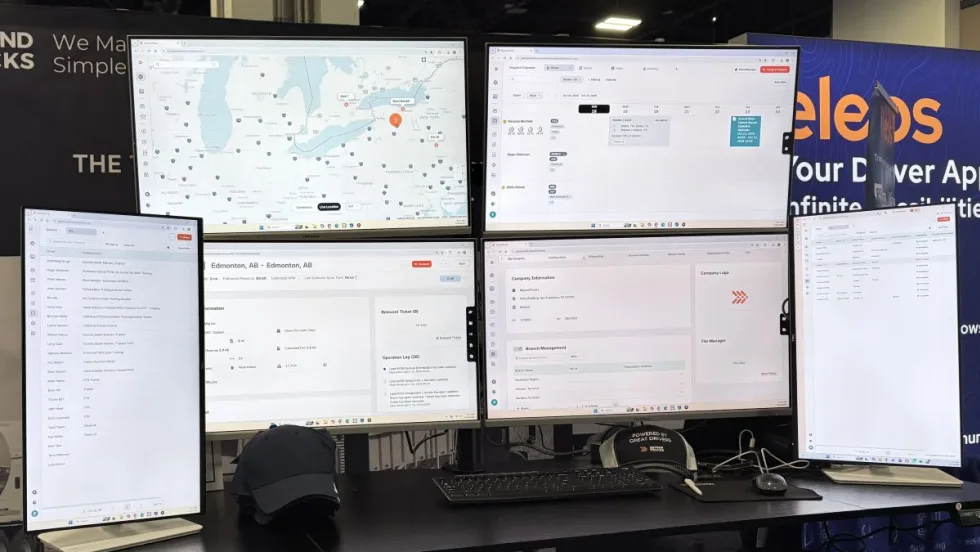
BeyondTrucks Adds Rules Checks to Dispatch
New Compatibility Engine checks driver qualifications, equipment requirements and fleet policies before loads are dispatched.
Read More →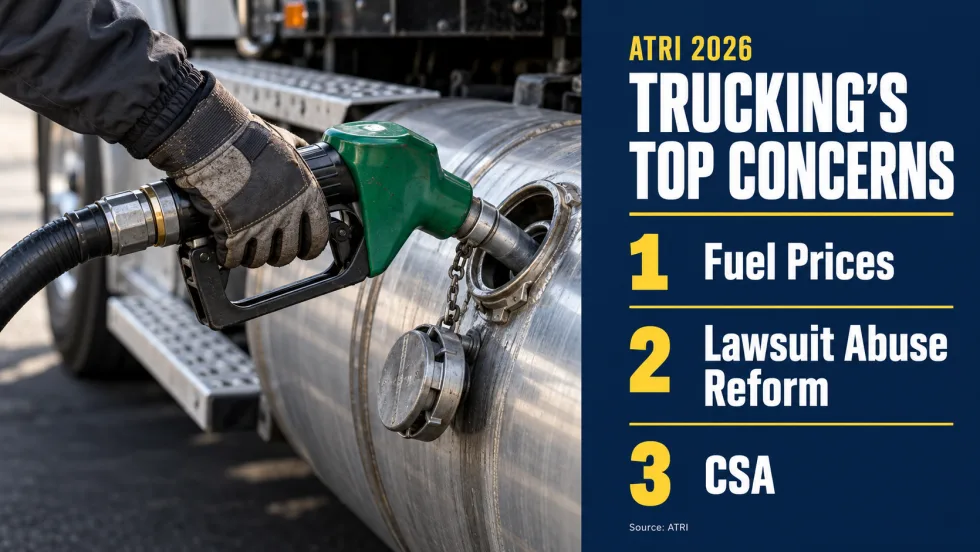
Diesel Prices Hijack Trucking’s Worry List
ATRI’s annual survey finds cautious optimism about freight, but diesel costs, litigation, and insurance continue to squeeze fleets. Drivers have different priorities on several issues.
Read More →
Nomination Deadline Extended for HDT Emerging Leaders
Just a few more days to nominate accomplished trucking fleet professionals under 40 who are making an impact and helping lead the industry forward for the HDT Emerging Leaders award. Deadline extended to October 20!
Read More →
What Will ATA’s New Leader Bring to Trucking's Table?
Incoming President and CEO Mark Colson’s record in Alabama offers clues about his priorities and approach following Chris Spear’s abrupt departure as the head of the American Trucking Associations.
Read More →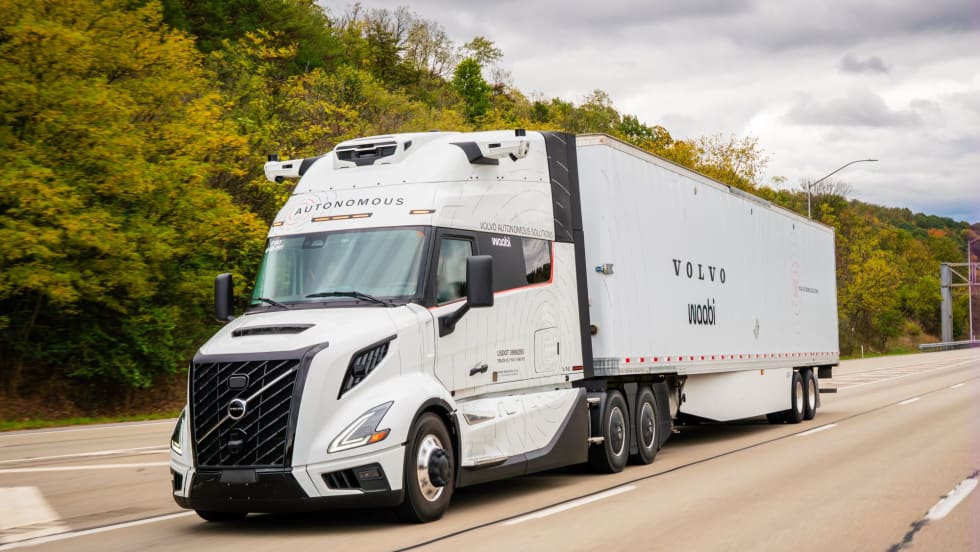
Volvo, Waabi Start Commercial Autonomous Operations in Texas
Volvo VNL Autonomous trucks, powered by the Waabi Driver, are hauling freight directly to third-party facilities for a customer in Texas.
Read More →
Samsara Launches Custom AI Agent Builder
Agent Studio lets fleets create AI tools for hours-of-service monitoring, reporting and driver support, including agents that communicate by phone.
Read More →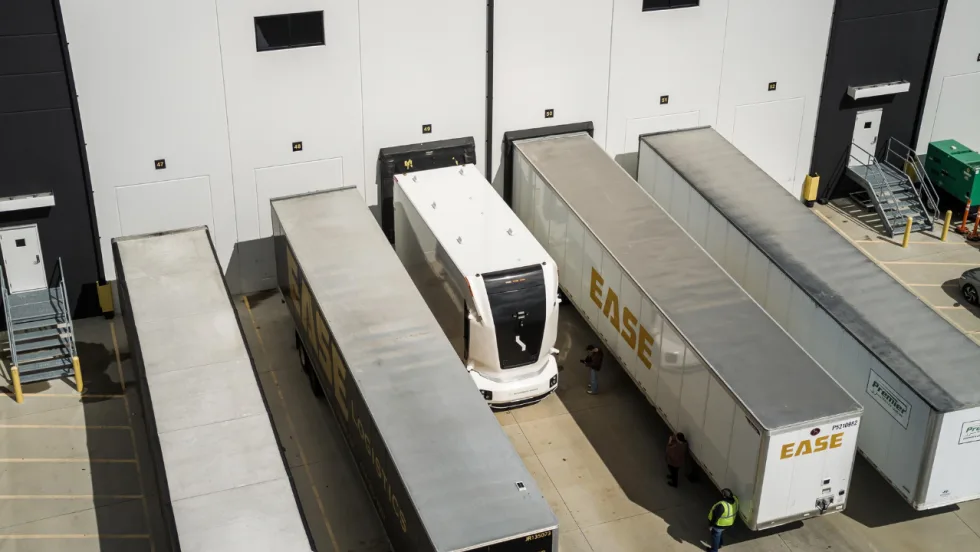
Einride Driverless Electric Trucks Begin Daily Freight Operations in Ohio
Two cabless electric trucks are hauling freight between EASE Logistics facilities in Marysville, Ohio, as part of a multi-state truck automation project.
Read More →
Geotab Links Fleet Card to Vehicle Data
The new card combines fuel discounts with telematics-based purchase controls. Geotab’s analysis also points to potential savings from choosing lower-priced fuel stops.
Read More →
How MFA Helps Protect Trucking Fleets
Multi-factor authentication adds protection when passwords are stolen. Here’s how it works and where fleets should start.
Read More →