




Predictive Maintenance Shifts Into High Gear
New ‘smart’ components, combined with machine learning technology, finally deliver on the promise of predictive maintenance.

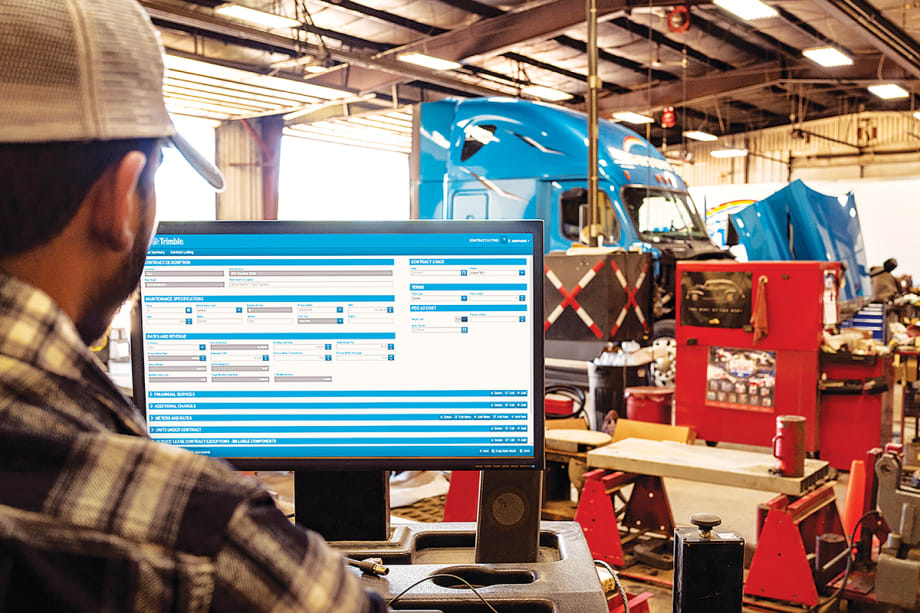
The promise of predictive maintenance systems has been supercharged by the addition of machine learning and artificial intelligence to create a whole new way of keeping trucks up and running.
Photo: Trimble
Has predictive maintenance technology finally arrived in trucking?
That seems to be the case, if the Technology & Maintenance Council Annual Meeting in February was any indication. Many of the meetings and press conferences were devoted to either understanding predictive maintenance or to promoting new products or systems designed to supercharge fleet maintenance practices.
The promise of predictive maintenance has been percolating around trucking for years. As a general concept, is very easy to understand. The electronics revolution that began in the early 2000s led to a host of wireless communication systems and to ever-smaller, increasingly robust sensors that could be mounted on vehicles to monitor the health of components and flash warning alerts back to concerned parties if they picked up signs of pending failures or other problems.
“Predictive maintenance is a data-driven approach to maintenance that uses algorithms and machine learning to suggest the ideal time to perform maintenance, repairs, or parts replacements,” explains Scott Bolt, director of product management for Noregon. “Currently, most fleets and vehicle owners subscribe to an interval-based maintenance program where decisions are driven by time, mileage, or other scheduled criteria. Predictive algorithms take these factors, plus much more, into account to output maintenance recommendations.”
Bolt uses oil as an example. A predictive algorithm considers not only time and mileage, but also data from the truck to understand driving temperatures, load curves, length of trip, and conditions to determine the optimal time to perform an oil change.
“We have sensors now on almost every component on a truck,” says Chris Orban, vice president of data science for Trimble Transportation. “We started out with dozens of them — mostly on big-ticket components like engines and automated manual transmissions. Since then, we’ve gone to hundreds on an average new truck. But it’s only been in the past three to four years that the accuracy and actionable data fleets need have come together in a way that can be leveraged effectively.”
Orban says the capabilities of the sensors themselves have expanded tremendously. “In the past, a typical component would send information on a single, critical, performance indicator,” he explains. “But now, those sensors collect and transmit data on many things. A sensor that used to just collect, monitor and transmit temperature data, today may also give you information on pressure, humidity and vibration. And that means that fleet managers can use that information to look at the actual driving conditions a vehicle is in and now factor environmental conditions into their maintenance models.”
In addition, in the early days of predictive maintenance technology, Orban says, sensors were limited to simply alerting a fleet manager when a component was nearing the end of its useful life. “But now, sensors have the capability to flash a message back to a fleet and say, ‘This component is suddenly wearing at a rate that is 30% faster than normal.’”
That allows you to schedule maintenance days, or even weeks, out, based on real-time wear data. “For the first time ever, we’re getting deep insights into how not just trucks — but how individual trucks — in a fleet behave,” he says.
This technology couldn’t be finding its way to fleets at a better time, says Gregg Mangione, senior vice president of maintenance at Penske Truck Leasing, with maintenance costs escalating. “It is amazing what the OEMs are doing with smart technology. They are planning to use more and more components that will electronically tell you when they require repair or replacement, or when they have reached the end of their useful life. Integrating that dynamic information into your maintenance processes will be the challenge.”
AI and Machine Learning
The next evolution in electronics is already shaping what kind of data, and what kind of insights, fleet managers will be getting in the very near future, says Braden Pastalaniec, vice president of transportation and logistics at artificial-intelligence company Uptake.
“Let’s look at a truck battery,” he says. “As a fleet manager, you know that a good battery should never drop below 9.7 volts when cranking. If we apply artificial intelligence data that is collected each and every time a vehicle is cranked, we soon learn the characteristics of that battery and its overall health. So, if a battery that normally cranks a truck at 9.7 volts suddenly begins cranking at 8 volts, AI will pick up on that trend and — over several days — confirm a drop in cranking voltage. The AI can then recommend a load test for that battery the next time it is in the shop and [the fleet can] replace it before a failure on the road occurs.”
Moreover, Pastalaniec notes, these AI systems can crunch data in an astoundingly short period of time, meaning that new predictive maintenance systems can begin saving fleets money almost immediately.
“It is surprising how efficient and how quickly these systems gain insights into both individual components and vehicles,” he says. “All they need is between 45 and 60 days of data, and they are able to paint a complete picture of a component in a way that allows you to understand its overall health at any moment in time like never before.”
Jonathan Bates, head of global marketing at Mix Telematics, says this new ability of AI algorithms to highlight key maintenance trends lets fleet managers customize the information they receive and act on it.
“Typically, the data is used to create a dynamic dashboard that allows maintenance professionals to see, for example, vehicles with recurring issues, operations and sub-units with higher numbers of engineering-related events, and which vehicles should be prioritized for maintenance,” Bates explains. “The AI built into the dashboard can also identify which makes and models may need attention in the future. Typically, vehicle types can be added to dashboard watch lists, meaning that the software shows us where the problem areas could be in the future, without engineering teams having to review a number of reports to detect possible fleet engineering issues. These dashboards mean that maintenance professionals can optimize the use of repair garage time, ensure that vehicles are serviced before an event becomes a problem, and can spot recurring issues across multiple vehicles of a certain type.”
If all this sounds complex and intimidating, don’t be alarmed. On the downstream/fleet side of the information flow, predictive maintenance systems are getting increasingly easier to both install and put into effective action quickly.
“Predictive maintenance programs are not difficult to install if you have the right infrastructure in place,” says Penske’s Mangione. ”And in terms of a training curve for fleet managers and technicians in the field, we have built analytics into our processes out of company headquarters. We are providing decision support from headquarters and giving technicians, supervisors and managers the digital tools they need to make a decision in the field.”
‘A Mississippi River of Data’
One early problem that plagued predictive maintenance systems was the sheer volume of data flowing off of vehicle sensors. “The data that is being transmitted can be overwhelming,” Pastalaniec admits. He cites one Uptake fleet customer that has 9,800 fault codes a month coming off of a single truck. “People say it’s like drinking from a firehose,” he says. “But really, if you start thinking about that data in terms 10, 50, or 100 trucks, it’s more like trying to drink from the Mississippi River. So, getting the data into usable, actionable formats has been critical for us as we develop our predictive maintenance systems.”
“Actionable intelligence. That’s what it’s all about,” says Cindy Hunter, technology sales director for Rush Truck Centers. “We see the whole industry now shifting toward making data actionable — and the realization that any data that is not actionable is just white noise.”
The next major predictive maintenance trend is integrating sensors and telematics systems so that all the information coming off of a vehicle is fully integrated, regardless of which OEM built the truck, who built the component in question, and who is doing the service, says Kirk Barnhard, director of operations technology innovation for Rush Truck Centers.
“This is now what we’re striving for with RushCare predictive maintenance services. We want to be able to give customers a diagnostic trouble code, filtered by fault and severity levels that have been informed by machine learning and AI, and then send that directly to a work request on a technician’s smartphone or tablet.”
What was once the stuff of science fiction is quickly becoming a maintenance reality for fleets nationwide. Soon, every aspect of a truck’s performance and health will be just a mouse-click away. Intelligence, action, and uptime will soon be the watchwords for fleets using this new technology.
More Maintenance
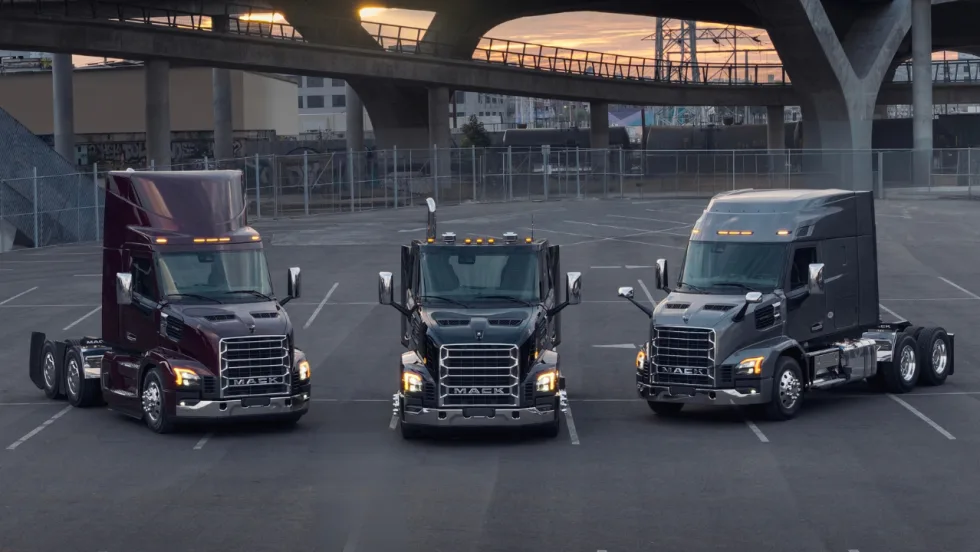
Mack Expands Extended Coverage With Four Chassis System Plans
Mack Trucks' new system-specific coverage options allow heavy-duty fleets to select protection for driveline, cab, HVAC, electronics, and advanced safety components.
Read More →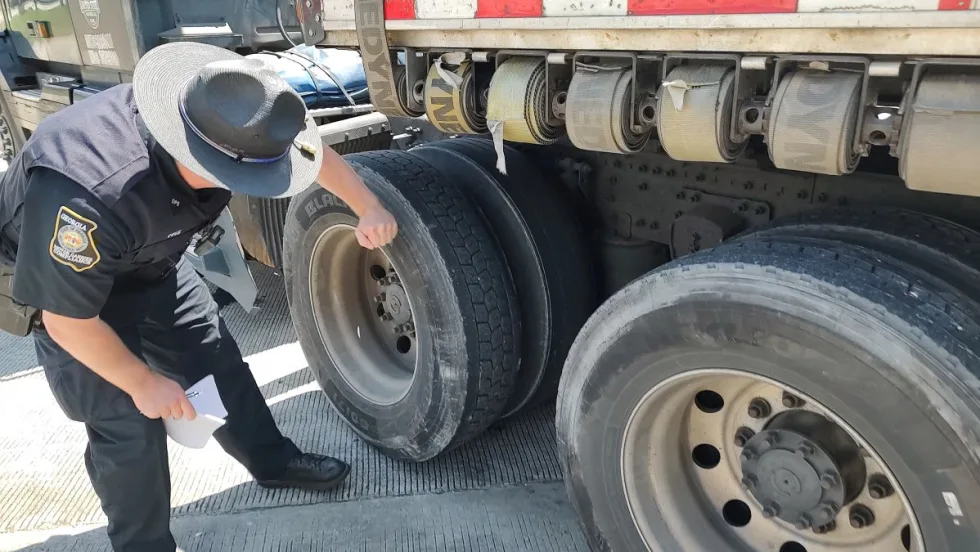
What an Out-of-Service Order Really Costs, and How to Plan for One
The repair invoice is the first number you see — and often one of the smallest. Here’s what else an out-of-service order can cost a fleet, and how planning can reduce the damage.
Read More →
International Launches Online Truck Parts Store
Fleetrite.com lets fleets and repair shops find OEM and all-makes parts, check prices and availability, and order without calling a parts counter.
Read More →

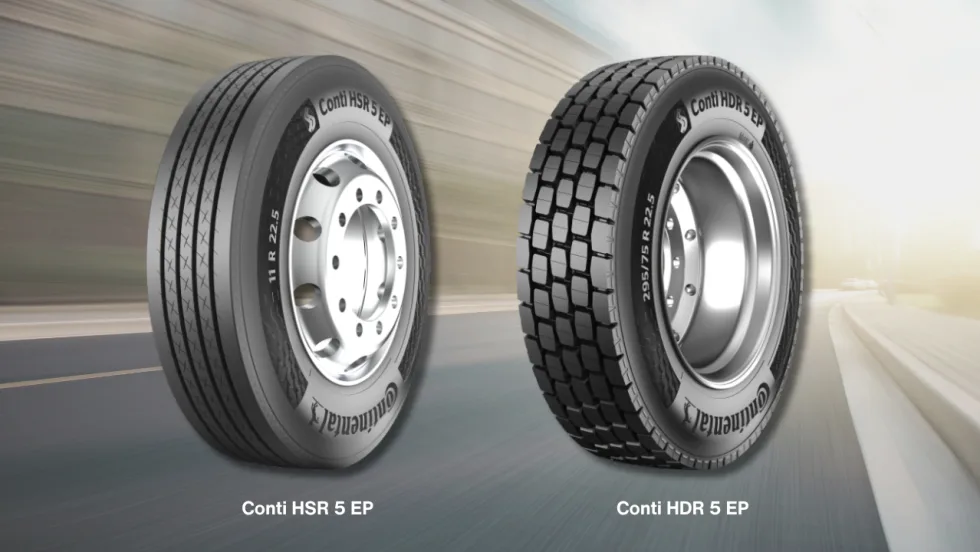
Continental Introduces New Regional Truck Tires
Continental says its new Generation 5 steer and drive tires for regional operations offer longer tread life, with estimated mileage gains of 22% and 19%, respectively.
Read More →
How AI Can Help Your Techs’ Efficiency
The technician shortage isn't going away, and no single fix can close the gap on its own. Trent Broberg makes the case that AI's real job in the shop is protecting the billable hours and job satisfaction of the techs you already have, not asking them to work faster.
Read More →
Color Match Smarter: Tools That Restore & Perform
For fleet managers and collision repair professionals keeping heavy-duty trucks on the road, getting the color right the first time isn't just about appearance — it's about efficiency, turnaround time, and bottom-line results. Discover how today's digital color tools are transforming the repair process from guesswork to precision.
Read More →
Wrong Repair Prompts Recall of Freightliner, Western Star 4x2 Trucks
DTNA is recalling more than 2,400 trucks that received an incompatible software fix instead of the hardware repair required to address brake valve corrosion.
Read More →
Truck Drivers Need More Than Another Alert
Fleets have more visibility into truck health, safety events, and driver activity than ever. The next challenge is turning all that information into useful guidance for the person who has to decide what to do next.
Read More →
The Maintenance Checks Trucking Fleets Should Prioritize Before Fall Freight Picks Up
Making it through August isn’t the same as being ready for the next several months of operation. Find out what systems may have suffered from summer heat and need to be checked out before fall.
Read More →
What Three Fleets Are Doing Differently When Buying Truck Parts in 2026
With freight improving but costs still climbing, fleet maintenance executives explain how they're balancing price, quality, and supplier relationships.
Read More →