




TMC Chairman Calhoun on Technology, Technicians
Kenneth Calhoun, newest chairman of the Technology & Maintenance Council of the American Trucking Associations, has long been an advocate of embracing new technology. Now, he’s doing just that to bring more positive change to the trucking industry.

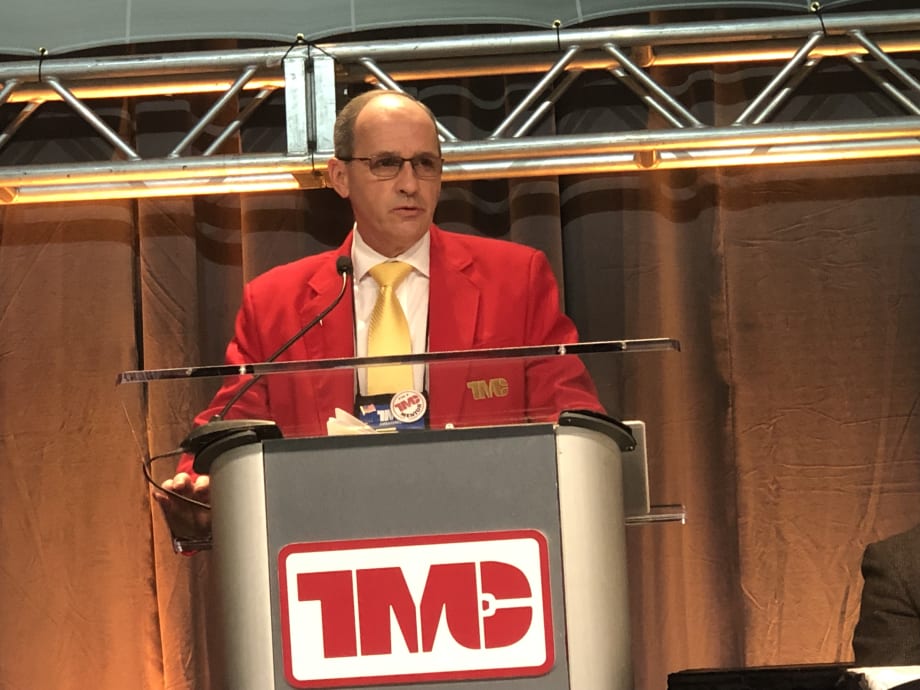
Kenneth Calhoun speaks to TMC members during the annual meeting in Atlanta.
Photo by Jack Roberts
Kenneth Calhoun, fleet optimization manager for Altech, has been a longtime board member of the American Trucking Associations' Technology & Maintenance Council and an early voice calling for the trucking industry to embrace new technology. This year he achieved another professional goal, being named the organization’s chairman for 2019.
HDT caught up with Calhoun briefly during TMC's annual meeting in Atlanta March 20 to find out what he hopes to accomplish during his tenure as chairman.
HDT: Congratulations on your new role as chairman.
Calhoun: Thank you! Of course I knew it was coming — once you’re named chairman of meetings for TMC, it’s an automatic ascension to the chairman’s seat. But you know, so many of my friends and mentors have been in this role before me — so to join the ranks of people you have so much respect for is very cool.
HDT: TMC is arguably the biggest trucking trade show and one of the most visible advocacy groups for trucking today. How do you keep that momentum going?
Calhoun: This is a time of great opportunity for TMC. If you think all the disruptive technologies coming at this industry in the next few years, this is absolutely the right time to be involved in TMC and take part in the discussions around those technologies and how they will impact trucking in the future. I think that goes to what I can bring to the table as TMC chairman, which is working to bring disparate parties together in a way that helps them collaborate effectively and reach consensus on these very important issues. That way, we can create information, practices and procedures that will become the industry standard as all this new technology enters mainstream use.
HDT: You’re actually leveraging new technology to make TMC work more efficiently, correct?
Calhoun: Yes. It’s a little bit of a cultural shift for us. But the opportunity exists today for TMC to be more nimble as we work through the processes that will lead to new practices, recommendations and policies for the trucking industry. Our internet platform TMC Connect was initially a repository for Recommended Practices. But we have now added the capability for TMC Connect to be a collaborative work space. You will hear me elaborate and advocate more on this later this year. But this new capability allows us to take advantage of that platform as a flexible work space. We can look at proposed policies and easily add comments, challenge aspects of a proposal, and exchange ideas. This gives us the ability to expedite our policy approval process, while allowing more input and interaction from our members. And we don’t have to be wholly dependent on two meetings a year and phone conference calls to get those things done. So I hope this system will hasten our policy adoption process — and I believe that it will.
HDT: I know you’ve long been a proponent of aggressively tackling the technician shortage problem in trucking.
Calhoun: Yes. And we are taking affirmative action on that front with the establishment at our lastest TMC meeting of the Apprenticeship Standards Committee, which was born out of an executive order issued by the White House last June, creating a more streamlined way for employers to use apprentices in the workplace. That committee is chaired by Glenn McDonald (director of maintenance, Ozark Motor Lines) in collaboration with the American Society of Engineers (ASE) and Maher & Maher, a human resources consultation, organizational and development firm out of New Jersey. And its goal is to define how apprenticeships in the trucking industry can serve our industry, with the intention being to create a uniform entry-level technician apprenticeship program.
I really feel like this is the piece of the puzzle that is missing and will allow us to duplicate similar programs that have worked well on the state level, such as the Be Pro, Be Proud program in Arkansas. The progress the committee has already made on this front makes me believe establishing such a program is achievable in the near future and has great potential for attracting more numbers of younger people to our industry.
More Maintenance
International Launches Online Truck Parts Store
Fleetrite.com lets fleets and repair shops find OEM and all-makes parts, check prices and availability, and order without calling a parts counter.
Read More →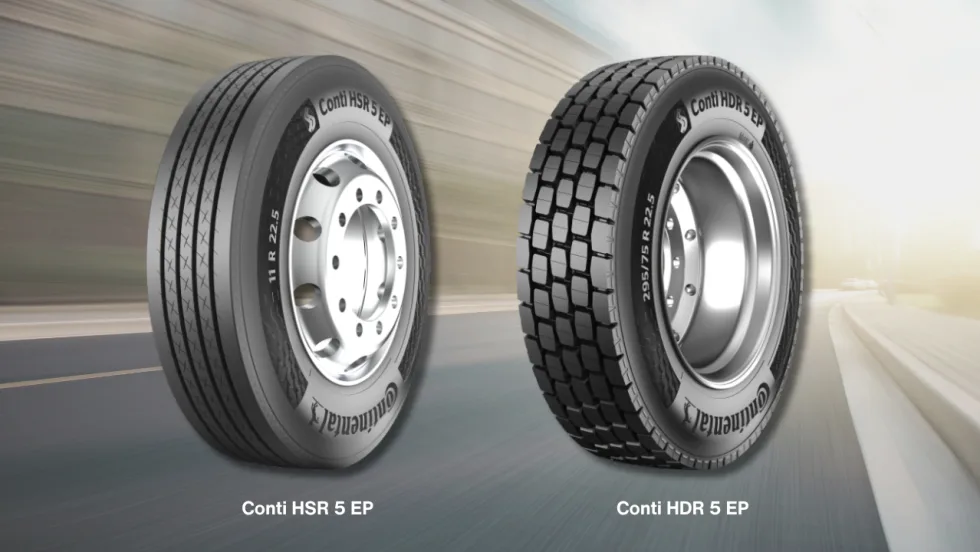
Continental Introduces New Regional Truck Tires
Continental says its new Generation 5 steer and drive tires for regional operations offer longer tread life, with estimated mileage gains of 22% and 19%, respectively.
Read More →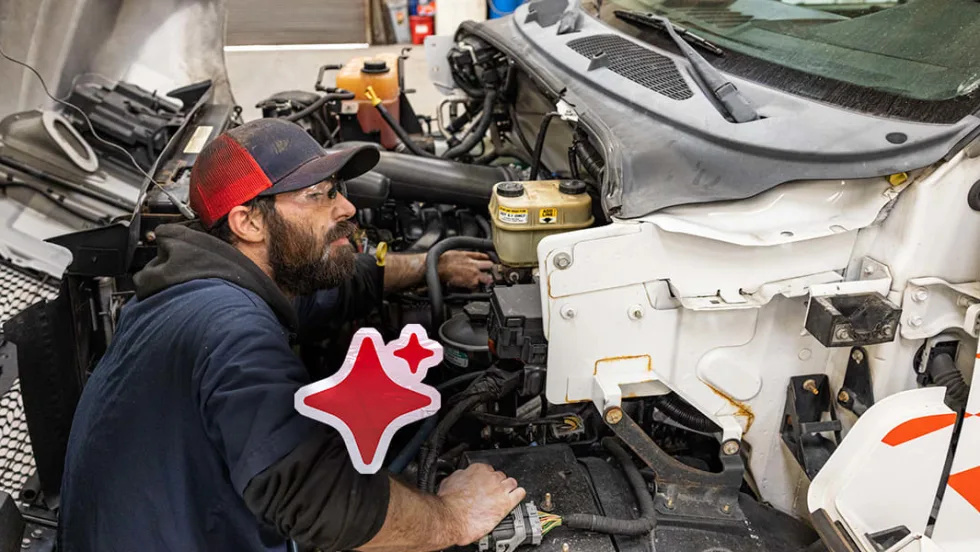
How AI Can Help Your Techs’ Efficiency
The technician shortage isn't going away, and no single fix can close the gap on its own. Trent Broberg makes the case that AI's real job in the shop is protecting the billable hours and job satisfaction of the techs you already have, not asking them to work faster.
Read More →


Color Match Smarter: Tools That Restore & Perform
For fleet managers and collision repair professionals keeping heavy-duty trucks on the road, getting the color right the first time isn't just about appearance — it's about efficiency, turnaround time, and bottom-line results. Discover how today's digital color tools are transforming the repair process from guesswork to precision.
Read More →
Wrong Repair Prompts Recall of Freightliner, Western Star 4x2 Trucks
DTNA is recalling more than 2,400 trucks that received an incompatible software fix instead of the hardware repair required to address brake valve corrosion.
Read More →
Truck Drivers Need More Than Another Alert
Fleets have more visibility into truck health, safety events, and driver activity than ever. The next challenge is turning all that information into useful guidance for the person who has to decide what to do next.
Read More →
The Maintenance Checks Trucking Fleets Should Prioritize Before Fall Freight Picks Up
Making it through August isn’t the same as being ready for the next several months of operation. Find out what systems may have suffered from summer heat and need to be checked out before fall.
Read More →
What Three Fleets Are Doing Differently When Buying Truck Parts in 2026
With freight improving but costs still climbing, fleet maintenance executives explain how they're balancing price, quality, and supplier relationships.
Read More →
Paccar Recalls 2027 Trucks Built This Summer for Possible Electrical Problem
The nearly 6,000 Kenworth and Peterbilt trucks in the recall could potentially lose engine power, among other things.
Read More →
Could New Engine Oils Mean Longer Drain Intervals?
New CL-4 and FB-4 engine oils are coming in 2027. Foodliner wants to know whether they could support longer oil drains, but it won’t change its maintenance schedule without data from its own trucks.
Read More →