




Related: California Posts List of Port Carriers with Unsettled Labor Violations
California Rules Against NFI in Driver Wage Lawsuit
The California Labor Commissioner ruled against NFI/California Cartage to the tune of $6 million for what it says was intentional misclassification of truck drivers as independent contractors to avoid paying a proper wage. NFI is appealing the decision.

Steven Martinez・Web Editor
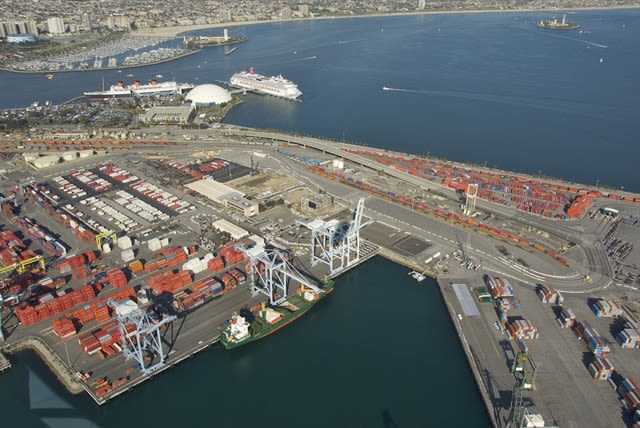
The California Labor Commissioner ruled against NFI/Cal Cartage to the tune of $6 million for what it says was intentionally misclassifying truck drivers to avoid paying a proper wage. NFI is appealing the decision.
Photo via Port of Long Beach
3 min to read
Twenty-four truck port drivers have been awarded $6 million by the California Labor Commissioner for what was deemed intentional misclassification of the drivers as independent contractors.
For the first time, the Labor Commissioner has also issued individual joint liability against one of the company’s employees, a general manager at NFI’s California Cartage Express, who oversaw the drivers of that company.
In a statement to Heavy Duty Trucking magazine, NFI clarified that the Division of Labor Standards Enforcement decision was about violations that took place prior to NFI’s acquisition of Cal Cartage in October of 2017 and were not issued against NFI or its Cal Cartage operations.
The company is appealing the decision, which it said would make the current $6 million judgement void and subject to a new trial.
The company also pushed back on the whole issue of driver misclassification, which it characterized as an ongoing effort by the Teamsters to force independent port drivers to become employees.
“It is a shame that the Teamsters and their supporters fail to acknowledge that there are thousands of available positions in Southern California for those drivers who would prefer to be employees,” NFI stated.
The Harbor Trucking Association, a group that represents port trucking companies and other drayage stakeholders on the West Coast, also attacked the Teamsters. Weston LaBar, chief executive officer of the HTA, told HDT, “This is another example of the Teamsters Union misrepresenting the truth to help exploit workers in to forced collective bargaining agreements and highlights why the California Trucking Association is suing the Secretary of Labor and her department.”
LaBar also told HDT that the HTA supports any measure that would help protect against the exploitation of drivers, but said that there wasn’t enough being done to protect the rights of drivers who choose to be independent.
“The HTA will continue to fight for right of drivers to choose whether they want to be employees or contract independently,” said LaBar. “Perhaps one day we will see the Teamsters and a majority of our elected officials make decisions with the driver’s best interests in mind as opposed to their own.”
While independent drivers are commonplace in the trucking industry, California has consistently ruled against trucking companies that use independent contractors as a tactic to avoid paying drivers proper wages and benefits that would be owed to a full employee, a practice labeled driver misclassification.
Late last year, California passed a law that would also hold retailers partly accountable for working with trucking companies that had a record of labor violations, such as misclassification. The Los Angeles City council, which has jurisdiction over one of the major ports complexes in Southern California, has also been actively pushing against the use of independent contractors, and has looked into possibly banning trucking and warehousing companies that break local, state and federal employment laws from operating on city property.
More Drivers

FMCSA Removes 110 Truck Driver Training Schools from Certified ELDT List
Federal regulators also are targeting more than 160 additional training providers and launching a nationwide audit of third-party CDL skills testers as part of a broader crackdown on trucking fraud.
Read More →
Hours of Service Pilot Programs: FMCSA Readies for 2027 Rollout
Two pilot programs could eventually reshape hours-of-service rules, giving truck drivers options to pause their 14-hour clock or use longer split sleeper rest periods.
Read More →
Medical Cards, English Proficiency Reshape Roadcheck Violations
Medical-card violations jumped to the top of the driver out-of-service list during CVSA’s 2026 International Roadcheck, while English-language proficiency violations appeared among the leading violations for the first time.
Read More →
Driver Trust Can Make or Break the Success of Fleet Safety Technology
New Teletrac Navman research suggests that onboarding, transparency about driver data, and positive feedback can play a significant role in how commercial drivers respond to safety and coaching technology.
Read More →
EEOC Sues KLLM Over Alleged Sex Discrimination in Driver Training
KLLM is facing a federal sex-discrimination lawsuit over policies the EEOC alleges put female truck driver trainees at a disadvantage.
Read More →
FMCSA Moves to Codify English Language Requirements for Commercial Drivers
By changing regulations on English-language proficiency requirements for commercial drivers, rather than relying on a guidance memo, the FMCSA said future administrations won't be able to walk back the Trump administration's stricter enforcement with just a memo.
Read More →
Drivers Put Western Star Trucks to the Test at Star Nation Experience
Watch to get an inside look at the Western Star trucks, technology, and community behind the Star Nation Experience 2026!
Read More →
Trump Administration Looks to Put More Veterans Behind the Wheel
The Freedom Haulers program pulls together existing and expanded programs at several federal agencies to recruit veterans to drive commercial heavy-duty trucks and cut the red tape for them to get a CDL, training, and employment.
Read More →
Putting Mack’s Command Steer to the Test
A test drive of Mack’s Command Steer active steering system evaluates how it can make truck driving easier and less tiring.
Read More →
Competition Heating Up for Truck Drivers
New report reveals rising driver hiring costs, the return of sign-on bonuses, growing AI advantages, and the operational factors shaping driver retention.
Read More →