




Trucking Alliance Pushing for State ELD Mandates
The Alliance for Driver Safety & Security, also known as the Trucking Alliance, is calling for all state legislatures to require electronic logging devices in commercial trucks that only operate within their state (intrastate).


The Trucking Alliance wants intrastate drivers to be required to use electronic logging devices to track their hours.
Photo courtesy J.J. Keller
The Alliance for Driver Safety & Security, also known as the Trucking Alliance, is calling for all state legislatures to require electronic logging devices in commercial trucks that only operate within their state (intrastate).
Lane Kidd, managing director of the coalition of transportation companies that lobbies to reduce large truck accidents, injuries, and fatalities, told HDT that the new policy statement was drafted because “to our knowledge, there are no states that require ELDs in commercial trucks that operate in intrastate commerce. We’re hopeful that state trucking associations will start the movement.”
In a July 20 statement, Kidd said that, "Since Congress required electronic logging devices in all interstate commercial trucks to monitor the hours that truck drivers spend behind the wheel, violations are down dramatically. Truck drivers no longer have paper log books to manipulate and falsify.
"State legislatures should consider doing what Congress has done, and require all large trucks to install these devices to make sure drivers are obeying the law," he added. "Electronic logging devices should be as common in large trucks as seat belts are."
The policy statement is actually two-fold: Firstly, the Alliance is “encouraging” the Federal Motor Carrier Safety Administration to expand its statutory authority and require ELDs in all interstate commercial trucks, "as Congress directed and regardless of the commodity or length of haul." Secondly, the Alliance is “urging” state legislatures to require ELDs in all commercial trucks that operate exclusively within their state and are engaged in intrastate commerce.
According to Kidd, the policy statement is supported by these sets of facts:
“ELDs are the Law”
The Trucking Alliance has advocated for the installation of ELDs in commercial trucks since 2010
In 2012, in a bipartisan vote, Congress required that all commercial trucks engaged in interstate commerce install ELDs to verify that truck drivers comply with federal hours-of-service rules
Following an extensive rulemaking process, and at the direction of Congress, the Department of Transportation required all interstate commercial trucks to install ELDs by December 17, 2017
ELDs are not currently required for large segments of the industry, such as drivers operating in intrastate commerce and those operating in interstate commerce within a 100 air mile radius of their work reporting location
“The ELD Law is Working”
Since the ELD Law took effect in December 2017, truck driver hours-of-service violations are down 46%
The ELD Law is reducing truck driver fatigue, a critical factor in large truck crashes
FMCSA estimates that 1,844 large truck crashes will be avoided and 26 lives will be saved each year with the ELD law, reversing a disturbing trend in which 4,317 people were killed in large truck crashes in 2016, the highest number since 2007
FMCSA further estimates that ELDs will result in a net economic benefit of $1.1 billion annually, a figure that will increase if ELDs are required in all trucks engaged in intrastate commerce
“ELDs Report Safety-Related Data”
ELDs are simply recording devices and have no effect on hours-of-service rules
ELDs accurately and truthfully record a driver’s actual on-duty driving time, unlike the paper log books that ELDs replaced and which could be easily manipulated
“ELDs Will Improve Hours-of-Service Regulations”
Historically, federal hours-of-service regulations are changed through a rulemaking process. This process should be based on sound science and accurate data, rather than political impulse. Further, previous rulemakings relied on data derived from paper logbooks, which are prone to human error and falsification
ELDs will now produce accurate data and provide the knowledge to provide for a more accurate understanding of trucking operations, including:
Accurate number of hours being driven
The time drivers spend waiting at shipper and receiver locations, for shipments to be loaded and unloaded
Slow transit time, due to traffic congestion
Information related to certain commodities that require special consideration
Correlations between commercial motor vehicle collisions and such factors as the number of hours driven, the time of day accidents occur, and hours-of-service compliance.
ELDs will provide accurate information, for developing sound policy, including:
Detention policies
Truck parking shortages
Hours-of-service rules
Highway infrastructure investment
“ELDs Will Improve the Supply Chain”
ELDs will serve as the critical foundation to build the nation’s future supply chain, enabling commercial drivers and citizens to maintain the quality of life that all Americans enjoy.
Related— Q&A: Lane Kidd Explains the Aims of the Trucking Alliance
More Safety & Compliance
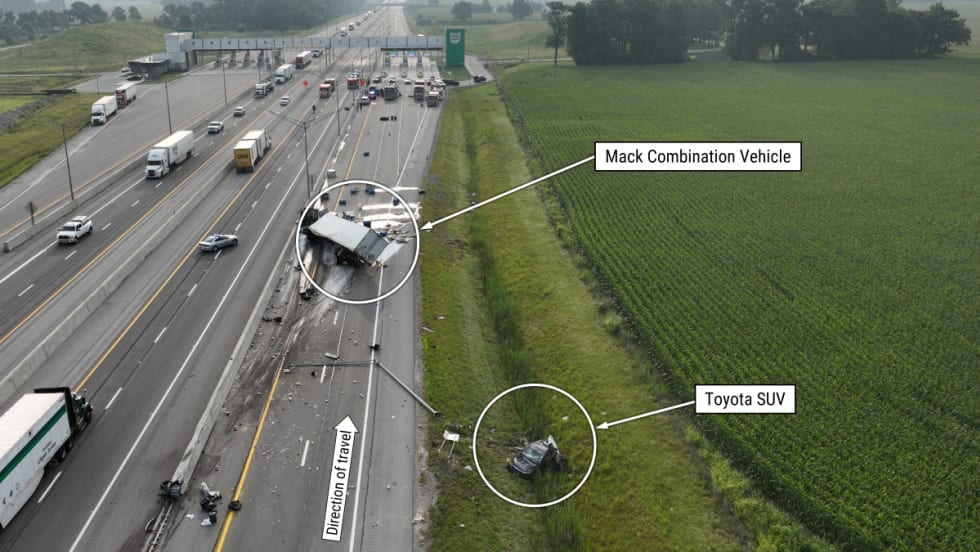
Fatal Crash Exposes Toll Plaza Risks
An NTSB investigation found that last-minute lane changes and large speed differences at an Ohio toll plaza created a hazard the truck driver couldn't avoid in time.
Read More →
When Language Stops the Truck: The Return of ELP Out-of-Service Orders
English language proficiency rules for commercial drivers aren’t new, but renewed out-of-service enforcement has raised the stakes. Here’s what carriers need to know before a driver reaches a roadside inspection.
Read More →
A Camera Isn't a Safety Program. Here's What Brokers Are Screening for Now
Footage alone may not be enough to pass broker vetting processes. Here's what counts as a defensible safety program now.
Read More →

Marijuana and Trucking’s Drug-Testing Dilemma
Marijuana is getting stronger, laws are changing, and drug tests still can’t reliably establish impairment. What does that mean for truck drivers and the fleets that employ them?
Read More →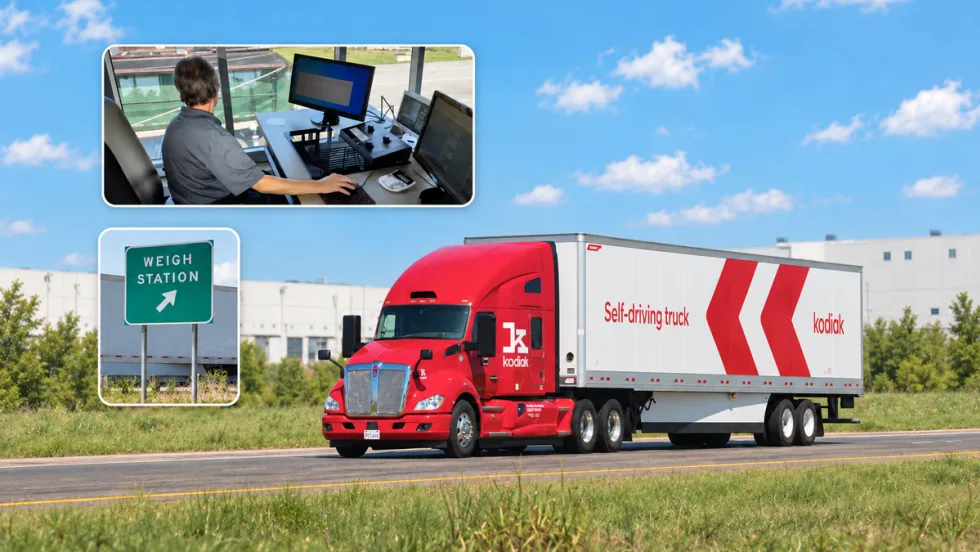
PrePass, Kodiak Connect Driverless Trucks to Roadside Enforcement
The system will allow enforcement agencies to verify Enhanced Inspection information and decide whether Kodiak’s autonomous trucks can bypass roadside screening sites.
Read More →
From One Generation to the Next: How Mentorship Builds Safer Truck Drivers
After three decades in trucking, Harold Perry shares what he's learned about driver safety, mentorship, and helping the next generation build confidence behind the wheel.
Read More →
FMCSA Pauses Biennial-Update Enforcement Amid Motus Transition
Carriers whose updates were due on or after June 1 have more time, while FMCSA works to stabilize its new registration system and warns of phishing sites impersonating its new carrier registration system, Motus.
Read More →
ZF Expands Commercial Vehicle Push in North America
ZF is expanding its North American commercial-vehicle presence with new transmission applications, electrification, trailer technology and autonomous-driving systems.
Read More →
Truck Drivers Need More Than Another Alert
Fleets have more visibility into truck health, safety events, and driver activity than ever. The next challenge is turning all that information into useful guidance for the person who has to decide what to do next.
Read More →
Tesla Wants a Self-Driving Semi. Are Cameras Enough?
Could Tesla’s camera-only autonomous driving technology work on an 80,000-pound Semi? In this commentary, HDT's Deborah Lockridge takes a look at Tesla, Cybercab, and how autonomous trucks see the road.
Read More →