





Related: How Fleets Can Get the Most From a National Tire Account
Tire Telematics: Where the Rubber Meets the Road
Sensors in tires and other wheel-end components are ready to move beyond optimizing tire management programs in some very surprising ways.
February 23, 2018
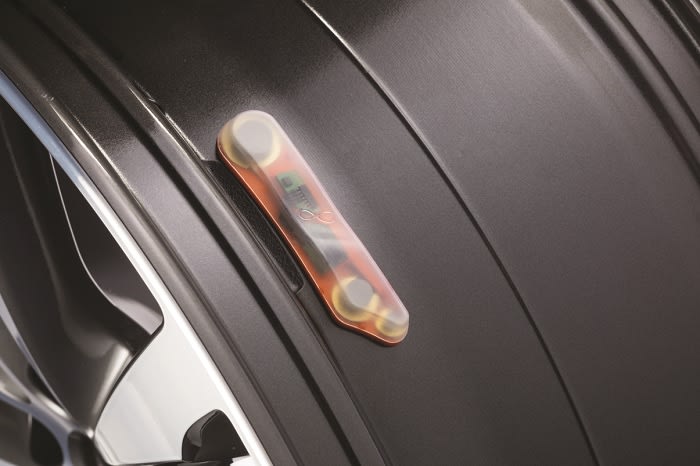
A new generation of wheel sensors may soon be transmitting surprising new types of operational information via tire telematics to fleet managers. Photo: Maxion
5 min to read
A new generation of wheel sensors may soon be transmitting surprising new types of operational information via tire telematics to fleet managers. Photo: Maxion
In the beginning, there was the lowly brake sensor: A simple metal bar that gradually became exposed as brake pads wore away and emitted a high-pitched squeal when it was time to replace them. Antilock brake sensors followed suit, designed to alert drivers when problems arose. Eventually, tire sensors began to transmit air pressure and temperature data to drivers and, later on, to fleet managers.
Wheel end sensors today are already important given the fast evolution and adoption of active vehicle safety systems, says Fred Andersky, director of customer solutions and controls for Bendix Commercial Vehicle Systems. “Data and diagnostic trouble codes from wheel speed sensors are an integral part of active safety technologies like full-stability and collision mitigation,” he explains. “And today, this information can be sent telematically, enabling shops to be prepared to fix issues and reduce truck downtime.”
This technology sets the stage to integrate and dramatically expand the information sensors will be sending to fleets, says Joe Wolf, manager of global advanced engineering group for Maxion Wheels. Wolf and his team of engineers have been working on a new combination of connected, active wheel sensors, which he says show great promise in relaying a host of vital operating information to fleets.
“We spent the last half of 2017 developing a number of wheel-mounted sensors, data processors and transmitters that can process vehicle operating parameters,” he says. “And because this system is integrated into the truck’s (or trailer’s) CAN bus, it is fully integrated into that vehicle’s telematics architecture and can be transmitted via telematics along with other data to fleet managers.”
Beyond the dashboard light
Wolf says the information Maxion engineers are collecting with their sensor system is potentially groundbreaking.
“Our sensors can monitor operational conditions such as hub or tire temperature, as well as tire pressure,” he explains. “But we are also using them to monitor individual wheel loads. We can tell if a vehicle is loaded or unloaded. Moreover, we can tell how a vehicle is loaded — what the actual weight distribution of the cargo is. Additionally, we can detect any sudden shifts in the distribution of cargo and weight on the vehicle, as well as monitor the type of surface the truck is driving across at any given time.”
He and his team were skeptical that the data they were receiving allowed them to look at operational data that detailed using wheel end sensors, Wolf says. But, he adds, the correlation of the data was extremely good, to the point now that he feels it is 98% accurate. And, he says, the potential for fleets is dramatic, citing the example of an LTL application where a truck starts a day fully loaded, is then partially unloaded and reloaded during the course of a work day. “Using our wheel sensors, we can feed the changing weight distribution data into the truck’s architecture as the day progresses to do things like adjust the suspension or brake performance to each wheel to make sure the vehicle stops efficiently every time,” he explains. “This is about safety and maximum vehicle efficiency. We’re not just talking about a light on the dashboard.”
Future opportunities and challenges
Other suppliers are working on their own wheel-end sensor systems. ConMet, for example, showcased its SmartHub intelligent wheel end at the North American Commercial Vehicle Show in Atlanta last fall. Beto Dantas, vice president of innovation, strategy and marketing for ConMet, says it will offer real-time data on important hub functions to help improve safety and maintenance. The SmartHub contains embedded sensors that will measure and transmit data on wheel end health indicators, including hub temperature, lubricant level, hub vibration, speed, miles traveled, spindle nut torque readings, hub load, and bolt tension.
Dantos says information such as this will become even more important as other technologies take root in trucking. “SmartHub is being developed with the purpose of providing better prognostic capabilities around the health of the wheel end,” he says. “And as market trends like autonomous vehicles and commercial vehicle platooning continue to grow, this self-monitoring, predictive technology will be critical to the safety of the wheel end.”
Wolf thinks that over time, the sensors currently monitoring and transmitting wheel end data will eventually migrate into the truck wheel itself. “We think the wheel is a more logical place for these sensors to reside,” he notes, adding that Maxion is currently working with both truck OEMs and tire manufacturers on different technology paths. “Wheels have a longer field life than tires, which suffer failures, or wear out and have to be replaced. Whereas wheels often last for years without requiring any major maintenance or replacement.”
Still, he notes, the challenges are daunting, including an operating environment that swings from very hot to very cold temperatures, exposure to salt water and other corrosive materials, as well as ultraviolet radiation. Then there are technical limitations to contend with, such as the power requirements needed to broadcast data along a 53-foot vehicle, as well as the different electronic transfer protocols each truck OEM uses today.
Looking even farther into the future, Wolf foresees a time when wheel end sensors will simply broadcast vehicle weight directly to weigh stations. “The technology is mature and the benefits are real,” he adds. “It’s a matter now of perfecting and integrating the sensors, providing the information the OEMs want, and getting costs down to an affordable price point.”
Subscribe to Our Newsletter
More Fleet Management

Sponsored•September 16, 2026
Color Match Smarter: Tools That Restore & Perform
For fleet managers and collision repair professionals keeping heavy-duty trucks on the road, getting the color right the first time isn't just about appearance — it's about efficiency, turnaround time, and bottom-line results. Discover how today's digital color tools are transforming the repair process from guesswork to precision.
Read More →
FMCSA Pauses Biennial-Update Enforcement Amid Motus Transition
Carriers whose updates were due on or after June 1 have more time, while FMCSA works to stabilize its new registration system and warns of phishing sites impersonating its new carrier registration system, Motus.
Read More →
Sponsored•September 14, 2026
2026 Blueprint for Countering Smarter Supply Chain Theft
Cargo theft is no longer just the cost of doing business. It's a multi-billion-dollar criminal enterprise exploiting vulnerabilities across your fleet, drivers, and supply chain.
Read More →


Sponsored•September 1, 2026
How Telematics Improves Visibility, Control, and Performance in Refrigerated Fleets
Explore how telematics help refrigerated fleets improve visibility, uptime, efficiency, compliance, and cargo protection across connected cold chain operations.
Read More →
What the U.S.-Canada Trade War Means for Trucking
Escalating U.S.-Canada tariffs could disrupt cross-border freight, reduce truck volumes, raise costs, and create new uncertainty for carriers on both sides of the border.
Read More →
What Are Trucking’s Top Concerns for 2026?
The American Transportation Research Institute wants to know what's worrying trucking fleet managers, drivers, and other stakeholders in its annual Industry Issues survey.
Read More →
American Trucking Associations Looks for a New Leader
ATA President and CEO Chris Spear abruptly left his job at the association on August 21, at a pivotal time for the trucking industry.
Read More →
Public Wi-Fi Cybersecurity Risks: How Truck Drivers and Fleets Can Protect Their Data
Public Wi-Fi can expose truck drivers and fleets to credential theft, malware, and other cyber threats. Here’s how to reduce the risk on the road.
Read More →
For Nicky Cupp, Fleet Innovation Starts With Frustration
HDT Truck Fleet Innovator Nicky Cupp turns everyday pain points at Fraley & Schilling into opportunities for better technology and smarter processes.
Read More →
Adam Buttgenbach’s Approach to Electric Trucks: Start With Where They Fit
HDT Truck Fleet Innovator Adam Buttgenbach helped PepsiCo build one of North America’s largest EV fleets by focusing on where electric trucks make operational sense.
Read More →