




Volvo Group has outlined how it plans to use $20 million in federal funding to further the freight-moving efficiency of heavy-duty trucks as part of the SuperTruck II initiative.
Volvo Group Outlines SuperTruck II Plans
Volvo Group has outlined how it plans to use $20 million in federal funding to further the freight-moving efficiency of heavy-duty trucks as part of the SuperTruck II initiative.
by Staff
August 31, 2016
2 min to read
Volvo Group said its team of researchers and engineers will use alternative engine designs and an integrated system approach to build a lightweight tractor-trailer concept that will exceed the freight efficiency goal of 100% improvement on a ton-mile-per-gallon basis compared to a 2009 baseline. The team is also tasked with demonstrating powertrain capable of 55% brake thermal efficiency. Volvo Group and its partners will match the development funds dollar-for-dollar.
To achieve these goals, the company plans to leverage its experience in vehicle development along with established partnerships with advanced technology and trailer equipment vendors.
Those partners include Michelin Americas Research Company for tires, Wabash National for trailers, Metalso for lightweight frames, Johnson-Matthey for exhaust aftertreatment systems, and Peloton Technology for platooning and connected vehicle tech.
Volvo will also partner with Oak Ridge National Laboratory for aftertreatment testing and analysis, Pennsylvania State University for connected vehicle testing, Knight Transportation for long-haul fleet, and Wegmans Food Market for regional-haul fleet.
The news comes as Volvo prepares to unveil its first SuperTruck concept from the original program in mid-September.
Other SuperTruck II Projects
The $20 million is part of a larger investment by the Department of Energy to develop next generation fuel-efficiency technology for commercial and passenger vehicles. Other manufacturers being funded as part of the SuperTruck II initiative are Daimler Trucks North America, Peterbilt, Cummins, and Navistar.
Cummins will design and develop a new more-efficient engine and advanced drivetrain and vehicle technologies.By reducing drag and rolling resistance, Peterbilt will work with Cummins to improve aerodynamics by 15% in all wind directions to gain up to 7.5% better fuel economy.
Peterbilt said it will also improve efficiency through auxiliary systems, such as air compressors, power steering pumps and cooling pumps. To reduce rolling resistance, Peterbilt will team with tire manufacturing partners to investigate alternative compounds and tire configurations for optimized surface contact.
Daimler Trucks North America will develop and demonstrate a tractor-trailer combination using a suite of technologies including active aerodynamics, cylinder deactivation, hybridization, and the electrification of accessories.
Navistar will design and develop a vehicle and powertrain with electrified engine components that can enable higher engine efficiency and a significantly more aerodynamically reengineered cab.
For more information on the DOE’s alternative fuel technology investment, click here.
More Fuel Smarts
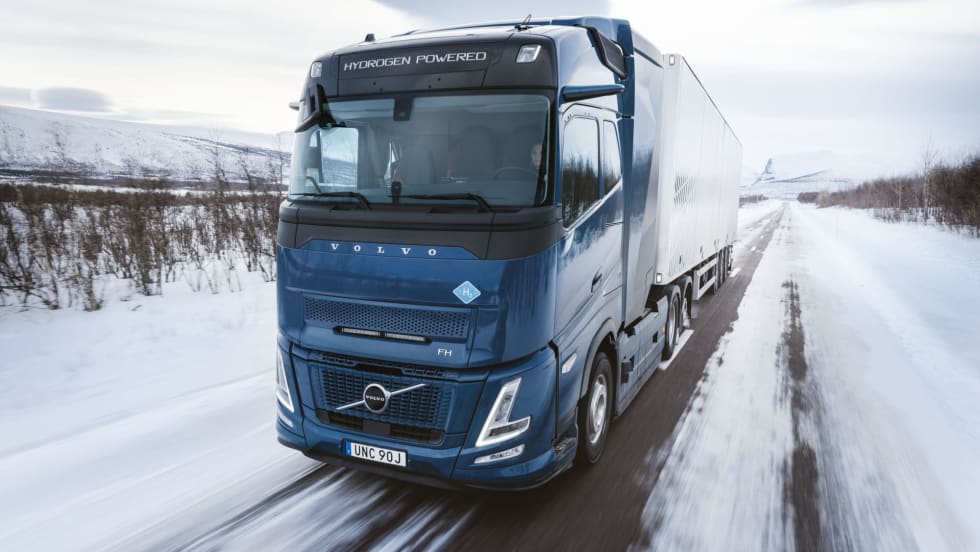
Volvo Testing Hydrogen-Fueled Internal Combustion Engines on Trucks in Europe
Hydrogen combustion engine trucks will be especially suitable over longer distances and in regions where there is limited charging infrastructure or time for recharging of battery-electric trucks, according to the company.
Read More →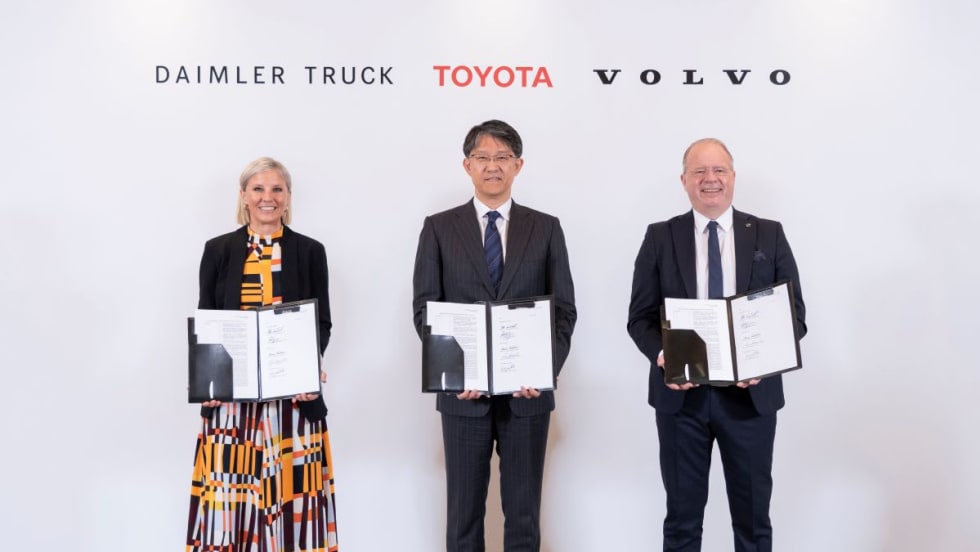
Toyota’s Entry Into Cellcentric Signals Push to Accelerate Hydrogen Truck Adoption
By joining Daimler Truck and Volvo, Toyota brings fuel cell expertise to a joint effort aimed at making hydrogen viable for heavy-duty transport.
Read More →
U.S. Diesel Prices Hit $5.40, Top $7 in California
Trucking operators are slowing speeds, cutting empty miles, and declining unprofitable freight as diesel costs continue to rise due to conflict in the Middle East.
Read More →
EPA Targets DEF Sensor Failures Behind Truck Derates
New guidance allows engine makers to replace problematic DEF sensors with NOx-based systems, aiming to reduce unnecessary derates and downtime caused by failures in the sensors designed to monitor diesel exhaust fluid on trucks.
Read More →
Heavy Duty Trucking is Searching for the Top Green Fleets of 2026
Is your company a leader in sustainability efforts among trucking fleets? If so, Heavy Duty Trucking's editors want to hear from you.
Read More →
What's Real in Advanced Truck Technology? ACT Expo's Erik Neandross Weighs In
Artificial intelligence, the software-defined vehicle, telematics, autonomous trucks, electric trucks and alternative fuels, and more in this HDT Talks Trucking interview
Read More →Why Diesel Is Climbing Fast—and What the Iran Conflict Has to Do With It
With global oil flows disrupted, U.S. diesel prices have topped $5 across every region, climbing sharply in the past few weeks.
Read More →
From Diesel Prices to Cyberattacks: How the Iran War Is Affecting Trucking
The impact of the Iran conflict extends beyond fuel costs, bringing more fraud and cybersecurity risks to the trucking industry.
Read More →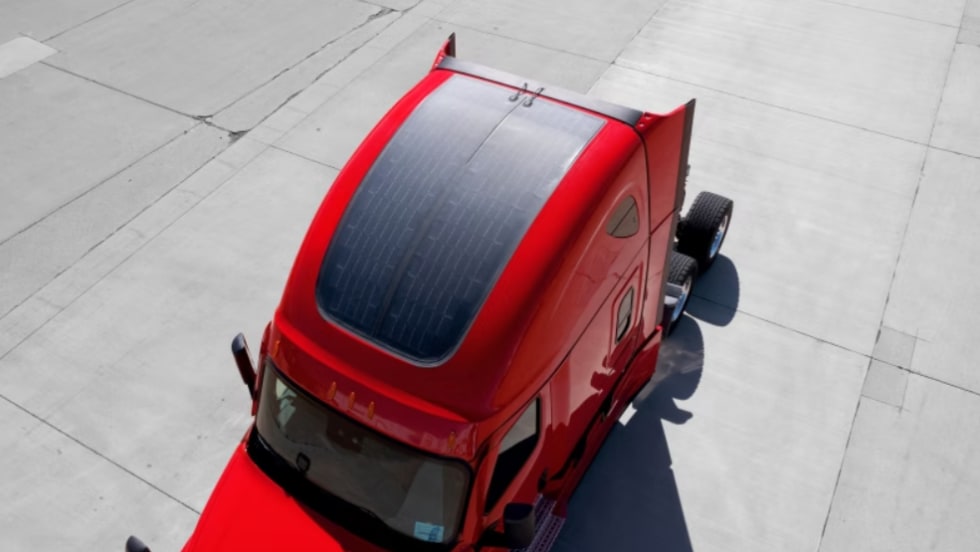
Vanair Introduces Solar, Battery Power Ecosystem for Class 8 Trucks
The company’s expanded EPEQ ecosystem includes flexible solar panels, lithium batteries, hydraulic power systems, and a portable fast charger for electric trucks.
Read More →
Run on Less “Messy Middle” Data Shows Multiple Paths for Truck Powertrains [Listen]
Listen as Mike Roeth of the North American Council for Freight Efficiency shares insights into battery-electric trucks, natural gas, biofuels, and clean diesel on this episode of HDT Talks Trucking.
Read More →