




Volvo Announces New VNL Powertrain Enhancements
Volvo has announced a host of improvements to its D13 engine and I-Shift automated transmission.


Volvo is upgrading powertrain options for its new VNL tractor -- and will no longer offer manual transmissions as an option, the OEM announced.
Photo: Volvo Trucks North America
Volvo Trucks North America is building on the launch of its “reimagined” VNL tractor last month by enhancing the Volvo D13 engine and I-Shift transmission. Design enhancements to the D13 engine include a new wave piston with a shorter piston height, as well as a longer connecting rod; smaller injector needle control valves; a variable vane oil pump; and improvements to the turbo compounding (TC) unit and turbocharger.
To further drive the fuel efficiency benefits of I-Shift, Volvo Trucks engineers introduced enhancements that improve shift speeds by up to 30%. These efficiency increases are critical to Volvo Trucks’ customers’ bottom line, while also providing tremendous reductions in carbon emissions, the OEM said in a press release.
More Than Just a VNL Facelift
“Bringing the all-new Volvo VNL to the market has been seven years in the making,” said Peter Voorhoeve, president of Volvo Trucks North America. “As we’ve said, this is not just a face lift, it’s a 90% redesign of the product and the platform for all future powertrain solutions. A 10% fuel efficiency increase is the result of radically improved aerodynamics and a dedication to improving upon our already class-leading powertrain offering. Setting the new standard for the North American trucking industry, these efficiency improvements represent not only a quantum leap forward in the way our customers do business, but also in our collective efforts to reduce carbon emissions. A 10% savings in a nearly 300,000 Class 8 truck market would equate to the same carbon reductions delivered by 30,000 battery-electric Class 8 trucks. Efficiency gains in our all-new Volvo VNL are crucial to our three-pillar strategy for decarbonizing heavy-duty transportation.”
Redesigned Volvo D13 Engine
Improvements to the D13 engine are abundant for the launch of the new Volvo VNL, according to Volvo. Its engineers looked at every area possible to improve combustion, reduce friction, make a reliable product even more robust, and reduce fuel consumption to increase customers' uptime and profitability.
These improvements include smaller needle control valves in the fuel injectors provide improved fuel flow into the D13 engine's combustion chamber. The control valve size reduction provides for more precise and rapid control over the fuel flow rate out of the injector tip, leading to improved fuel atomization, better combustion efficiency, and enhanced engine performance.
In 2017, Volvo Trucks introduced its patented six-wave piston, which received broad industry recognition for its results in reducing fuel consumption. With the launch of the new Volvo VNL, Volvo Trucks has introduced an improved seven-wave piston that provides further directional control of the air and fuel mixture to create even more efficient combustion. Additionally, the piston height was decreased and paired with a longer connecting rod to minimize cylinder sidewall pressure, decreasing friction and improving overall performance. These improvements provide smoother internal movement, reducing parasitic loss and increasing the overall efficiency and engine longevity.
Turbo-Compounding Improvements
Because the turbo compounding unit on the Volvo D13 engine is a pivotal element in enhancing fuel efficiency, Volvo Trucks engineers focused on opportunities to further optimize its design. To minimize heat loss and increase efficiency, complete insulation was added to both the turbocharger and the turbo compounding unit. Internally, the turbo compounding unit refinements include a smaller compressor and turbine wheel. This strategic improvement enables the system to recover surplus energy more effectively, converting it into usable power.
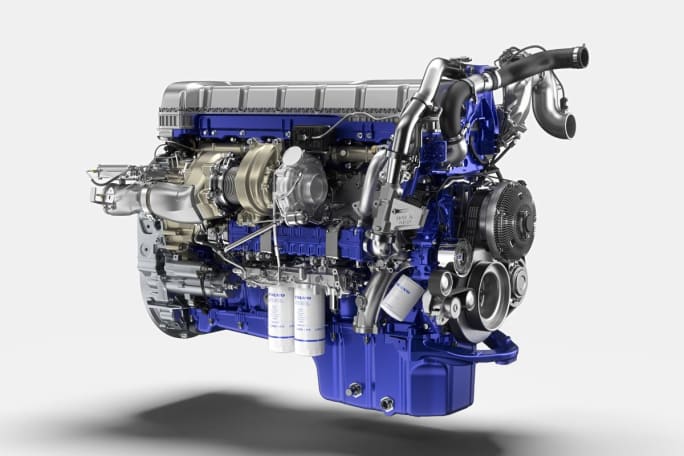
Volvo has announced a host of upgrades to its D13 diesel engine, which the OEM said further increase its fuel efficiency and reliability.
Photo: Volvo Trucks North America
“The advancements made in the latest generation of the Volvo D13 engine are nothing short of remarkable,” said Duane Tegels, product marketing manager for powertrain, Volvo Trucks North America. “While our previous generation D13, particularly the D13TC engine, performed extremely well, our dedicated team of engineers were able to seek out and successfully implement changes to make it even more reliable and efficient than ever before. When you’re designing a truck to change everything, every detail inside the engine matters. Where there are opportunities to make improvements, our team is focused on continuing to work towards decarbonizing our product offering.”
A New Variable Displacement Oil Pump
The integration of a variable displacement oil pump within an engine represents a pivotal advancement in optimizing oil pressure regulation while effectively minimizing parasitic losses. This pump employs adjustable vanes that dynamically adapt to the engine's oil pressure demands, ensuring a consistent and precise delivery of oil throughout various operating conditions. By dynamically altering the vane angles, the pump can tailor its output to match the engine's requirements, thereby preventing excess oil flow when not needed and maintaining optimal pressure when demanded. This adaptability not only enhances engine efficiency by reducing the energy required to drive the pump but also minimizes unnecessary strain on the engine components, resulting in improved fuel economy and reduced wear and tear over time.
No More Manual Transmissions
The latest iteration of the I-Shift transmission now features up to 30% faster shifting speeds compared to its predecessor, according to Volvo.
When Volvo Trucks introduced the I-Shift transmission in the North American market in 2007, it was met with skepticism. Today, the OEM noted, automated manual transmissions have become the industry standard, with traditional manual transmissions almost non-existent outside of extremely rare applications.
The efficiency gains and reliability achieved with the I-Shift have led Volvo Trucks to officially mark the end of its manual transmission offering, the company said.
The increase in shifting speeds on the newest version of the I-Shift has been achieved through an overhaul of the software, electronics, clutch mechanisms, and precision engineering, Volvo said. Additionally, Volvo engineers have redefined algorithms, reduced clutch throw, and introduced an enhanced clutch brake system to revolutionize gear shifts, significantly reducing the transition times between gears to ensure seamless power delivery. This improvement not only amplifies acceleration, but also minimizes energy loss during gear changes, resulting in heightened overall efficiency.
“Vehicle efficiency transcends mere engine performance; it encompasses the synergy between various components, where the transmission plays a pivotal role,” said Tegels. “The transmission's ability to optimize gear shifts, reduce energy loss, and harmonize power delivery significantly influences overall vehicle efficiency, showcasing that a holistic approach beyond the engine is vital in achieving optimal performance and fuel economy.”
More Equipment

More Trailer Data Through the Same Seven-Way [Video]
Can trucking’s standard seven-way connector handle more cameras and trailer data? Grote’s Adam Slade shows HDT how the company is using new technology with its 4See trailer system, not only to add a new backup camera but also to expand other capabilities — without adding another connection.
Read More →
Grote: More Cameras, Same Seven-Way Connector
The next-generation 4See rear-view backup camera from Grote uses the standard seven-way connector and supports additional cameras and other trailer data.
Read More →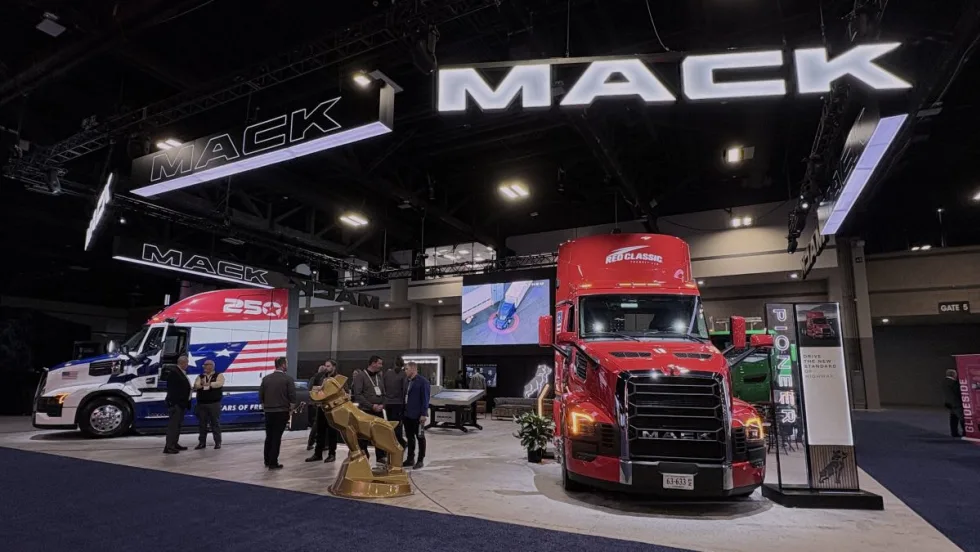
Trucks at ATA's 2026 MC&E in Charlotte, North Carolina [Photos]
From rigs decked out in patriotic America's 250 paint schemes to autonomous trucks and more, check out these photos from ATA's 2026 Management Conference & Exhibition.
Read More →
Help HDT Find Trucking’s Top Products
Have you come across a new product that could make a difference for trucking fleets? Nominate it for HDT’s 2027 Top 20 Products Awards by November 9.
Read More →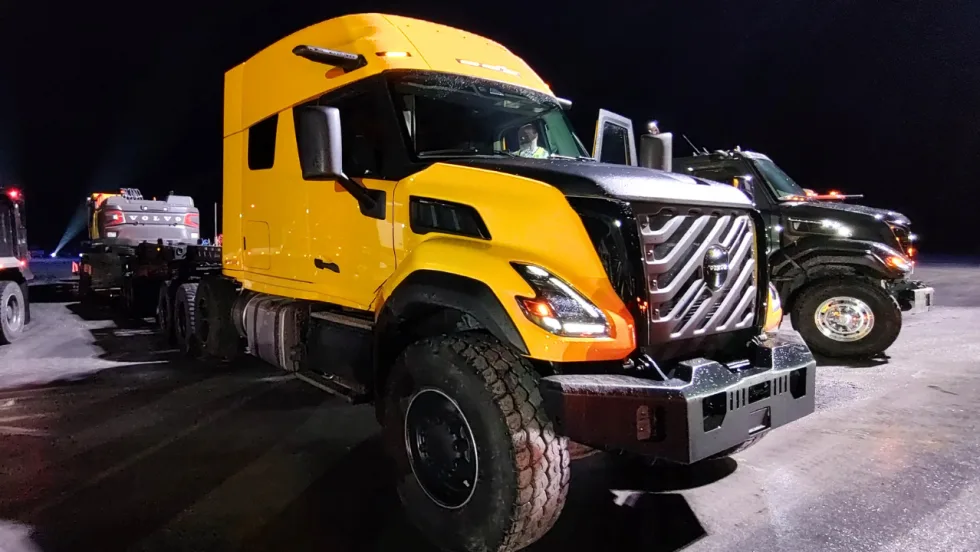
Volvo Unveils New VNX Heavy-Haul and Vocational Truck
Volvo Trucks has launched the VNX, a new vocational truck also available as a tractor in day cab and two sleeper configurations, with one heavy-haul model. The Volvo VNX is powered by Volvo's D13 platform, which delivers up to 540 horsepower and 1,950 pound-feet of torque and is EPA 2027-compliant.
Read More →
How GP Transco Cuts Trucking Fuel Costs, a Tenth of a Gallon at a Time
What’s another tenth of a mile per gallon worth? GP Transco shares how equipment upgrades and driver coaching turn small gains into meaningful fuel savings.
Read More →
Electric Yard Tractors Move Beyond Pilots
Operating-cost savings have overtaken sustainability goals as the leading reason surveyed fleets are adopting battery-electric terminal tractors, according to new NACFE research.
Read More →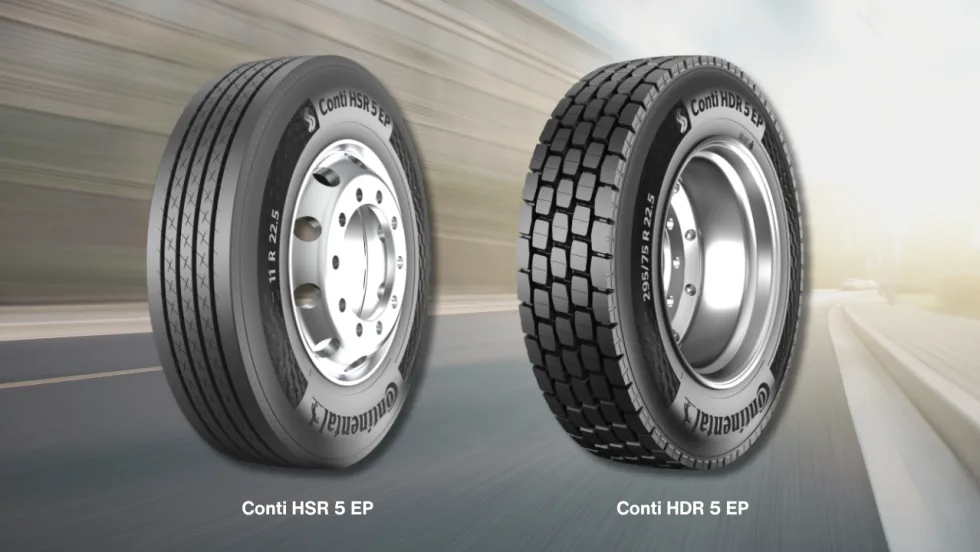
Continental Introduces New Regional Truck Tires
Continental says its new Generation 5 steer and drive tires for regional operations offer longer tread life, with estimated mileage gains of 22% and 19%, respectively.
Read More →
Tekmodo Introduces CargoBright Brand for Translucent Trailer Roofs
CargoBright is designed to diffuse daylight across the cargo area while performing as a working vehicle roof.
Read More →
Fleet Economics Shape Electric Truck Outlook
ACT Research expects costs, charging infrastructure, and technology improvements to drive zero-emission commercial vehicle adoption as federal regulations and incentives retreat.
Read More →