





Bringing the Fleet Perspective to Self-Driving Trucks [Video]
California’s Autonomous Truck Bill Passes Senate, Goes to Governor
The California State Senate this week passed AB 318, a bill that, if signed into law by Gov. Gavin Newsom, would ban driverless autonomous trucks on the state’s roads.
September 12, 2023
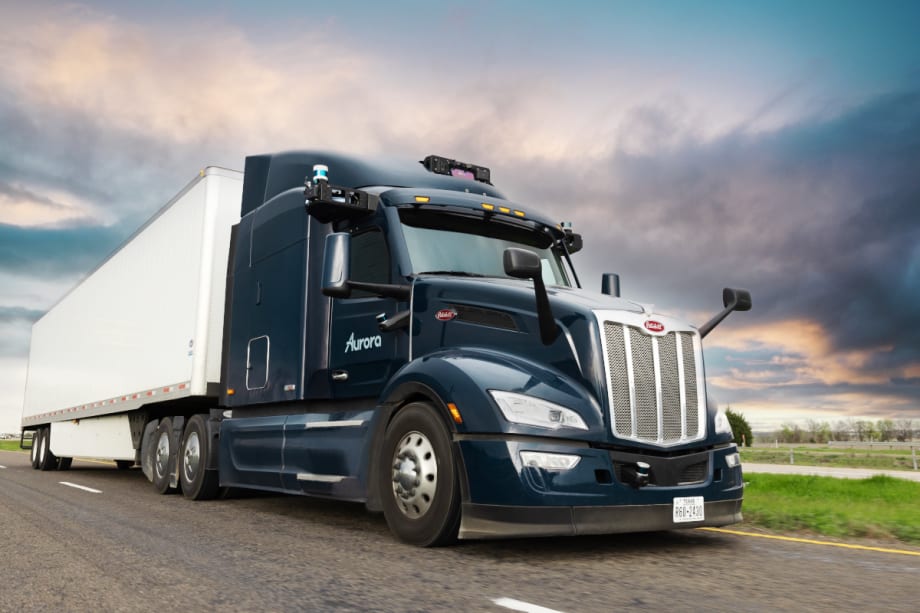
Aurora is one of the autonomous-truck companies urging Gov. Newsom to veto a bill that would increase restrictions on autonomous vehicles over 10,000 pounds in the state.
Photo: Aurora Horizon
4 min to read
The California State Senate this week passed a bill that, if signed into law by Gov. Gavin Newsom, will ban driverless autonomous trucks on the state’s roads. Basically, Assembly Bill 316 prohibits autonomous trucks weighing 10,001 pounds or more from using California roads if they do not have a driver on board.
However, media reports indicate that a veto is likely. A top business official in the Newsom administration wrote to lawmakers last month that the bill hampers California’s competitiveness and undermines existing oversight.
According to California legislative documents, existing law authorizes the operation of an autonomous vehicle on public roads for testing purposes by a driver who possesses the proper class of license for the type of vehicle operated, if specified requirements are satisfied.
California law already prohibits the operation of an autonomous vehicle on public roads, even for testing, until the manufacturer submits an application to the Department of Motor Vehicles and that application is approved.
The new law, if signed, will:
Mandate a manufacturer of an autonomous vehicle report any collision on a public road involving one of its autonomous vehicles with a GVW over 10,000 pounds that is operating under a testing permit within 10 days of the collision if it resulted in damage of property, bodily injury, or death.
Mandate a manufacturer of an autonomous vehicle annually submit to the state DMV specified information regarding the deactivation of the autonomous mode for autonomous vehicles over 10,000 pounds that were operating on public roads under a testing permit.
Prohibit the operation of an autonomous vehicle with a gross vehicle weight of more than 10,000 pounds on public roads for testing purposes, transporting goods, or transporting passengers without a human safety operator physically present in the autonomous vehicle at the time of operation.
Support for AB 316
Advocates of the bill included the California Labor Federation and the International Brotherhood of Teamsters, which issued a statement applauding the Senate’s passage of the bill and encouraging Newsom to sign the bill into law.
“AV companies do not care about the safety and well-being of Californians. There are hundreds of thousands of trucking jobs in jeopardy due to automation in our state, and that’s a real problem that needs to be addressed now,” said Lorena Gonzalez, California Labor Federation executive secretary-treasurer. “AB 316 has seamlessly passed through the California Legislature with strong bipartisan support because safety and good jobs are issues everyone can get behind.”
Chris Griswold, president of Teamsters Joint Council 42, said opposition to the bill came from out-of-touch middle-class Californians who do not understand that more than 200,000 people in the state are employed as truck drivers.
Opposition to AB 316
The Autonomous Vehicle Industry Association issued a statement after AB 316 passed the California Senate urging the governor to veto the bill.
“We are disappointed to see AB 316 pass the California Senate. The Department of Motor Vehicles and Governor’s Office of Business and Economic Development were correct that AB 316 undermines oversight of expert regulators in California," said AVIA Executive Director Jeff Farrah. "AB 316 will also lock in the unacceptable safety status quo on the state’s roads and cause California to miss out on the supply chain benefits of autonomous trucking,"
Autonomous vehicle companies and representatives, according to Tech Crunch, point out the 5,788 truck crash fatalities that occurred in 2021, a 47% increase over 10 years. They compare zero fatalities caused by AV trucks in over two years of reporting and tens of millions of miles driven on public roads.
Successful AV Testing
Earlier this year, the state’s DMV released details from an annual report that tracks the results of companies with a permit to test autonomous vehicles in California (both cars and trucks). The results reported were from a period spanning Dec. 1, 2021, to Nov. 30, 2022.
The DMV reported test vehicles traveled 5.7 million miles in autonomous mode on California’s public roads during the reporting period – 5.1 million miles with a safety driver and 622,257 miles of driverless testing. The total miles driven increased by more than a million miles from the previous reporting period.
According to a February statement from the DMV, the annual report included the total number of disengagements, the circumstances or testing conditions, the location, and the total miles traveled in autonomous mode on public roads for each permit holder. Disengagements can occur when a failure of the technology is detected or when the safety driver needs to take immediate control of the vehicle.
More Safety & Compliance
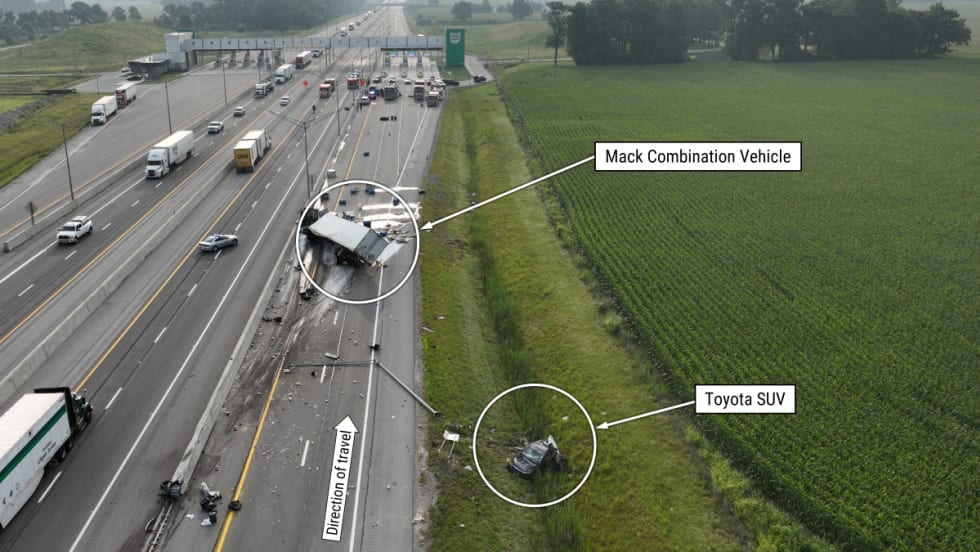
Fatal Crash Exposes Toll Plaza Risks
An NTSB investigation found that last-minute lane changes and large speed differences at an Ohio toll plaza created a hazard the truck driver couldn't avoid in time.
Read More →
When Language Stops the Truck: The Return of ELP Out-of-Service Orders
English language proficiency rules for commercial drivers aren’t new, but renewed out-of-service enforcement has raised the stakes. Here’s what carriers need to know before a driver reaches a roadside inspection.
Read More →
Sponsored•October 6, 2026
A Camera Isn't a Safety Program. Here's What Brokers Are Screening for Now
Footage alone may not be enough to pass broker vetting processes. Here's what counts as a defensible safety program now.
Read More →

Marijuana and Trucking’s Drug-Testing Dilemma
Marijuana is getting stronger, laws are changing, and drug tests still can’t reliably establish impairment. What does that mean for truck drivers and the fleets that employ them?
Read More →
PrePass, Kodiak Connect Driverless Trucks to Roadside Enforcement
The system will allow enforcement agencies to verify Enhanced Inspection information and decide whether Kodiak’s autonomous trucks can bypass roadside screening sites.
Read More →
From One Generation to the Next: How Mentorship Builds Safer Truck Drivers
After three decades in trucking, Harold Perry shares what he's learned about driver safety, mentorship, and helping the next generation build confidence behind the wheel.
Read More →
FMCSA Pauses Biennial-Update Enforcement Amid Motus Transition
Carriers whose updates were due on or after June 1 have more time, while FMCSA works to stabilize its new registration system and warns of phishing sites impersonating its new carrier registration system, Motus.
Read More →
ZF Expands Commercial Vehicle Push in North America
ZF is expanding its North American commercial-vehicle presence with new transmission applications, electrification, trailer technology and autonomous-driving systems.
Read More →
Truck Drivers Need More Than Another Alert
Fleets have more visibility into truck health, safety events, and driver activity than ever. The next challenge is turning all that information into useful guidance for the person who has to decide what to do next.
Read More →
Tesla Wants a Self-Driving Semi. Are Cameras Enough?
Could Tesla’s camera-only autonomous driving technology work on an 80,000-pound Semi? In this commentary, HDT's Deborah Lockridge takes a look at Tesla, Cybercab, and how autonomous trucks see the road.
Read More →