




Driver Qualification Files, Equipment Compliance Among Fleet Challenges in Survey
Fleet managers are continuing to face the day-to-day challenges of staying up to date with regulatory changes and improving driver knowledge and skills, according to a J.J. Keller survey.


According to a survey of fleet managers, keeping up with regulatory changes and improving driver knowledge are key challenges.
Photo: Canva
Among fleet managers' biggest challenges are the day-to-day challenges of staying up to date with regulatory changes and improving driver knowledge and skills, according to a recent survey — with drivers knowing how to safely operate a specific vehicle making a big jump in priority compared to last year.
The study, The State of Fleet Management: Insights on Priorities for Today’s Fleet Managers, is based on a survey fielded in February 2023 and is the third such study conducted by the J.J. Keller Center for Market Insights, the research arm of J.J. Keller & Associates.
Survey respondents are trucking fleets, both for-hire and private. In terms of size, 67% were less than 25 trucks, 17% were 25-99 trucks, and 17% were 100+ trucks.
“Until you wear the shoes of a fleet manager, there is no way to truly understand the unique challenges in safety," said Joshua Lovan, business industry advisor at J.J Keller. "Today’s fleet managers are responsible for driver coaching, injuries, accidents, and there are no excuses for lack of preparation."
Study Highlights
The number of fleet managers who believe it’s most important for their drivers to safely and correctly operate their specific vehicle types increased 39% from 2022.
Knowing quickly when a vehicle or trailer is damaged or non-compliant jumped 24% from 2022.
Having all driver files together in one place so fleet managers can quickly and easily prove compliance increased 13% from 2022.
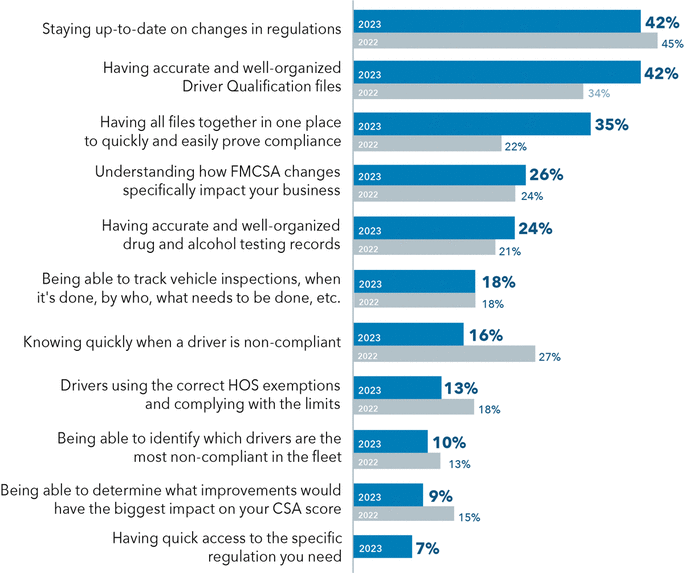
Of fleet managers surveyed, 42% report staying up to date on regulatory changes is a major challenge.
Chart: J.J. Keller Center for Market Insights
Keeping Up with Regulatory Changes
Forty-two percent of fleet managers who participated in the study stated that “staying up to date on changes in regulations” was the most important aspect of Federal Motor Carrier Safety Administration compliance.
Comments from respondents regarding the most challenging aspects of their job included, “compliance and keeping up with rule changes,” and, “ensuring that all vehicles are compliant at any given time.”
According to one respondent, this includes, “keeping up with the different OSHA or FMCSA requirements. Also keeping up with different state, city, and county guidelines regarding safety and DOT requirements.”
Another respondent commented that they struggled with “ensuring all required steps are completed for hiring drivers.”
Improving Driver Knowledge and Skills
As fleet managers continually assess and work to improve the knowledge and skills of their drivers, some areas were identified as more important than others.
Safely and correctly operating a specific vehicle type topped the list with 62% of respondents agreeing it was the most important driver knowledge and skill — a 39% increase over 2022, when distracted driving was the top of the list.
This was followed by knowing:
How to avoid injury while working and driving (28%)
The correct action to take in an accident (27%)
How to avoid distracted driving (26%)
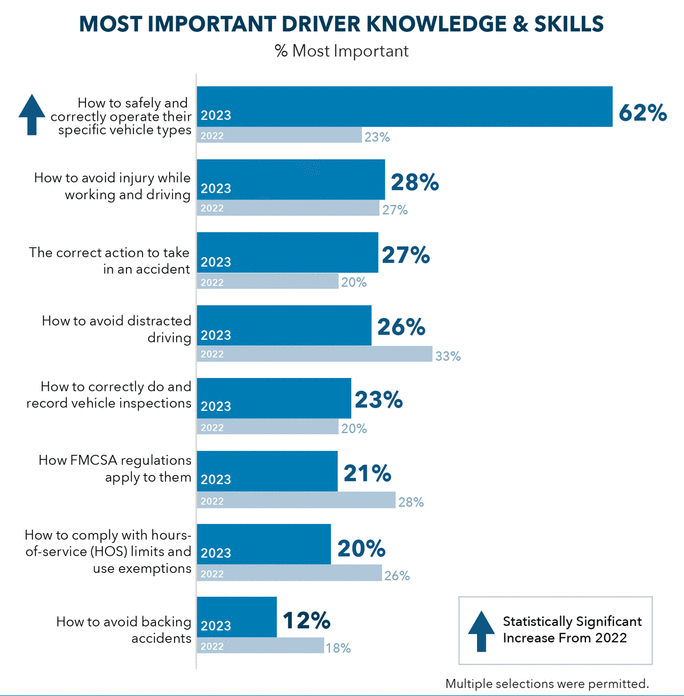
Fleet managers report having drivers trained to safely and correctly operate their specific vehicle type is important.
Chart: J.J. Keller Center for Market Insights
“Drivers will naturally respond more positively if their company’s goals are centered around safety, so it was no surprise that 63% of fleet managers believe their company mostly or completely emphasizes continuous learning,” said Lovan.
When it comes to training their drivers, respondents believe it’s most important that drivers apply what they learn in training (52%) and that the training is specific to their unique needs (45%). Being able to prove that the content was understood saw a 12% increase from 2022 to 2023.
However, 37% of respondents stated that they receive less than ideal support from their company for continuous learning.
Prioritization of Challenges
As the risk of “nuclear verdicts” and FMCSA audits continue to increase, fleet managers are likely to continue to prioritize staying up to date with regulatory requirements and improving driver knowledge and skills
“Driver safety and regulatory compliance were top trends in both the 2023 data and in our findings from previous years of research,” said Wendy Blezek Fleming, J.J. Keller customer and market insights manager. “We appreciate that ensuring safety for drivers and the public is a very important challenge as a fleet manager and applaud the efforts of our survey respondents to keep their teams and others safe.”
More Fleet Management
What Will ATA’s New Leader Bring to Trucking's Table?
Incoming President and CEO Mark Colson’s record in Alabama offers clues about his priorities and approach following Chris Spear’s abrupt departure as the head of the American Trucking Associations.
Read More →
Volvo, Waabi Start Commercial Autonomous Operations in Texas
Volvo VNL Autonomous trucks, powered by the Waabi Driver, are hauling freight directly to third-party facilities for a customer in Texas.
Read More →
Samsara Launches Custom AI Agent Builder
Agent Studio lets fleets create AI tools for hours-of-service monitoring, reporting and driver support, including agents that communicate by phone.
Read More →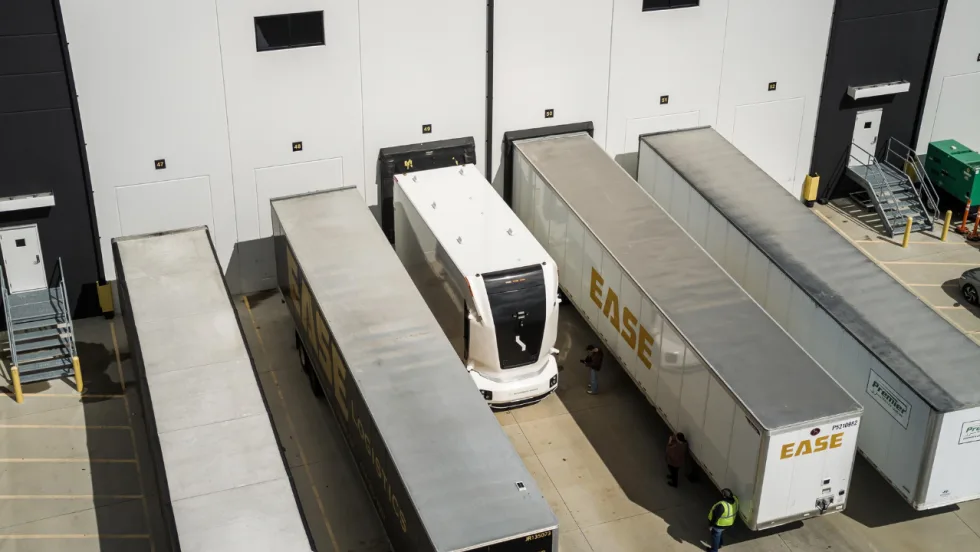
Einride Driverless Electric Trucks Begin Daily Freight Operations in Ohio
Two cabless electric trucks are hauling freight between EASE Logistics facilities in Marysville, Ohio, as part of a multi-state truck automation project.
Read More →
Geotab Links Fleet Card to Vehicle Data
The new card combines fuel discounts with telematics-based purchase controls. Geotab’s analysis also points to potential savings from choosing lower-priced fuel stops.
Read More →
How MFA Helps Protect Trucking Fleets
Multi-factor authentication adds protection when passwords are stolen. Here’s how it works and where fleets should start.
Read More →
How Better Freight Data Helps Trucking Teams Get Ahead of Disruption
Trucking and logistics teams have plenty of data. The problem is getting the right information in front of the right people soon enough to act. Better-connected data can help teams spot trouble earlier and make smarter decisions before small problems become big ones.
Read More →
Trimble: Taking Artificial Intelligence in Trucking Beyond Faster Tasks
At Insight 2026, Trimble executives argued that fleets may need to redesign workflows to get more from AI as it introduced new products and enhancements. AI’s value will depend on how fleets combine automation with their people's knowledge.
Read More →
Build a bulletproof fleet: Uniting ELDs and dash cams for total compliance
An ELD can prove compliance, but it cannot always prove what happened on the road. Discover how uniting accurate ELD data with AI-powered dash cam video can help your fleet strengthen compliance, defend against liability, protect drivers and reduce operational costs.
Read More →
Nominations Open for HDT Emerging Leaders
Heavy Duty Trucking is looking for accomplished trucking fleet professionals under 40 who are making an impact and helping lead the industry forward.
Read More →