





More on ZEVs at the port: FCEV Drayage Trucks Prove Themselves in LA Port Demonstration Project
Port of Los Angeles Awards $6 Million for Zero-Emission Drayage Trucks
Two trucking companies and their truck manufacturer partners are getting a big funding boost to speed up the transition to zero-emission drayage trucks serving the Port of Los Angeles.
December 20, 2022
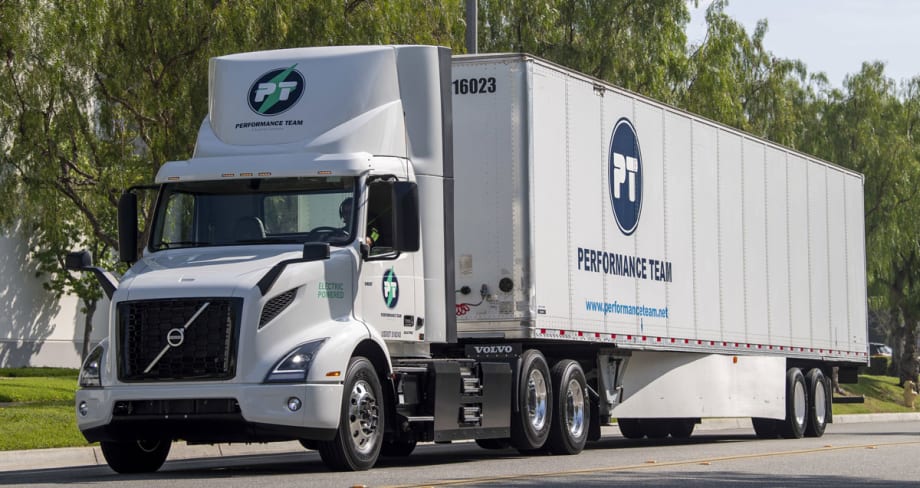
Performance Team is working with Volvo and investing more than $5.6 million to produce and deploy 10 battery-electric trucks serving the Port of Los Angeles.
Photo: Volvo Trucks North America
3 min to read
Two trucking companies and their truck manufacturer partners are getting a big funding boost to speed up the transition to zero-emission drayage trucks serving the Port of Los Angeles.
The Port of Los Angeles has awarded a total of $6 million in grants, which will defray the cost of putting 22 pre-production emissions-free models in port service during 2023.
Gardena-based MLI Leasing and El Segundo-based Performance Team will receive $3 million each — the maximum funding per trucking company available under the Port’s Zero Emission Truck Pilot Program.
Each carrier has partnered with a truck maker to qualify for the incentive. MLI is working with Peterbilt and investing more than $3.4 million to produce and deploy 12 battery-electric trucks.
Performance Team is working with Volvo and investing more than $5.6 million to produce and deploy 10 battery-electric trucks. Earlier this year, Performance Team ordered 126 Volvo VNR Electrics to service its short haul warehouse distribution routes. Its full order is scheduled to complete delivery by the third quarter of 2023.
All 22 will be on the road within the coming year. Each vehicle must make at least 50 drayage trips annually to Port of Los Angeles terminals.
The awards, approved by the Los Angeles Harbor Commission last week, represent the first distribution of Clean Truck Fund dollars by the Port of Los Angeles since April 1, when the San Pedro Bay ports began collecting $10 for every loaded 20-foot equivalent unit (TEU) container moving through the port by truck. The port expects to raise $45 million within the first 12 months and each subsequent year based on the current rate.
All CTF revenues will be used to offer incentives that accelerate the deployment of zero-emission trucks serving the San Pedro Bay ports. For the first three years, the Port has prioritized spending the money on:
Truck vouchers
Support for small fleets and independent owner-operators
Matching funds to support electric and clean energy fueling infrastructure
Advanced truck technologies
Innovative ZE concept trucks.
Progress will be reported annually.
More About the Port's Clean Truck Fund
The Clean Truck Fund rate is paid by cargo owners or their agents. Zero-emission trucks are permanently exempt. Trucks with low emissions of nitrogen oxides (low-NOx), in accordance with state standards, are temporarily exempt until Dec. 27, 2027, provided they are registered in the San Pedro Bay Ports’ Drayage Truck Registry by the end of 2022.
The program builds on the Port of Los Angeles' original Clean Truck Program, which port officials say has played a crucial role in reducing emissions of diesel particulate matter by 84%, sulfur oxides by 95%, and NOx by 44% from port-related operations since 2005. More information on the port’s current Clean Truck Program is available here.
While only 2007 or newer models are currently eligible to call at the port, more than half are 2014 or newer models. Effective Jan. 1, 2023, all trucks calling at the San Pedro Bay ports must be 2010 or newer models.
Still, 95% of the drayage fleet serving the port complex runs on diesel. The push to turn over the entire fleet to zero-emission models by 2035 is expected to yield greater clean air progress, including reducing greenhouse gas emissions from all port-related sources 40% below 1990 levels by 2030 and 80% below 1990 levels by 2050, according to the port.
The ports established GHG reduction targets in the San Pedro Bay Ports Clean Air Action Plan 2017 Update.
“This is just one of the incentives we are offering to accelerate zero-emission technology and drive stakeholder investment,” said Port of Los Angeles Executive Director Gene Seroka. “We have a long way to go, but with our private and public partners, we can reduce greenhouse gases and meet our 2035 goal of transitioning the entire fleet serving our port complex to zero-emission trucks.”
More Fuel Smarts

Why Diesel Price Relief Efforts May Fall Short
Diesel prices have eased from September’s record high, but doubts about additional Russian supply and limits on dyed-diesel tax relief mean trucking fleets still face expensive fuel. And prices could go higher.
Read More →
Why Small Fuel Savings Matter in Trucking
Can better fuel economy help pay for driver raises? In this podcast, GP Transco explains how small efficiency gains create room to reinvest in its people.
Read More →
How GP Transco Cuts Trucking Fuel Costs, a Tenth of a Gallon at a Time
What’s another tenth of a mile per gallon worth? GP Transco shares how equipment upgrades and driver coaching turn small gains into meaningful fuel savings.
Read More →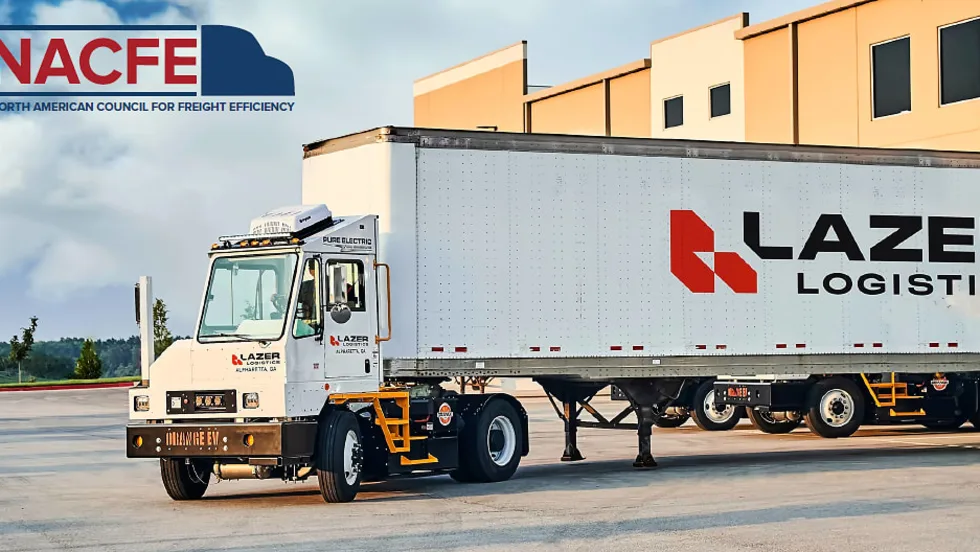
Electric Yard Tractors Move Beyond Pilots
Operating-cost savings have overtaken sustainability goals as the leading reason surveyed fleets are adopting battery-electric terminal tractors, according to new NACFE research.
Read More →
Geotab Links Fleet Card to Vehicle Data
The new card combines fuel discounts with telematics-based purchase controls. Geotab’s analysis also points to potential savings from choosing lower-priced fuel stops.
Read More →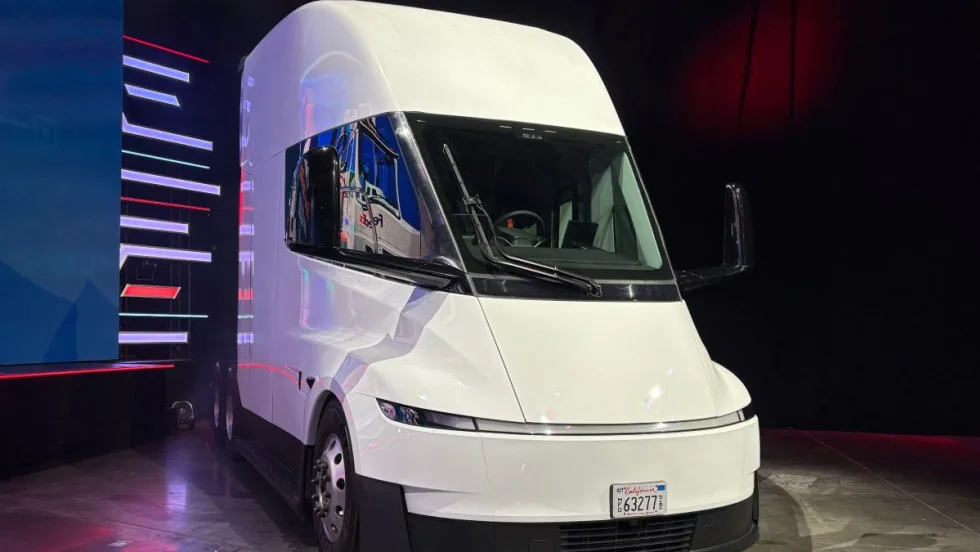
Fleet Economics Shape Electric Truck Outlook
ACT Research expects costs, charging infrastructure, and technology improvements to drive zero-emission commercial vehicle adoption as federal regulations and incentives retreat.
Read More →
Wex Adds Cardless Fuel Payments for Over-the-Road Customers
A new fuel card feature for Wex customers offers convenience and security.
Read More →
New California Law Could Shed Light on Electric Truck Prices
Why do battery-electric Class 8 trucks remain so expensive? A California bill signed by Gov. Gavin Newsom would give fleets and state agencies more visibility into what manufacturers charge.
Read More →
How Volvo Updated Its D13 for EPA 2027 [Watch]
Volvo’s updated D13 promises lower emissions without sacrificing performance or fuel economy. Take a closer look at what changed inside the engine in this HDT Spotlight video.
Read More →
Diesel Price Spike Shortens Payback for Natural Gas Trucks, Report Says
Energy Vision estimates fleets could recover the higher purchase price of an RNG-fueled Class 8 tractor in 1.3 to 2.8 years under current fuel-price scenarios.
Read More →