




EPA Publishes Stringent New-Truck Emissions Regulations
EPA said its new emission standards for oxides of nitrogen (NOX) from medium- and heavy-duty on-highway engines are more than 80% stronger than current standards.


The NOx regulations published Dec. 20 are just the first of three major actions being taken under EPA’s Clean Trucks Plan.
Photo: Mack Trucks (from files)
The U.S. Environmental Protection Agency on Dec. 20 finalized what it called “the strongest-ever national clean air standards to cut smog- and soot-forming emissions from heavy-duty trucks beginning with model year 2027.”
The new rule establishes revised emission standards for oxides of nitrogen, or NOx, from medium- and heavy-duty on-highway engines. EPA said the new regulations are more than 80% stronger than current standards.
This final rule will reduce emissions from heavy-duty engines that contribute to ambient levels of ozone, particulate matter, NOx, and carbon dioxide.
“Control of Air Pollution from New Motor Vehicles: Heavy-Duty Engine and Vehicle Standards” is the first update to clean air standards for heavy-duty trucks in more than 20 years, according to the EPA. Those emissions regulations were phased in over the first decade of the 2000s. They were so challenging that they essentially drove Caterpillar out of the truck engine business and resulted in a major loss of market share for Navistar.
The new standards just published require heavy-duty commercial vehicles to limit NOxemissions to 0.035 grams per horsepower-hour during normal operation, 0.050 grams at low load, and 10.0 grams at idle.
The new rules cover a wider range of heavy-duty engine operating conditions than the current standards.
They also require these more stringent emissions standards to be met for a longer period of time of when these engines operate on the road. The new rules increase useful life of governed vehicles by 1.5 to 2.5 times and will yield emissions warranties that are 2.8 to 4.5 times longer. These longer useful life and warranty periods guarantee that as target vehicles age, they will continue to meet EPA’s more stringent emissions standards for a longer period of time, according to the agency.
The rule also requires manufacturers to better ensure that vehicle engines and emission control systems work properly on the road. For example, manufacturers must demonstrate that engines are designed to prevent vehicle drivers from tampering with emission controls by limiting tamper-prone access to electronic pollution controls.
EPA said the rule also includes “a balanced approach to engine derates related to the SCR emission control system.” The final SCR inducement program requires engines to provide more advance notice for operators that their SCR system is not working properly, which EPA believes will encourage ongoing maintenance while limiting frustration due to unexpected engine derates. The requirements for electronic controls and SCR inducements are expected to reduce the risk of operators completely disabling emission control systems and further ensure that the new, emissions standards continue to be met during in-use operations.
EPA projects that by 2045, this final rule will reduce NOx emissions from the in-use fleet of heavy-duty trucks by almost 50%.
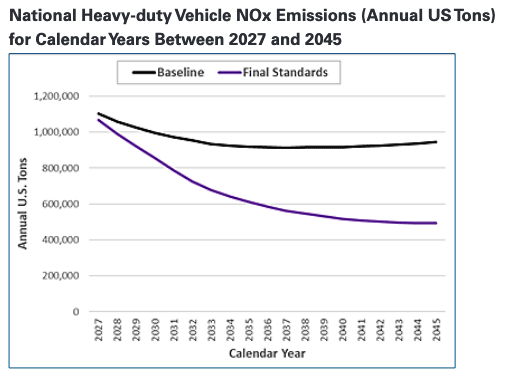
EPA projects that by 2045, this rule will reduce NOx emissions from the in-use fleet of heavy-duty trucks by almost 50%.
Source: EPA
Final Emissions Rule vs. Proposed Rule
EPA’s proposed emissions rule, which it published in March, outlined two options for the NOx program:
Proposed Option 1 was the more stringent option, and it included new standards and other program elements starting in MY 2027, which were further strengthened in MY 2031.
Proposed Option 2 was the less stringent option, with new standards and requirements implemented fully in MY 2027.
The final numeric NOx standards and testing requirements are largely consistent with the proposed Option 1 for model year 2027, noted the EPA.
In comments on the original proposal, associations and companies involved in trucking had very specific concerns about the achievability of the new standards, especially Option 1.
For instance, the American Trucking Associations said fleets are concerned that manufacturers will not be capable of producing Option 1-compliant products that meet 0.02 g/bhp-hr in 2031. “Stringency levels teetering a notch above zero cause great hesitation for fleets that can ill afford more false-positive NOx sensor readings and greater potential for manufacturer recalls," ATA said. "After all, a truck in a service bay is an unproductive truck — even if such truck is still under a warranty for repairs.”
Several commenters pointed out that while the California Air Resources Board has certified a limited number of natural gas and liquefied petroleum gas heavy-duty engine families that can achieve a 0.02 g/bhp-hr NOx limit, these engines do not incorporate NOx sensors, and natural gas vehicles are not widely used in the freight sector.
Also singled out for criticism was EPA’s low-NOx demonstration done at SWRI, which did not take into account the wide variety of engine ratings and exhaust configurations used in the industry.
“Broadly speaking, EPA’s assumption that its proposed Option 1 standards and requirements are fully feasible is a fallacy," the Truck and Engine Manufacturers Association said in its comments on the original proposed rule. "Moreover, that fallacy is premised on only one set of data –– in some instances just one data point –– from one still-evolving prototype engine used in one not-fully-successful experiment. That is the sum and substance of the basis for EPA’s incorrect assumption that manufacturers can design and build engine systems to meet a NOx standard starting at 0.02 g/bhp-hr, and ending at 0.04 g/bhp-hr at the 800,000 mile mark, without the need to replace any emissions-related components.”
Another concern was the availability of NOx sensors that would be up to the task. Current sensors, they said, are not. In fact, Daimler Truck pointed out, sensor suppliers are rapidly moving towards electrification technology, rather than continuing to invest in diesel technology.
“Notably, no vehicle has been demonstrated that can meet EPA’s proposed standards when considered in their totality (including GHG standard compliance, exposure to real world maintenance and fueling practices, installation on a real vehicle with acceptable Noise, Vibration and Harshness (NVH) profiles, drivability characteristics, etc.),” Daimler said in its comments on the EPA proposal.
The EPA, responding to those comments in its final rule, said the final standards are based on its projection of the future performance improvements of emission control technologies such as cylinder deactivation, heated DEF dosers, dual-SCR aftertreatment, and NOx sensors that it used on the test engine at SWRI. It admitted that “in some cases [these are] technologies that are currently available as prototypes but are not necessarily in production yet,” but that “based on the improvements we have seen in recent years, that it is reasonable to expect there will be additional improvements beyond what was demonstrated with the Stage 3 engine.”
New Rules, New Challenges
“The rule establishes many new challenges for manufacturers and suppliers but also ensures diesel’s place in the future for trucking,” said Diesel Technology Forum Executive Director Allen Schaeffer in a statement.
Schaeffer also pointed out that the current generation new diesel trucks are more fuel-efficient and emit less than 1/60th the emissions of 2000 models. They’re already near zero emission for both oxides of nitrogen (NOx) and particulate matter. Of all commercial trucks in operation today, 53% are of this newest generation.
“The further improvements in diesel engines anticipated in the outcome of this final rule and the ability of truckers to invest in new trucks will be fundamental to ensuring progress toward meeting both local clean air and national climate goals,” Shaeffer said. “Without continued turnover in the fleet, older generations of technology with relatively higher emissions will stay in service longer, thereby delaying benefits to disadvantaged communities and contributing to worse air quality all around the country.”
The Truck and Engine Manufacturers Association, which represents manufacturers of medium-and heavy-duty commercial vehicles, internal combustion engines, and zero-emission powertrains, said while the group has a long history of working collaboratively with EPA, and engaged with the agency throughout this regulatory process to provide data and insights,
"While we are still in the process of reviewing the details of the newly published NOx emissions rule, it is clear the rule is very stringent and will be challenging to implement,” said EMA President Jed Mandel in a statement. “Our members are fully committed to working with the EPA and other stakeholders for its successful implementation.
“Ultimately, the success or failure of this rule hinges on the willingness and ability of trucking fleets to invest in purchasing the new technology to replace their older, higher-emitting vehicles.”
In fact, a recent report issued by ACT Research found that a significant “prebuy” of Class 8 trucks is likely before the EPA's next round of emissions regulations targeting diesel exhaust emissions go into effect in 2027.
As Todd Spencer, president of the Owner-Operator Independent Drivers Association, said in a statement, “If small business truckers can’t afford the new, compliant trucks, they’re going to stay with older, less efficient trucks, or leave the industry entirely. Once again, EPA has largely ignored the warnings and concerns raised by truckers in this latest rule.”
On the other hand, Eaton praised the rule in a news release, noting that “Eaton’s Vehicle Group and eMobility business currently offer several technologies that can help manufacturers meet the new emissions regulations, including variable valve actuation for engines, 48-volt systems and aftertreatment thermal management solutions.”
Accelerating a Zero-Emissions Future
EPA noted that most of the comments received on its proposal called on EPA to do more to reduce emissions from trucks and truck engines, especially by speeding up the transition to electric vehicles.
“This is just the first action under EPA’s Clean Trucks Plan to pave the way toward a zero-emission future,” said EPA Administrator Michael Regan in a news release. “These rigorous standards, coupled with historic investments from the Inflation Reduction Act and the Bipartisan Infrastructure Law, will accelerate President Biden’s ambitious agenda to overhaul the nation’s trucking fleet, deliver cleaner air, and protect people and the planet.”
This is the first of three major actions being taken under EPA’s Clean Trucks Plan. By the end of March 2023, EPA intends to release the proposals for the remaining two steps in the Clean Trucks Plan:
Proposed “Phase 3” greenhouse gas (GHG) standards for heavy-duty vehicles beginning in Model Year 202
Proposed multipollutant standards for light- and medium-duty vehicles beginning in Model Year 2027.
These additional rulemakings will consider recent Congressional action, including resources for electrification from the Inflation Reduction Act and the Bipartisan Infrastructure Law.
Now that the EPA has taken this final action on reducing NOx emissions nationally from heavy-duty trucks, the agency will prioritize issuing decisions on the three pending heavy-duty program waiver requests from the State of California in early 2023.
This rule does not include final action regarding the proposed targeted updates to the existing Heavy-Duty Greenhouse Gas Emissions Phase 2 program (HD GHG Phase 2). The EPA said it intends to consider potential changes to certain HD GHG Phase 2 standards as part of the Phase 3 GHG rulemaking.
Corrected Dec. 22 to eliminate an instance of referring to NOx as "nitrous oxides" instead of the correct "oxides of nitrogen."
Also of Interest: 9 Keys to Drawing a Roadmap to Zero Fleet Emissions
More Fuel Smarts
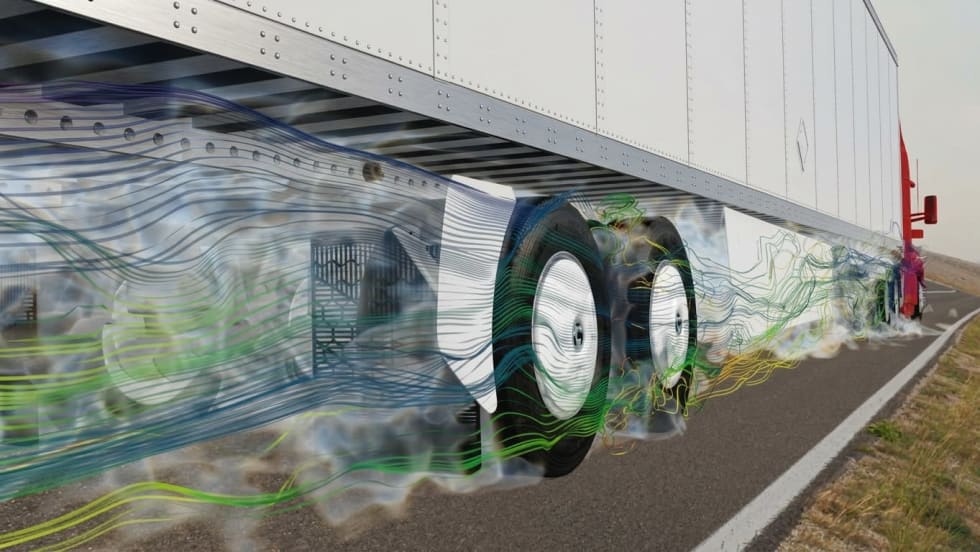
FlowBelow Redesigns Trailer AeroSlider to Cut Fuel Use
The lighter trailer aerodynamic system installs in less than 45 minutes, according to the company, with potential payback in under a year depending on fuel prices and trailer mileage.
Read More →
Why Diesel Price Relief Efforts May Fall Short
Diesel prices have eased from September’s record high, but doubts about additional Russian supply and limits on dyed-diesel tax relief mean trucking fleets still face expensive fuel. And prices could go higher.
Read More →
Why Small Fuel Savings Matter in Trucking
Can better fuel economy help pay for driver raises? In this podcast, GP Transco explains how small efficiency gains create room to reinvest in its people.
Read More →
How GP Transco Cuts Trucking Fuel Costs, a Tenth of a Gallon at a Time
What’s another tenth of a mile per gallon worth? GP Transco shares how equipment upgrades and driver coaching turn small gains into meaningful fuel savings.
Read More →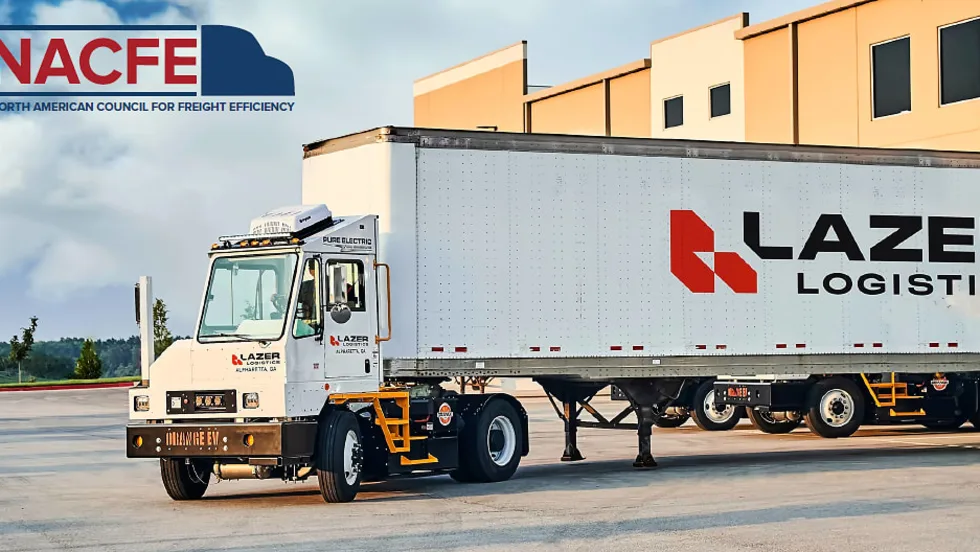
Electric Yard Tractors Move Beyond Pilots
Operating-cost savings have overtaken sustainability goals as the leading reason surveyed fleets are adopting battery-electric terminal tractors, according to new NACFE research.
Read More →
Geotab Links Fleet Card to Vehicle Data
The new card combines fuel discounts with telematics-based purchase controls. Geotab’s analysis also points to potential savings from choosing lower-priced fuel stops.
Read More →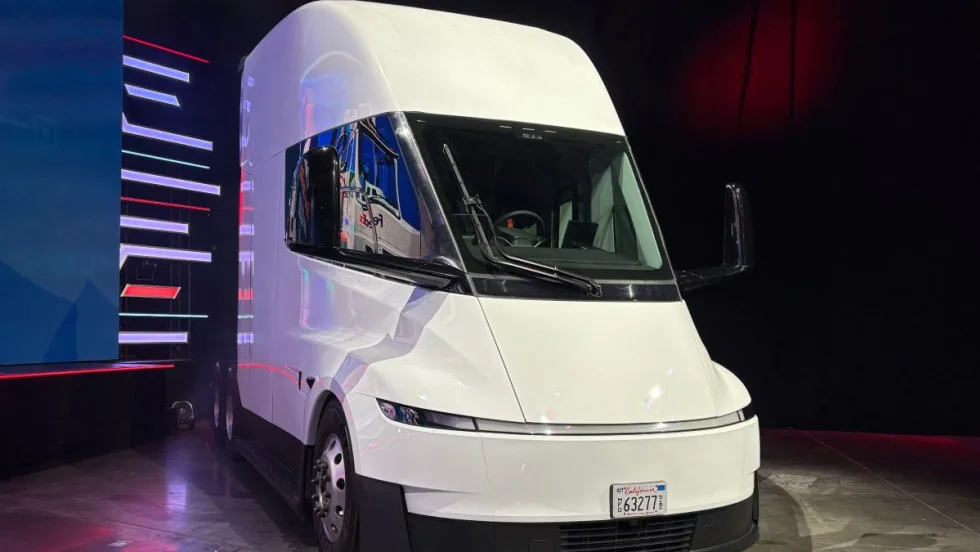
Fleet Economics Shape Electric Truck Outlook
ACT Research expects costs, charging infrastructure, and technology improvements to drive zero-emission commercial vehicle adoption as federal regulations and incentives retreat.
Read More →
Wex Adds Cardless Fuel Payments for Over-the-Road Customers
A new fuel card feature for Wex customers offers convenience and security.
Read More →
New California Law Could Shed Light on Electric Truck Prices
Why do battery-electric Class 8 trucks remain so expensive? A California bill signed by Gov. Gavin Newsom would give fleets and state agencies more visibility into what manufacturers charge.
Read More →
How Volvo Updated Its D13 for EPA 2027 [Watch]
Volvo’s updated D13 promises lower emissions without sacrificing performance or fuel economy. Take a closer look at what changed inside the engine in this HDT Spotlight video.
Read More →