




Navistar Pursues Technology Path to Cleaner, Automated, Connected Future
Now that Navistar has “a solid owner that thinks long-term,” its new CEO is excited to bring the strengths of the truck maker together with a technology infusion from parent company Traton to bring about a zero-carbon future by 2040 — and autonomous trucks, too.


Navistar President and CEO Mathias Carlbaum sees 2022 as a decisive year for the company.
Photo: Navistar
Now that Navistar has “a solid owner that thinks long-term,” its new CEO is excited to bring the strengths of the truck maker together with a technology infusion from parent company Traton to bring about a zero-carbon future by 2040 — and autonomous trucks, too.
In a wide-ranging virtual roundtable with trucking reporters on Feb. 4, Mathias Carlbaum talked about his impressions since becoming president and CEO of Navistar back in September and about the path forward.
Previously executive vice president of commercial operations at Traton’s Scania, Carlbaum had been leading the post-merger management of Navistar on behalf of the Traton Group. German-based Traton completed its merger with Navistar last July.
He described 2022 as “very decisive for Navistar,” as the company determines its priorities for the future and works on bringing together the two companies.
“Important decisions and trends are being set,” he said, including the “future of emissions, technologies, everything that’s really boiling around us now. 2022 is a year when a lot of the parameters will be set by the market and at Navistar.
“All the decisions we’re making today are to pave our future,” he said.
“I think this is the biggest opportunity in the trucking and transportation sector in the world right now. Building on what Navistar’s been and putting us where I believe we should be in the future is a fantastic opportunity.”
Navistar's Technology Focus
Carlbaum emphasized Traton bringing more advanced technology to the mix. He used the acronym ACES for pillars for vehicles of the future – automated, connected, electric — and, where automotive companies say the “S” stands for shared, for Traton he said it stands for sustainability.
The “A,” he said, will actually come last. But when it comes to autonomous truck technology, Navistar is the one ahead in the group, thanks to its partnership with TuSimple, which just announced it will be moving freight on a fully automated, “driver-out” trucking route for Union Pacific Railroad. “What we see in the U.S. is it’s going much faster and will be faster to market than for instance, Europe.
“We clearly see autonomous is going to be first-out here in North America, perhaps at the same time as in China.”
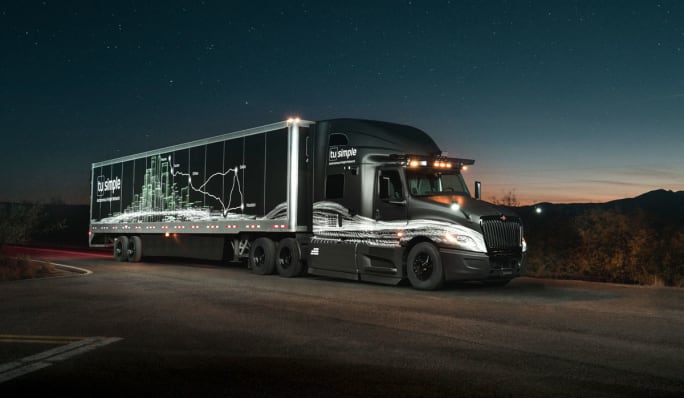
Navistar is pursuing autonomous trucking through its partnership with TuSImple.
Photo: Navistar
On a related note, he talked about the importance of data and OnCommand Connection. The data coming from trucks can be integrated into customer logistics systems and maintenance systems, and it also informs the development process at Navistar.
"One of the biggest opportunities is predictive maintenance and predictive repairs. Some of it based on AI, some of it based on sensors." The data offers the ability to do the right maintenance at the right time, which means more uptime. Not only do trucks have to stop at dealers less, the data also enables the dealerships to be more prepared and get the truck out the door faster.
"Uptime is the currency today. To drive uptime in our customers' demanding operations is key today and it will be even much more as we move into future technologies."
When it comes to green technology, he said, he’s found that the U.S. may be slightly behind the curve compared to other countries. But he believes that will change rapidly, noting the rapid adoption of and investment in electric vehicles coming from the automotive side, as well as the increasing role of corporate sustainability targets.
Although Navistar “operates with immense autonomy and local decision power” within the Traton Group, he said, “we tap into [Traton’s] huge portfolio of technology. The group has invested heavily; over 50% of the R&D investments are to future technology.”
Explaining that Traton parent Volkswagen is very committed to global CO2 reduction and the development of battery-electric technology, Carlbaum said, “our commitment here is to work for a better future for coming generations. It’s truly the moment when we as a global organization and a player in NA can really drive a shift, a transformation, toward clean technology and safety driven.”
The company’s commitment toward the future, he said, will lead to a time when battery-electric vehicles “make such a big [total cost of ownership] case for the customers that the tipping point will come sooner than ever expected.”
Betting on Battery-Electric
Navistar’s launch last year of a battery-electric version of its medium-duty MV is just the beginning of the company's march toward a zero-carbon future.
Right now, midrange trucks like the eMV are the best use case for battery-electric trucks, he said. “There are applications and routes that are viable already today,” including the eMV and school buses. “Some forward-leaning operators are starting on a small scale to get used to it and prepare for two, three years down the road.”
Initially, adoption must depend on government grants and other subsidies to help overcome that initial price hurdle.
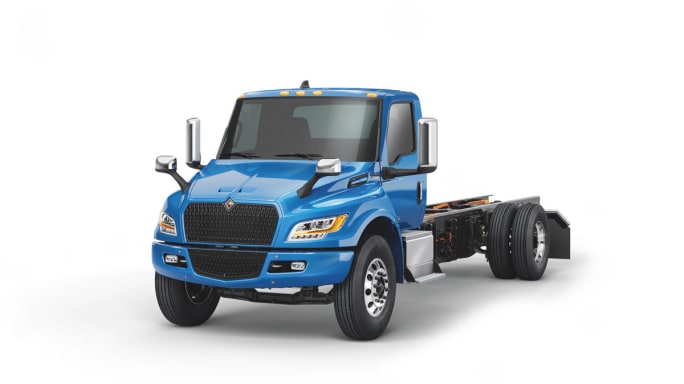
The battery-electric International eMV addresses the current best use case for commercial BEVs.
Photo: Navistar
The company is also bullish on battery-electric for Class 8 trucks down the road.
“We see a range of 450 miles, more or less, will take one mega of battery capacity, which we will be having not that far away – three or four years," Carlbaum said. "But on top of that, you need the mega-chargers, which we see coming in ’04 or ’05. You drive about five hours, charge for 30-40 minutes,” then you’re back on your way. But a consistency, a stability, in routes will be a factor.
He predicted that the 2027-2028 time frame will see “the real tipping point for long haul, where the technology, the batteries, the charging infrastructure, all comes together.”
Carlbaum was less enthusiastic about hydrogen for long-haul trucks.
“We do believe there is a use case for hydrogen. Hydrogen, technically there’s less energy efficiency in the conversion. But for certain very long distances, and the flexibility of shorter and longer [irregular routes], hydrogen will have a case.” Even so, he said, “we believe that case will be closed over time with the advancement in battery technology.”
When asked what the push to electrification means for continuing development in internal combustion engine, he said, “That makes us scratch our heads in the board room every day,” he said, as they balance the need for R&D well into the future with nearer-term development needs.
Obviously internal-combustion engines will still be a major force for some time, Carlbaum said. The peak of ICE engine use is still a way ahead of us before we get to that 2040 zero-carbon target date.
However, he said, thanks to technology, “there is huge potential for improvements in fuel consumption. Dealers say the potential for lowering fuel consumption on the current platform is immense, and that’s also a contribution to less emissions and less greenhouse gases.”
From Looking Back to Looking Ahead
Carlbaum said Traton’s commitment to the future allows for better long-term planning — “something that has been a bit more difficult in the past for Navistar given the state the company was in. Now we have a solid owner with long-term commitment.”
Navistar, of course, has had challenges to overcome since it failed to produce a reliable engine that could meet EPA’s 2010 emissions standards. Disgruntled customers sued, warranty claims ate through profits, and market share for its International brand trucks plunged. By 2012, it announced a change in its emissions strategy and started offering Cummins engines and adding Cummins aftertreatment to its MaxxForce engines. And in 2017, it unveiled an all-new engine, the A26.
In 2016, what was then Volkswagen Truck and Bus struck a deal with Navistar for a “wide-ranging strategic alliance” with VW taking a nearly 17% equity stake in the company. By late 2017, Navistar had returned to profitability and was putting the new A26 engine as well as Cummins diesels in its trucks. In early 2020 Traton made the long-anticipated bid to acquire Navistar, and the two companies reached a deal that fall, with the merger becoming final in July 2021.
Buying Navistar gave Traton “access to a huge market in North America,” Carlbaum said, saying it makes up a third of the global market.
In a way, the five-year strategic alliance gave the companies a jump-start. The companies already had reaped the benefits of the alliance in procurement. And when it comes to products, he teased reporters with hints about a coming announcement. “We have some components that will be hitting market quite soon which could not have happened if this alliance had not started five years before.”
He cited several things that have impressed him about Navistar since coming on board. Despite problems in the past, he said, its brands (International and IC Bus) are very strong. Its “very capable and dedicated dealer network” are “forward-leaning and welcoming the new ownership.” And he talked about a U.S. culture reflected at Navistar of a “desire to win, to overcome, and bring us back as the recognized brand that we have been and certainly will be in the future.”
The newly merged company will be tweaking Navistar’s 4.0 strategy, but Carlbaum praised the modularization part of that initiative.
“Modularization is a religion in the group,” he said. The modular approach means fewer components and an ability to get scale that brings costs down. The exchange between the brands gets easier. Fewer parts have to be in inventory, both at dealers and in production.
He also pointed to Navistar’s growing industrial footprint, having recently produced the first vehicles in its new San Antonio plant, as well as the transformation of the dealership network and how they work with data, extended service solutions, and a wider portfolio of services.
“It's a good foundation, a solid foundation to work on, we will tweak it and work it, and that will be communicated in the coming months.”
He also hinted that the company may bring other Traton brands to North America for certain segments, noting that MAN and Scania serve some industry segments where Navistar is not today. And in fact, there already is a project to bring in Scania trucks for certain applications in Canada such as forestry and heavy on-/off-road use.
Supply Chain Outlook
Of course, first Navistar and the trucking industry must work their way through the supply-chain issues that have been plaguing truck manufacturers and fleets alike.
“It’s not just a surprise every Monday, it’s a surprise every day,” he said, calling supply chains “very unstable.”
He believes that fixing the problem will come gradually, “in several, several, small steps, as everyone in the supply chain is working through processes that were uncovered that we weren’t aware of.”
He foresees improvements throughout 2022, but more toward the end of the year. “We will see a better end of this year than we did last year.”
In closing, Carlbaum said, Navistar is looking at “how we can grow our presence with the toolbox we have, [including] closeness to our customers, closeness to our dealers, and enhancing the qualities of today’s product at the same time raising our view of what’s to come.”
More Equipment
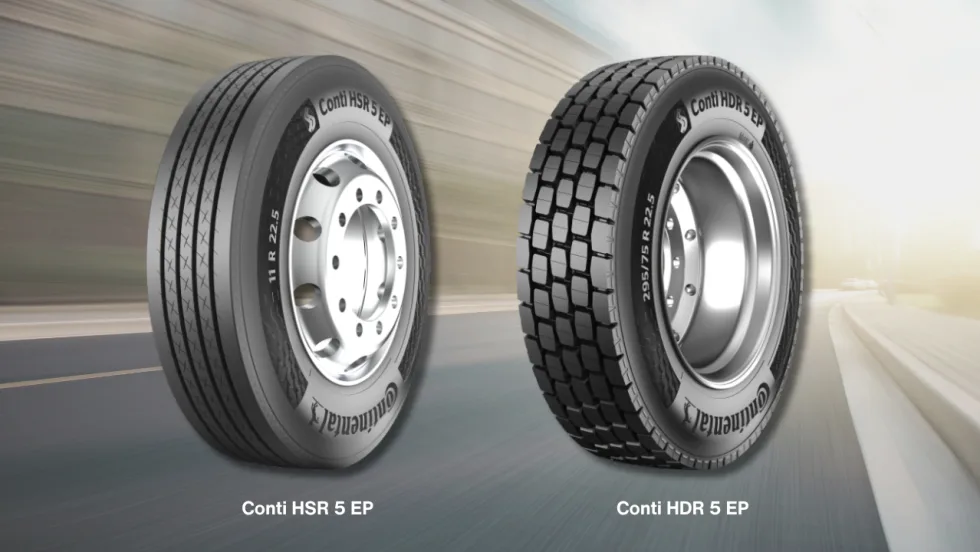
Continental Introduces New Regional Truck Tires
Continental says its new Generation 5 steer and drive tires for regional operations offer longer tread life, with estimated mileage gains of 22% and 19%, respectively.
Read More →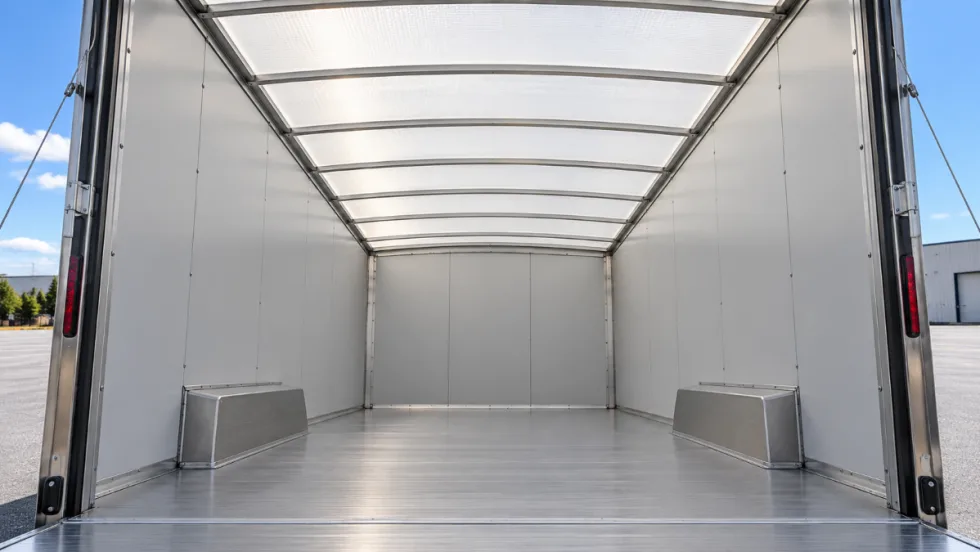
Tekmodo Introduces CargoBright Brand for Translucent Trailer Roofs
CargoBright is designed to diffuse daylight across the cargo area while performing as a working vehicle roof.
Read More →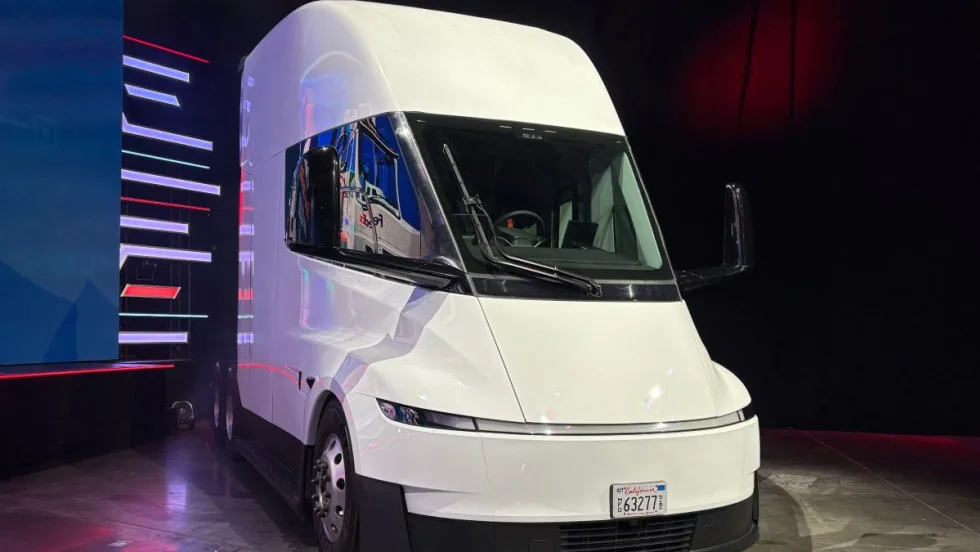
Fleet Economics Shape Electric Truck Outlook
ACT Research expects costs, charging infrastructure, and technology improvements to drive zero-emission commercial vehicle adoption as federal regulations and incentives retreat.
Read More →
Kodiak Targets Dallas–Houston for Driverless Trucks
The company says its autonomous trucks are completing the I-45 run without a safety observer taking control. It plans to remove the observer by the end of 2026.
Read More →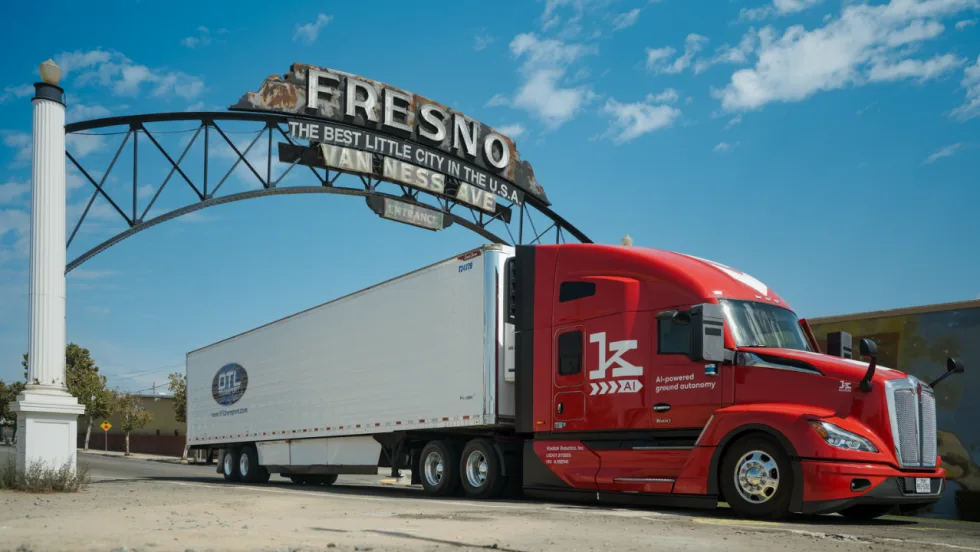
Kodiak Hauls Produce in California Autonomous Truck Pilot
Kodiak AI and DTL Transport have begun hauling produce between Fresno and Los Angeles under California’s new rules for testing heavy-duty autonomous trucks. A safety driver remains behind the wheel.
Read More →
Used-Truck Remarketing Math Is Changing
Used-truck value is no longer just a concern at trade-in. Decisions made throughout a truck’s first life can influence what it’s worth years later.
Read More →
How Volvo Updated Its D13 for EPA 2027 [Watch]
Volvo’s updated D13 promises lower emissions without sacrificing performance or fuel economy. Take a closer look at what changed inside the engine in this HDT Spotlight video.
Read More →
Michelin Tire Improves Efficiency and Durability for Regional Fleets
The Michelin X Multi Energy D2 is a regional haul drive tire engineered to help fleets improve fuel efficiency, durability and traction in demanding stop-and-go operations.
Read More →
ZF Expands Commercial Vehicle Push in North America
ZF is expanding its North American commercial-vehicle presence with new transmission applications, electrification, trailer technology and autonomous-driving systems.
Read More →
Tesla Wants a Self-Driving Semi. Are Cameras Enough?
Could Tesla’s camera-only autonomous driving technology work on an 80,000-pound Semi? In this commentary, HDT's Deborah Lockridge takes a look at Tesla, Cybercab, and how autonomous trucks see the road.
Read More →