




With Funding Clock Ticking, Congress Turns to Highway Bill
Congress is getting to work on the next highway bill. At its opening hearing on reauthorization on Jan. 14, the House Transportation and Infrastructure Committee heard urgent calls for a bipartisan approach to sustainable funding, a multi-year program and federal leadership.


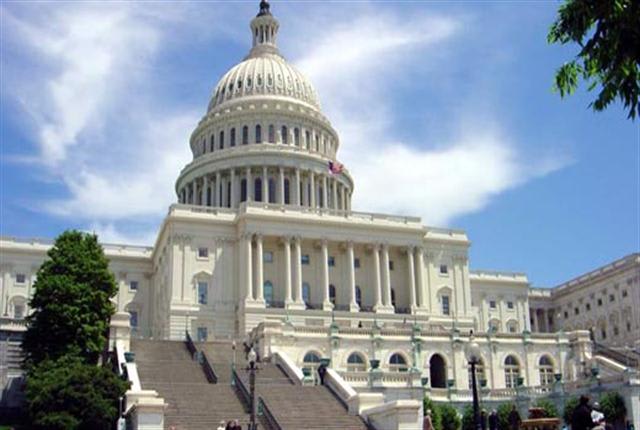
Congress is getting to work on the next highway bill.
At its opening hearing on reauthorization on Jan. 14, the House Transportation and Infrastructure Committee heard urgent calls for a bipartisan approach to sustainable funding, a multi-year program and federal leadership.
Committee Chairman Bill Shuster, R-Pa., said he wants to wrap up work on the bill by early summer and get it to the floor by August.
Discussions about the bill are tinged with a sense of impending crisis. The Highway Trust Fund is on track to run out of money by next year, and possibly even sooner. Transportation Secretary Anthony Foxx has warned that the fund could be depleted by this August.
In the House, funding is the responsibility of the Ways and Means Committee, and a group of Democratic committee members are asking Ways and Means Chairman Dave Camp, R-Mich., to schedule hearings on highway funding options.
“Our transportation programs may begin to notice the drop in funding this summer, when the Highway Trust Fund’s available cash on hand is likely to fall below $4 billion,” they said in their letter to Camp.
That’s the minimum amount needed to meet week-to-week obligations, they said. “Below this amount, reimbursements to construction projects will be curtailed, and jobs will be lost.”
Among those who signed the letter is Rep. Earl Blumenauer, D-Ore., author of a bill that would raise federal fuel taxes and index them to inflation.
Another money-raising option available to Congress is to leverage federal dollars through public-private partnerships. The Transportation and Infrastructure Committee is putting together a special panel to examine that approach.
The group of committee members will look at existing partnerships, which typically finance projects that produce a revenue stream through tolling. It also will study how these partnerships affect management of the projects, and how to balance public and private interests.
The group will be lead by Rep. John Duncan, R-Tenn., who chaired a similar panel that looked into freight transportation policy, and Rep. Michael Capuano, D-Mass.
In a related development, support is growing in the Senate for a funding idea that originated in the House, The Partnership to Build America Act.
This bill, introduced last year by Rep. John Delaney, D-Md., would provide $50 billion in loans and loan guarantees financed by the sale of infrastructure bonds.
Delaney’s idea is to give corporations an incentive to buy the bonds by letting them repatriate some of their overseas earnings tax-free. The initial $50 billion federal investment would be leveraged up to $750 billion in loans or guarantees, he says.
The bill has bipartisan support from 50 House members and now Sens. Michael Bennett, D-Colo., Roy Blunt, R-Mo., have introduced a Senate version. Joining them as co-sponsors are Mark Warner, D-Va., Kelly Ayotte, R-N.H., Mary Landrieu, D-La., Lindsay Graham, R-S.C., Angus King, I-Maine, Dan Coats, R-Ind., Mark Begich, D-Alaska, John Hoeven, R-N.D., and Mark Kirk, R-Ill.
T&I Hearing
One theme Shuster has been stressing as his committee sets the foundation for the highway bill is the need to educate legislators on transportation.
In recent remarks to the U.S. Conference of Mayors, he asked for help to overcome the reluctance of some House members to support a continuing federal role in transportation, according to a news account.
The issue was front and center at last week’s T&I hearing.
“It’s going to be important for stakeholders to educate and advocate to the public and Congress,” Shuster said.
“Some members of Congress are not clear on how far we’re falling behind on infrastructure.”
Witnesses at the hearing were adamant on that point.
Stuart Levenick, group president of Caterpillar, one the nation’s largest exporters, told Shuster that the transportation network does not work as it should.
Caterpillar sends 40% of its exports through Canadian ports because they’re faster than U.S. ports – even though they’re further away, he said.
“If the network doesn’t work together as an integrated whole, that’s a problem,” Levenick said. “We need a multi-year sustainable plan.”
The news that so much of Caterpillar’s freight goes through Canadian ports was upsetting to Rep. Janice Hahn, D-Calif. That means, she said, that Caterpillar is avoiding the harbor maintenance tax, which helps fund port maintenance.
Levenick replied that the company’s decision is not arbitrary. Caterpillar would love nothing better than to use U.S. ports, he said.
“It drives us crazy that we can’t export efficiently from U.S. ports,” he said. “It only makes sense (to use U.S. ports), they are closer to our place of manufacturing. We’re only doing it because we’re driven by global economics.”
Transportation modes – highways, rail and water – are not as well aligned in the U.S. as they are in other countries, Levenick said.
“If you have a world-class port, and the highway infrastructure surrounding it isn’t up to standard, you haven’t gained anything. Other countries are doing it much better, and we all pay a price for that.”
Rep. Peter DeFazio, D-Ore., noted that on the Republican side there’s a school of thought that federal involvement in transportation should be devolved to the states.
“We don’t support that,” Levenick replied. “It’s not an effective solution.”
Rep. Nick Rahall, D-W.Va., the ranking member of the panel, put the same question to Oklahoma Governor Mary Fallin.
“There has to be a partnership between the federal, state and local governments,” Fallin replied. “We need a national vision. The states can’t pick up all the costs.”
"States also need Congress to produce a long-term bill, she said. “We need certainty.”
Atlanta Mayor Kasim Reed told the panel that one major virtue of a multi-year bill is that it creates jobs.
“There is no question that transportation and infrastructure is where you create verifiable jobs,” he said. “The long-term bipartisan nature of transportation is undeniable.”
Caterpillar’s experience with U.S. ports should be pivotal, Reed said.
“The fact that the ports of the United States are so uncompetitive that 40% of Caterpillar’s traffic is being sent to Canada would be persuasive to any person that cares about their own standard of living,” he said.
“If you love America and want it to be the leading economy of the world, it has to have world-class infrastructure because the rest of the world gets it and is investing in it. And the fact of the matter is that we are losing.”
Work on the bill continues Tuesday with a hearing by the T&I Committee’s Highways and Transit Subcommittee on safety funding. The National Transportation Safety Board and the Commercial Vehicle Safety Alliance will be among the witnesses.
More Drivers

Truck Drivers Need More Than Another Alert
Fleets have more visibility into truck health, safety events, and driver activity than ever. The next challenge is turning all that information into useful guidance for the person who has to decide what to do next.
Read More →
FMCSA Removes 110 Truck Driver Training Schools from Certified ELDT List
Federal regulators also are targeting more than 160 additional training providers and launching a nationwide audit of third-party CDL skills testers as part of a broader crackdown on trucking fraud.
Read More →
Hours of Service Pilot Programs: FMCSA Readies for 2027 Rollout
Two pilot programs could eventually reshape hours-of-service rules, giving truck drivers options to pause their 14-hour clock or use longer split sleeper rest periods.
Read More →
Medical Cards, English Proficiency Reshape Roadcheck Violations
Medical-card violations jumped to the top of the driver out-of-service list during CVSA’s 2026 International Roadcheck, while English-language proficiency violations appeared among the leading violations for the first time.
Read More →
Driver Trust Can Make or Break the Success of Fleet Safety Technology
New Teletrac Navman research suggests that onboarding, transparency about driver data, and positive feedback can play a significant role in how commercial drivers respond to safety and coaching technology.
Read More →
EEOC Sues KLLM Over Alleged Sex Discrimination in Driver Training
KLLM is facing a federal sex-discrimination lawsuit over policies the EEOC alleges put female truck driver trainees at a disadvantage.
Read More →
FMCSA Moves to Codify English Language Requirements for Commercial Drivers
By changing regulations on English-language proficiency requirements for commercial drivers, rather than relying on a guidance memo, the FMCSA said future administrations won't be able to walk back the Trump administration's stricter enforcement with just a memo.
Read More →
Drivers Put Western Star Trucks to the Test at Star Nation Experience
Watch to get an inside look at the Western Star trucks, technology, and community behind the Star Nation Experience 2026!
Read More →
Trump Administration Looks to Put More Veterans Behind the Wheel
The Freedom Haulers program pulls together existing and expanded programs at several federal agencies to recruit veterans to drive commercial heavy-duty trucks and cut the red tape for them to get a CDL, training, and employment.
Read More →
Putting Mack’s Command Steer to the Test
A test drive of Mack’s Command Steer active steering system evaluates how it can make truck driving easier and less tiring.
Read More →