




Related: Automakers Fear NAFTA Changes
Trucking Groups Urge NAFTA Negotiators to Support Trade
ORLANDO – Three of North America’s largest trucking associations – American Trucking Associations, the Canadian Trucking Alliance, and Mexico’s CANACAR – have come to the defense of the North American Free Trade Agreement, which they see as a business driver.
by Staff
October 25, 2017
Although much of the discussion has revolved around Mexico, a great deal of goods travel by truck between the U.S. and Canada, as well. Photo: Jim Park
3 min to read

Although much of the discussion has revolved around Mexico, a great deal of goods travel by truck between the U.S. and Canada, as well.Photo: Jim Park
ORLANDO – Three of North America’s largest trucking associations – American Trucking Associations, the Canadian Trucking Alliance, and Mexico’s CANACAR – have come to the defense of the North American Free Trade Agreement, which they see as a business driver.
In a joint statement released during ATA’s annual Management Conference & Exhibition this week, the groups urged negotiators to “update the trade agreement in a manner that continues to benefit trade.”
Motor carriers haul the vast majority of trade by value across international borders, supporting the supply chain for everything from cars to agriculture and pharmaceuticals, the statement notes.
“Trucking and trade are synonymous,” said Bob Costello, the ATA’s chief economist, during a session at the meeting. Every year, 46,000 U.S. trucking jobs can be linked to trade with the Canada and Mexico, he said.
NAFTA negotiations have been extended into 2018 after hitting an impasse on several issues such as the process used to resolve disputes, and a U.S. proposal to include a sunset clause that would require the agreement to be renewed every five years.
The trade agreement has had an undeniable impact on the trucking industry, with trucks moving 71% of the value of surface trade across the Canada-U.S. border and 82% of the value across the U.S.-Mexico border.
“NAFTA truck-transported trade supports tens of thousands of trucking industry jobs across the continent and generates billions in revenue annually,” notes the joint statement. “Trucking jobs created from North American trade are good-paying jobs, from our professional commercial drivers, to dispatchers, sales personnel, managers, and many others,” it reads. “In fact, our industry demonstrates how trade creates good, solid long-term jobs across the continent. The ripple effects are significant, too. In order to haul all the trade across our borders, our industries have to buy a significant amount of goods and services, from equipment to fuel to tires to insurance. This, in turn, supports many jobs. Not only do we haul this cross-border freight efficiently, we do it safely – regardless of the carrier’s country of origin.”
The groups ask government negotiators to update NAFTA to keep North America competitive in an international context, improving the efficiency of international crossings.
Since the deal was established in 1995, the value of Canada-U.S. surface trade has increased 76%, while U.S.-Mexico surface trade has increased 372%, Costello said. The northern and southern U.S. borders now count 12 million crossings per year. Loredo, Texas accounts for 6,000 crossings per day on its own, making it the largest land port in the U.S.
Between 1994 and 2000, the U.S. manufacturing sector added half a million jobs, he said, challenging the notion that NAFTA killed manufacturing jobs. The reversal came in 2000 after China joined the World Trade Organization. The sector then lost 3.9 million jobs from 2000-07. And Costello doesn’t think that is a coincidence.
Mexico gets a lot of unfair blame in this, he said.
Derek Leathers, president and CEO of Werner Enterprises, which does a lot of cross-border business, said he is hopeful negotiations will continue. There are opportunities to improve, but the goal should be to remodel the house rather than tearing it down, he said, adding that discussions will likely be a “little messy” for a while.
The renegotiations still create opportunities to strike a deal that introduces an integrated customs process, and the chance to modernize empty trailer moves, he said.
“I don’t think we should apologize for looking at the agreement, nor do I believe the agreement should be thrown into the fireplace any time soon,” Leathers predicted.
“Cooler minds are going to prevail.”
More Fleet Management
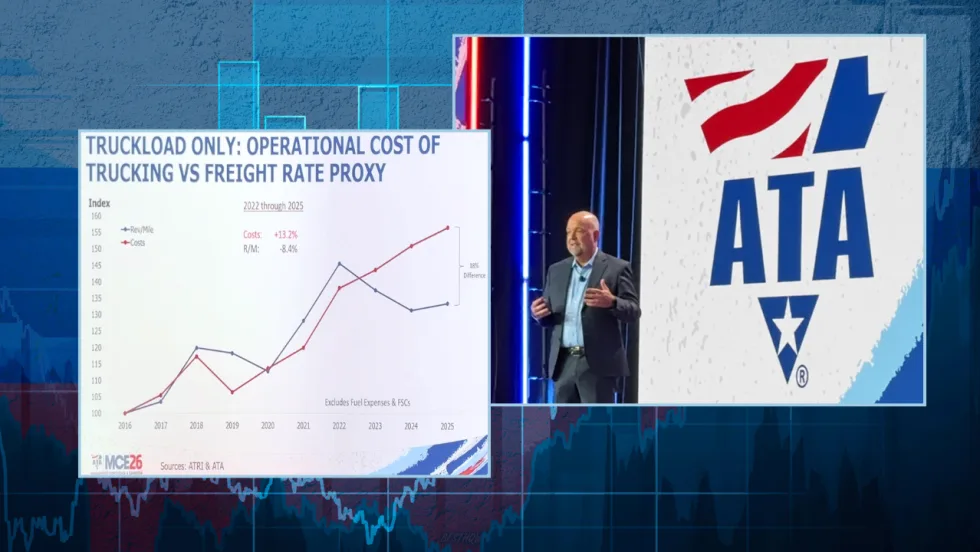
Why This Trucking Recovery Is Different
Freight demand remains sluggish, but rising costs and tougher enforcement have taken enough capacity out of the market to change the outlook for motor carriers.
Read More →
Platform Science Adds Dispatch and Safety Tools
Four additions to PS Fleet help fleets monitor loads, manage driver coaching, share truck locations and adjust video system settings.
Read More →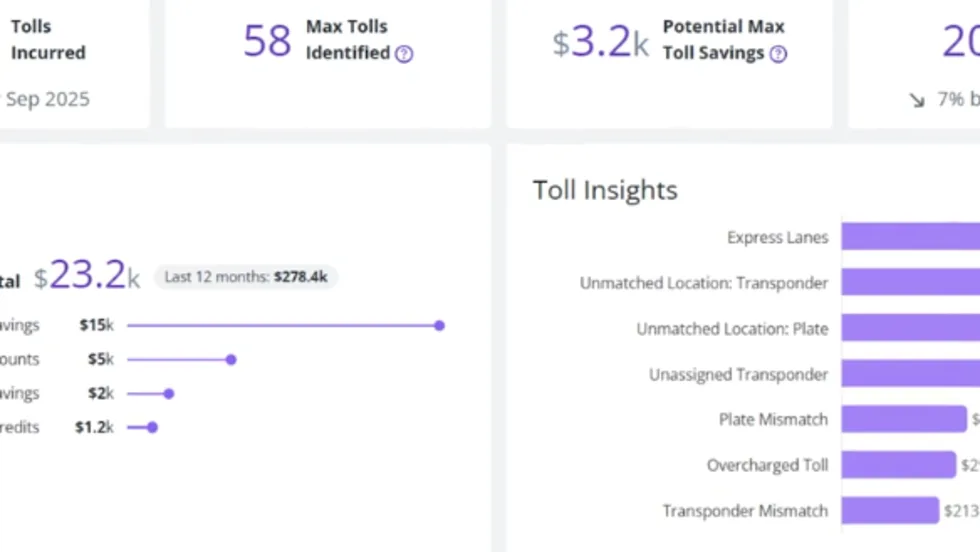
PrePass Intelligence Mines Fleet Bypass, Toll and Safety Data
PrePass Intelligence helps fleets measure bypass savings, flag potential toll overcharges, and spot suspicious transactions by combining data from separate systems.
Read More →
Motive Adds AI Agents for Fleet Operations
New tools automate follow-up on fleet data, from maintenance work orders to driver alerts, with two-way voice conversations planned for later this year.
Read More →
Can You Beat Our Trucking Trivia Challenge?
Test your truck knowledge with 19 trivia questions from Heavy Duty Trucking Exchange. Can you keep up with the fleet pros?
Read More →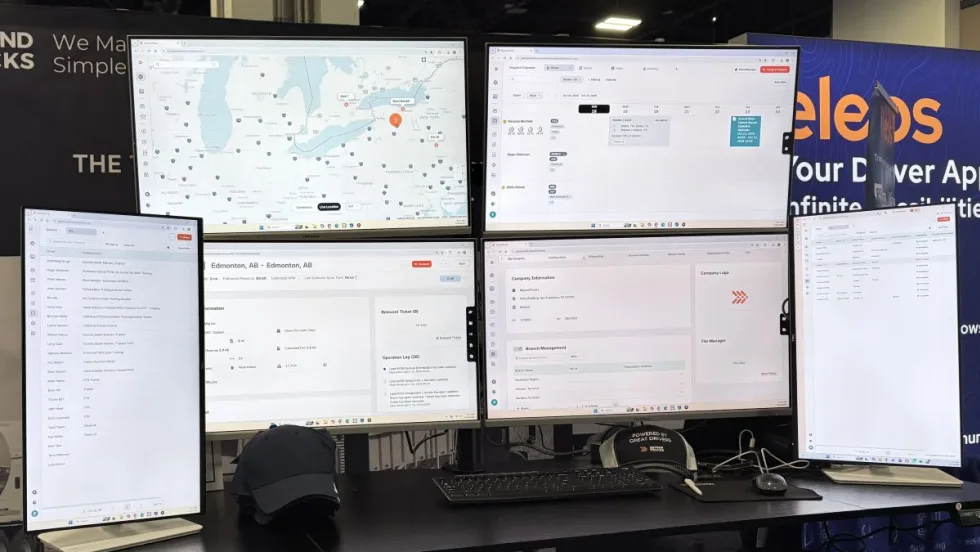
BeyondTrucks Adds Rules Checks to Dispatch
New Compatibility Engine checks driver qualifications, equipment requirements and fleet policies before loads are dispatched.
Read More →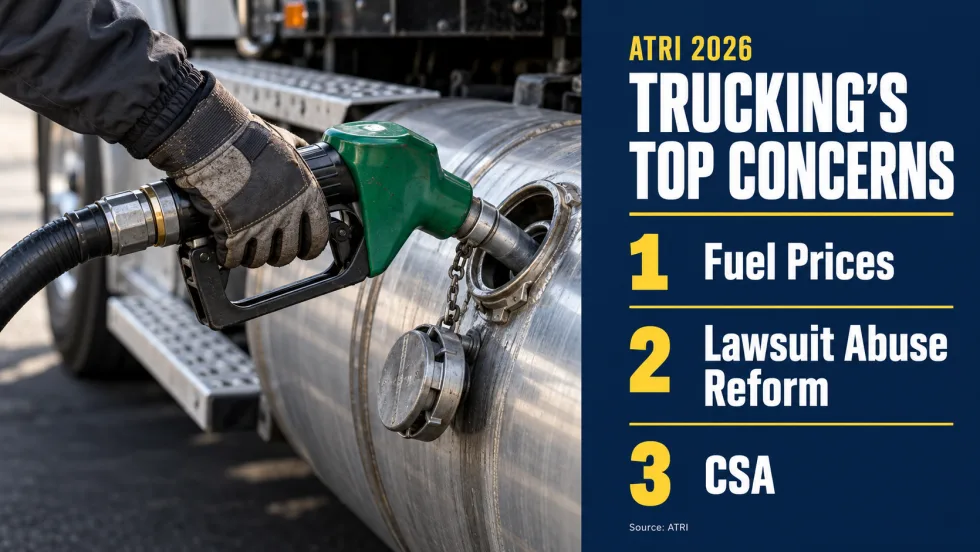
Diesel Prices Hijack Trucking’s Worry List
ATRI’s annual survey finds cautious optimism about freight, but diesel costs, litigation, and insurance continue to squeeze fleets. Drivers have different priorities on several issues.
Read More →
Nomination Deadline Extended for HDT Emerging Leaders
Just a few more days to nominate accomplished trucking fleet professionals under 40 who are making an impact and helping lead the industry forward for the HDT Emerging Leaders award. Deadline extended to October 20!
Read More →
What Will ATA’s New Leader Bring to Trucking's Table?
Incoming President and CEO Mark Colson’s record in Alabama offers clues about his priorities and approach following Chris Spear’s abrupt departure as the head of the American Trucking Associations.
Read More →
Volvo, Waabi Start Commercial Autonomous Operations in Texas
Volvo VNL Autonomous trucks, powered by the Waabi Driver, are hauling freight directly to third-party facilities for a customer in Texas.
Read More →