



Learn more:
Save Fuel, Increase Profit, Save the Planet
 MENU
MENU SEARCH
Aerodynamic fairings, low-rolling-resistance tires and automatic tire-inflation systems will allow manufacturers to meet the regulations,
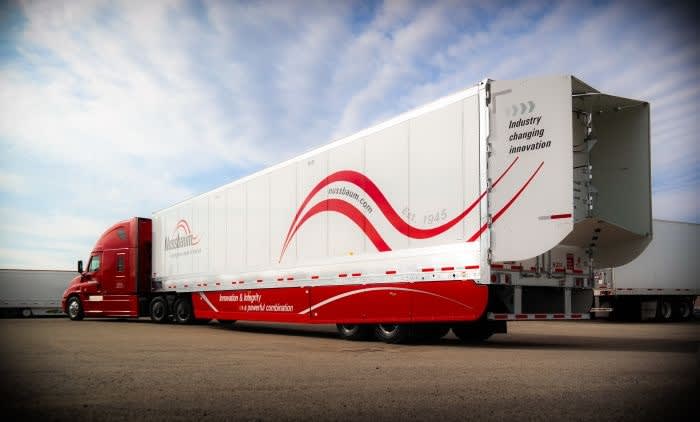
Trailers like this one being used by Nussbaum Transportation, equipped with aerodynamic fairings, plus low rolling-resistance tires and inflation devices, will probably meet EPA and NHTSA’s Phase 2 GHG standards into 2027. Photo courtesy Nussbaum Transportation
Trailers like this one being used by Nussbaum Transportation, equipped with aerodynamic fairings, plus low rolling-resistance tires and inflation devices, will probably meet EPA and NHTSA’s Phase 2 GHG standards into 2027. Photo courtesy Nussbaum Transportation
Trailers meeting the just-announced Phase 2 federal greenhouse-gas and fuel-economy regulations are already running in a few progressive fleets, according to an analysis by research organization that was indirectly involved in writing the regs.
On June 19 the Environmental Protection Agency and the National Highway Traffic Safety Administration proposed the regs that would further reduce fuel consumption and production of carbon dioxide and other greenhouse gases. The proposals treat trucks, tractors, engines and trailers separately, and do not require “integrated” tractor-trailer configurations.
Phase 2 follows the first phase that went into effect last year and largely relied on existing technologies. Pending public comments and possible altering of the proposals, the Phase 2 regs would begin taking effect for model-year 2018 trailers and MY 2021 tractors and trucks, and run through MY 2027, according to Ben Sharpe, a senior researcher at the International Council for Clean Transportation.
“Box” trailers, which include long and short dry-freight and refrigerated vans, would need side skirts that cover their wheels, along with rear-end fairings and perhaps gap-reduction devices, to meet the Phase 2 proposals, Sharpe says. Those trailers would also use low-rolling-resistance tires and automatic tire-inflation devices.
Observers know that such trailers are now at work at Mesilla Valley Transportation and Nussbaum Transportation, among others. These fleet executives have said the equipment is highly effective at saving fuel, so also reduce production of greenhouse gases, which are directly linked.
“Non-box” and “non-aero” trailers, including flatbeds, tankers, dumps, livestock units and those with equipment that prevents use of aerodynamic aids, would need only easy-rolling tires and auto-inflation devices, according to Sharpe. An example of a non-aero trailer is a van with a rear liftgate that precludes a boat tail device.
“Regulations are aimed solely at trailer manufacturers, aerodynamics-device manufacturers, and tire suppliers,” Sharpe explains. Users are not regulated as such, but “are required to keep equipment in the condition as it was sold. This condition does not apply to replacement tires.
“But, it'd be unrealistic to think that EPA will actually be able to enforce that,” he added. “This is not like the California rule, where CHP officers technically have the authority to issue citations for a fleet's lack of compliance with CARB's tractor-trailer rule.”
ICCT’s study of the proposals divides box trailers into seven categories, or “bins,” from a bare van with no aero improvers to “optimized” sets of skirts, boat tails and gap reducers, plus the tire improvements.
An eighth box-trailer category describes “exotic” trailers with smoother basic shapes, which could appear during the regulation's time period, and might or might not be needed to meet Phase 2 regs. Teardrop-shaped trailers with curved roofs that probably fall into that class are running in the United Kingdom, news reports have said.
Phase 2’s targeted fuel and CO2 savings would start with 5% for a van with side skirts and a boat tail device, like many now running; move to 7% for what is currently a SmartWay Elite classification with more advanced equipment (which actually now requires a stiffer 9% improvement to be granted the Elite status); and reach 10% for trailers with optimized aero fairings, according to ICCT’s study.
Non-box and non-aero trailers would have no specific savings goals, but easy rolling tires that stay properly inflated would reduce mechanical drag and save fuel and CO2, the agencies’ reasoning goes.
Manufacturers would have to comply with the box-trailer regs by analyzing their models with an algebraic formula devised by EPA and NHTSA, Sharpe says. Manufacturers could “average” all vehicles on a sales-weighted basis, as car makers now do to meet corporate average fuel economy, or CAFE, standards. Or they could score each trailer model individually.
Scoring is based on the amount of CO2 in grams per ton-mile, he explains. Thus long, 53-foot trailers that typically carry 38,000-pound loads score better than short, 28-footers which tote 20,000-pound cargoes. The average load weights are based on government transportation data.
Why won’t the agencies require integrated tractor-trailers that EPA has promoted in its SuperTruck development programs?
“They acknowledge that if you design a tractor-trailer together, you really optimize it,” Sharpe explained. “But they recognize that in the real world [of trucking], trailers get swapped out regularly. So it would be very difficult to regulate it.”
Because model years are stipulated, the requirements would be effective months before the start of the calendar years involved. Under other federal laws, manufacturers may begin their model years as early as 364 days prior to the named calendar year.
ICCT provided information from its testing programs to EPA and NHTSA as the agencies were working on the Phase 2 regulations, but did not have a hand in writing them, Sharpe says. The proposals did cite some of ICCT’s data, however. ICCT staffers began analyzing the Phase 2 proposals as soon as they were announced, and have begun commenting on their findings.
ICCT was founded in 2005, and Sharpe says he has been focusing on trailers since 2008. ICCT’s goal “is to work with regulators to get them to formulate intelligent, workable regulations,” he says.
The organization is funded by foundation grants and some government contracts, and has annual budgets of $8 million to $10 million. It is based is in San Francisco and has offices in Washington, D.C., and western Europe, and is setting up another office in China.
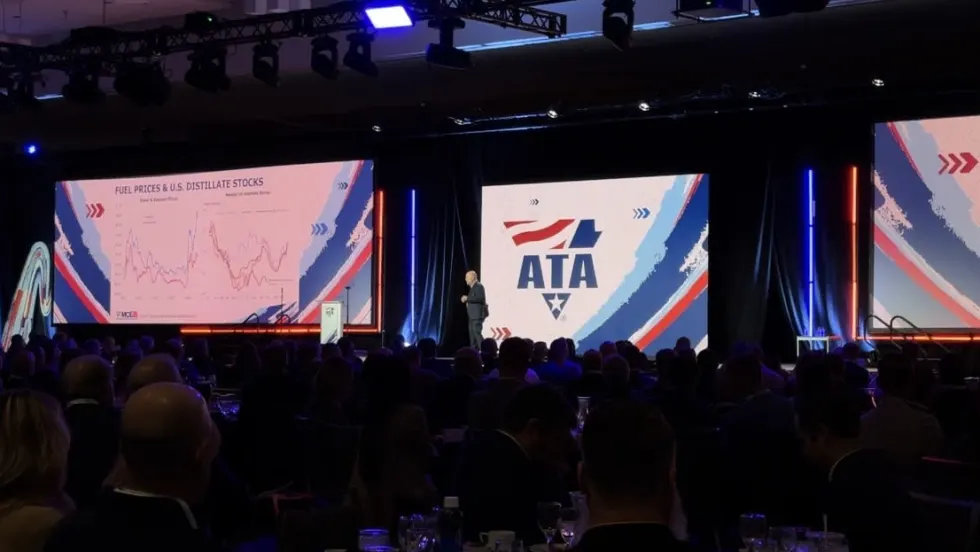
With diesel topping $6 a gallon nationally, ATA's Bob Costello explains why fleets should prepare for continued pressure at the pump.
Read More →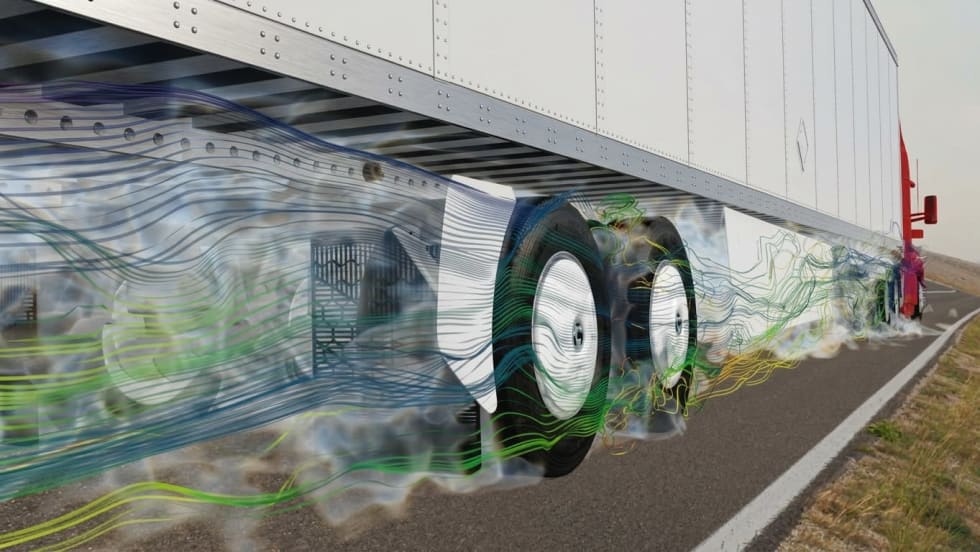
The lighter trailer aerodynamic system installs in less than 45 minutes, according to the company, with potential payback in under a year depending on fuel prices and trailer mileage.
Read More →
Diesel prices have eased from September’s record high, but doubts about additional Russian supply and limits on dyed-diesel tax relief mean trucking fleets still face expensive fuel. And prices could go higher.
Read More →
Can better fuel economy help pay for driver raises? In this podcast, GP Transco explains how small efficiency gains create room to reinvest in its people.
Read More →
What’s another tenth of a mile per gallon worth? GP Transco shares how equipment upgrades and driver coaching turn small gains into meaningful fuel savings.
Read More →
Operating-cost savings have overtaken sustainability goals as the leading reason surveyed fleets are adopting battery-electric terminal tractors, according to new NACFE research.
Read More →
The new card combines fuel discounts with telematics-based purchase controls. Geotab’s analysis also points to potential savings from choosing lower-priced fuel stops.
Read More →
ACT Research expects costs, charging infrastructure, and technology improvements to drive zero-emission commercial vehicle adoption as federal regulations and incentives retreat.
Read More →
A new fuel card feature for Wex customers offers convenience and security.
Read More →
Why do battery-electric Class 8 trucks remain so expensive? A California bill signed by Gov. Gavin Newsom would give fleets and state agencies more visibility into what manufacturers charge.
Read More →