




Full-length Skirts Add Fuel Savings for Nussbaum
Nussbaum is streamlining its trailers looking to save money on fuel. Skirts, TrailerTails and a few other modifications together save close to 1 mpg.

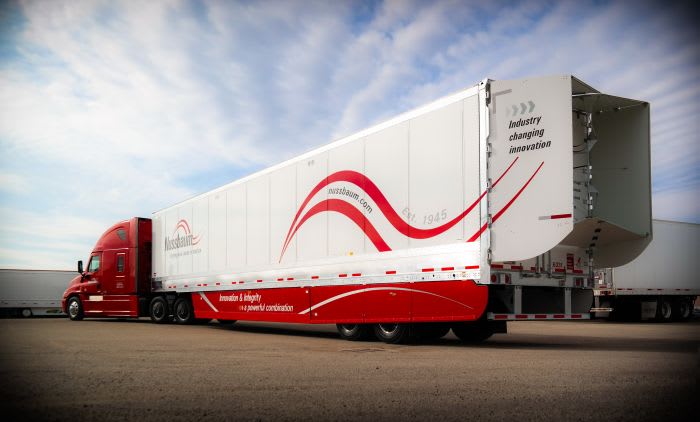
The newest in the long skirts run from nose to tail of Nussbaum’s 53-foot Wabash National vans. Skirts, TrailerTails and a few other modifications together save close to 1 mpg.
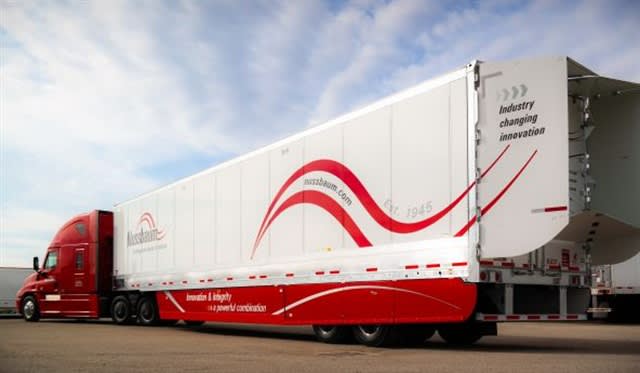
The newest in the long skirts run from nose to tail of Nussbaum’s 53-foot Wabash National vans. Skirts, TrailerTails and a few other modifications together save close to 1 mpg.
“There’s a lot of fuel to be saved on trailers,” says Phil Braker, operations manager at Nussbaum Transportation in Hudson, Ill. That’s why the progressive company runs wide-base single tires, which led to its latest innovation, full-length skirts on its 53-foot-long, 102.3-inch-wide vans from Wabash National.
“We started on this a couple years ago during a visit with Wabash while they were here,” he recalls. “The single tires were inset enough from the sides so there’s clearance for a skirt alongside." Wabash thought they could work with that. More consultations led to the first prototype, which has been on the road for a year.
Each skirt has two top-hinged doors that swing up to allow access to wheels and tires for inspections and maintenance. The doors are at the tandem’s standard running position, or the tandem can be slid for access. They can be locked in the up position or pinned down for travel.
They’re the same material as DuraPlate AeroSkirts, a little thinner, with three stationary, vertical, stainless steel posts to keep them away from the wheels, plus tether straps to retain a door in case of a tire blowout.
“That was a worry of some drivers – ‘What’s going to happen if we blow a tire?’ But that hasn’t happened," Braker notes, adding that Meritor-PSI tire inflation systems help keep tire pressure up.
Wind tunnel testing showed a 4% aerodynamic improvement over a regular skirt. “We don’t quite get that, but it’s still worthwhile. There are now 101 trailers in service, and they seem to be working well.”
The latest version on the last 30 trailers also extends forward by 42 inches to cover the landing gear and beyond. The longer skirts add some weight and cost, but make up for it with better fuel economy. Braker figures the long skirts alone pick up 0.5 mpg.
The fleet’s trailer-to-tractor ratio is just over 2 to 1, making the aero improvers financially feasible. The longer skirts will probably go on all new trailers.
More Fuel Smarts
Trucking’s Diesel Squeeze Isn’t Letting Up
With diesel topping $6 a gallon nationally, ATA's Bob Costello explains why fleets should prepare for continued pressure at the pump.
Read More →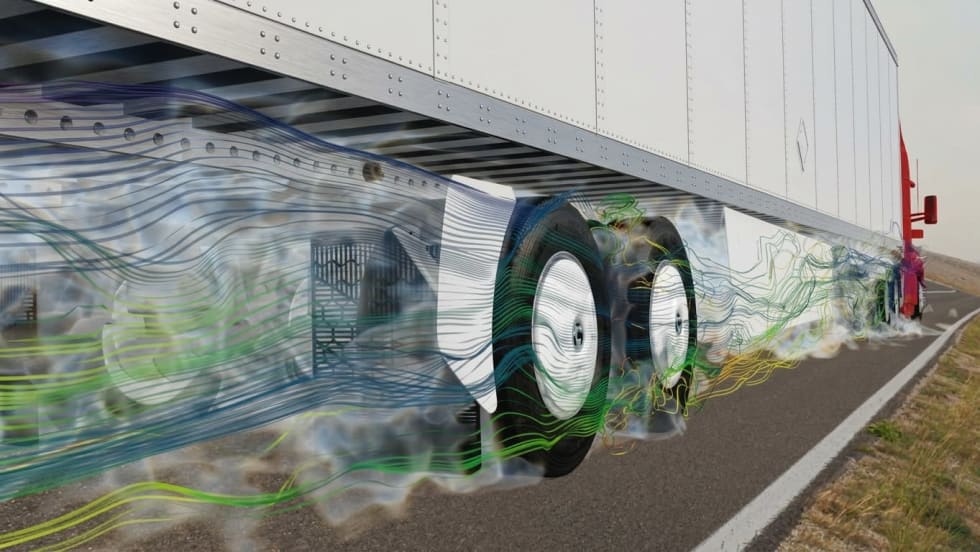
FlowBelow Redesigns Trailer AeroSlider to Cut Fuel Use
The lighter trailer aerodynamic system installs in less than 45 minutes, according to the company, with potential payback in under a year depending on fuel prices and trailer mileage.
Read More →
Why Diesel Price Relief Efforts May Fall Short
Diesel prices have eased from September’s record high, but doubts about additional Russian supply and limits on dyed-diesel tax relief mean trucking fleets still face expensive fuel. And prices could go higher.
Read More →
Why Small Fuel Savings Matter in Trucking
Can better fuel economy help pay for driver raises? In this podcast, GP Transco explains how small efficiency gains create room to reinvest in its people.
Read More →
How GP Transco Cuts Trucking Fuel Costs, a Tenth of a Gallon at a Time
What’s another tenth of a mile per gallon worth? GP Transco shares how equipment upgrades and driver coaching turn small gains into meaningful fuel savings.
Read More →
Electric Yard Tractors Move Beyond Pilots
Operating-cost savings have overtaken sustainability goals as the leading reason surveyed fleets are adopting battery-electric terminal tractors, according to new NACFE research.
Read More →
Geotab Links Fleet Card to Vehicle Data
The new card combines fuel discounts with telematics-based purchase controls. Geotab’s analysis also points to potential savings from choosing lower-priced fuel stops.
Read More →
Fleet Economics Shape Electric Truck Outlook
ACT Research expects costs, charging infrastructure, and technology improvements to drive zero-emission commercial vehicle adoption as federal regulations and incentives retreat.
Read More →
Wex Adds Cardless Fuel Payments for Over-the-Road Customers
A new fuel card feature for Wex customers offers convenience and security.
Read More →
New California Law Could Shed Light on Electric Truck Prices
Why do battery-electric Class 8 trucks remain so expensive? A California bill signed by Gov. Gavin Newsom would give fleets and state agencies more visibility into what manufacturers charge.
Read More →