




Trade Organizations Speak Out Against Ports' Regulatory Efforts
In a letter to Transportation Secretary Ray LaHood, the National Retail Federation, writing on behalf of several trade organizations, urged the DOT to oppose the efforts of some ports to regulate the trucking industry
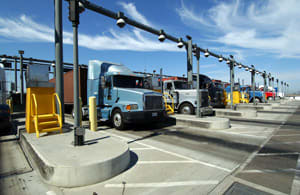
Several industry groups are taking action against the ports' efforts to regulate trucking operations. (Photo courtesy of the Port of Los Angeles)
In a letter to Transportation Secretary Ray LaHood, the National Retail Federation, writing on behalf of several trade organizations, urged the DOT to oppose the efforts of some ports to regulate the trucking industry.
The group is referring to the efforts of some ports, including the Port of Los Angeles, to get Congress to change the Federal Aviation Administration Authorization Act (FAAAA), which prohibits states from enacting and enforcing laws that are "related to" motor carrier prices, routes, or services in order to maximize competitive forces in the trucking industry. These ports wish to have the authority to regulate trucking operations at the ports, such as security, congestion and the environment. The letter says the ports are using their Clean Truck Programs as a guise to make this regulatory change.
"While we strongly support efforts to improve air quality and port security in and around America's ports, the effort to undermine federal preemption of interstate commerce is an attempt to overturn losses in the federal courts restricting local regulation of truck drayage services," the letter said. "If successful, these efforts will not improve air quality or port security in and around the nation's ports, but will re-impose a fragmented, local, patchwork regulatory structure on foreign and interstate commerce, contrary to the U.S. Constitution and acts of Congress."
The National Retail Federation writes the letter on behalf of members of several national associations that haul goods through these ports, including the Clean Truck Coalition, Los Angeles Customs Brokers & Freight Forwarders Association, the Waterfront Coalition and the Harbor Truckers for Sustainable Future LA/LB Port, just to name a few.
The letter outlines the history of this conflict at the ports, including the success of the Clean Truck Programs at the Ports of Los Angeles and Long Beach and the American Association of Port Authorities' recent move to opt out of the ports' efforts to regulate truck drayage operations.
The National Retail Federation also mentions the Port of Los Angeles' provision to ban harbor trucking companies from using independent owner-operators, a move that is mostly advocated by the Teamsters union, the letter said. The letter also goes into the lawsuit filed by the American Trucking Associations against the Port of Los Angeles regarding the owner-operator ban.
"The argument that port trucking services should not be subject to federal preemption in order to improve air quality is fallacious, and is based on motives unrelated to achieving cleaner air around the ports," the letter said.
CORRECTION: We originally reported, incorrectly, that the Port of Long Beach was part of the effort to get the FAAAA changed. The Port of Long Beach is not lobbying to change this legislation.
More Fleet Management

Why Private Fleets Are Taking More Freight
Private fleets are putting their own trucks on demanding customers and high-cost lanes as companies seek greater control over service, costs, and capacity.
Read More →
Color Match Smarter: Tools That Restore & Perform
For fleet managers and collision repair professionals keeping heavy-duty trucks on the road, getting the color right the first time isn't just about appearance — it's about efficiency, turnaround time, and bottom-line results. Discover how today's digital color tools are transforming the repair process from guesswork to precision.
Read More →
FMCSA Pauses Biennial-Update Enforcement Amid Motus Transition
Carriers whose updates were due on or after June 1 have more time, while FMCSA works to stabilize its new registration system and warns of phishing sites impersonating its new carrier registration system, Motus.
Read More →


2026 Blueprint for Countering Smarter Supply Chain Theft
Cargo theft is no longer just the cost of doing business. It's a multi-billion-dollar criminal enterprise exploiting vulnerabilities across your fleet, drivers, and supply chain.
Read More →
How Telematics Improves Visibility, Control, and Performance in Refrigerated Fleets
Explore how telematics help refrigerated fleets improve visibility, uptime, efficiency, compliance, and cargo protection across connected cold chain operations.
Read More →
What the U.S.-Canada Trade War Means for Trucking
Escalating U.S.-Canada tariffs could disrupt cross-border freight, reduce truck volumes, raise costs, and create new uncertainty for carriers on both sides of the border.
Read More →
What Are Trucking’s Top Concerns for 2026?
The American Transportation Research Institute wants to know what's worrying trucking fleet managers, drivers, and other stakeholders in its annual Industry Issues survey.
Read More →
American Trucking Associations Looks for a New Leader
ATA President and CEO Chris Spear abruptly left his job at the association on August 21, at a pivotal time for the trucking industry.
Read More →
Public Wi-Fi Cybersecurity Risks: How Truck Drivers and Fleets Can Protect Their Data
Public Wi-Fi can expose truck drivers and fleets to credential theft, malware, and other cyber threats. Here’s how to reduce the risk on the road.
Read More →
For Nicky Cupp, Fleet Innovation Starts With Frustration
HDT Truck Fleet Innovator Nicky Cupp turns everyday pain points at Fraley & Schilling into opportunities for better technology and smarter processes.
Read More →