





Related: Number of Zero-Emissions Commercial Vehicle Models Expected to Double by 2023
States Join Forces to Accelerate Truck, Bus Electrification
Fifteen states and the District of Columbia have signed an agreement pledging to develop a plan to eliminate diesel emissions by 2050.
July 14, 2020
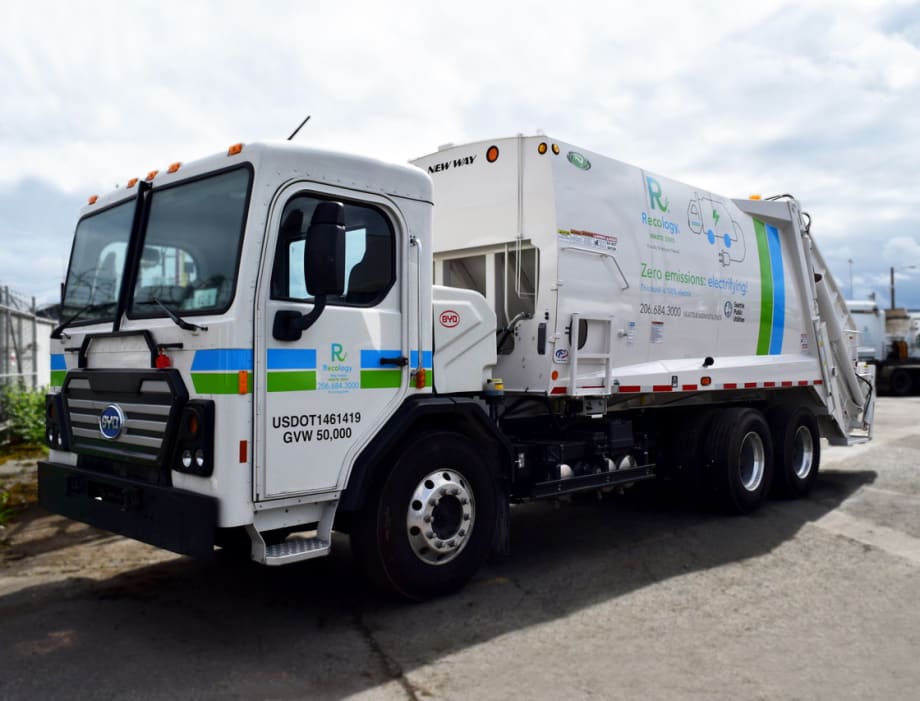
BYD makes both electric trucks and buses.
Photo: BYD
4 min to read
Fifteen states and the District of Columbia have signed an agreement pledging to develop a plan to eliminate diesel emissions by 2050.
The states agreed to work collaboratively to advance and accelerate the market for electric medium- and heavy-duty vehicles, including large pickup trucks and vans, delivery trucks, box trucks, school and transit buses, and long-haul heavy-duty trucks. The goal is for 100% of all new medium- and heavy-duty vehicle sales to be zero-emission vehicles by 2050, with an interim target of 30% zero-emission vehicle sales by 2030.
The memorandum of understanding was signed July 14 by California, Connecticut, Colorado, Hawaii, Maine, Maryland, Massachusetts, New Jersey, New York, North Carolina, Oregon, Pennsylvania, Rhode Island, Vermont, and Washington, plus the District of Columbia.
These states combined represent about one-third of U.S. truck registrations, according to the Environmental Defense Fund, which called the agreement "a major step for clean air."
According to the press release announcing the move, while trucks and buses only account for 4% of vehicles on the road, they are responsible for nearly 25% of total transportation sector greenhouse gas emissions.
“Emissions from trucks are the fastest growing source of greenhouse gases, and the number of truck miles traveled on the nation’s roads is forecast to continue to grow significantly in the coming decades,” said the announcement, which was put out by the Northeast States for Coordinated Air Use Management, a nonprofit association of air quality agencies in the Northeast, and the California Air Resources Board.
The signatory jurisdictions will work through the existing multi-state ZEV Task Force facilitated by the Northeast States for Coordinated Air Use Management to develop and implement a ZEV action plan for trucks and buses.
Within six months, the MOU calls for the task force to develop a multi-state action plan to identify barriers and propose solutions to support widespread electrification of medium- and heavy-duty vehicles.
Earlier this month, 37 businesses and investors – including major fleet operators such as DHL, IKEA North American Services, PepsiCo, and Unilever – sent a statement of support to the 15 state governors and the Mayor of D.C. They highlighted the long-term cost savings and benefits that can be captured by decarbonizing commercial vehicles, according to a release from Ceres, a sustainability nonprofit organization. DHL and IKEA are also members of the Corporate Electric Vehicle Alliance, a platform of major companies and fleet operators working to accelerate corporate uptake of electric vehicles.
Calling for Federal Funding for Zero-Emission Trucks
The announcement noted that investment in zero-emission vehicle technology for the medium- and heavy-duty sector continues to ramp up. Today, at least 70 electric truck and bus models are on the market, it said, and manufacturers are expected to make many more new models commercially available over the next decade.
However, there are still questions about costs and charging infrastructure, and many believe the federal government should step up and support this sector, with benefits not only for clean air, but also for the economy.
“Without federal leadership, addressing the climate crisis requires states to work together to take action to reduce greenhouse gas emissions from all sources,” said New York State Department of Environmental Conservation Commissioner Basil Seggos in the announcement. “Reducing air pollution from medium- and heavy-duty vehicles will result in cleaner air for our communities—including low-income neighborhoods and communities of color that are often disproportionately impacted by environmental pollution. Today’s announcement bolsters New York’s ongoing efforts to electrify the transportation sector and reduce climate pollution, helping to realize our ambitious emissions reduction goals and grow a powerful green economy to benefit all communities.”
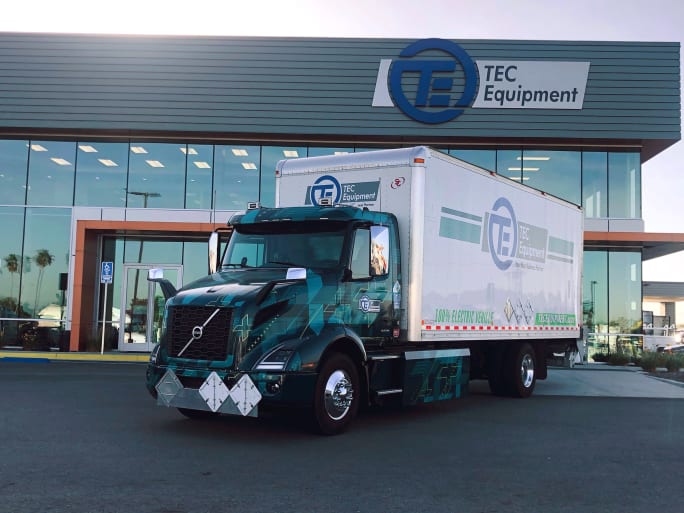
Volvo is testing electric heavy-duty vehicles in real-world use, like this one in California.
Photo: Volvo
The National Zero-Emission Truck Coalition recently released its priority federal recommendations, calling for federal funding of more than $2 billion for point-of-sale incentives to jumpstart zero-emission truck production during the current economic downturn.
The coalition, organized by clean transportation industry organization Calstart, is also urging that federal funding be targeted at commercial zero-emission vehicle charging and refueling infrastructure and that federal innovation investments be increased for zero-emission technologies.
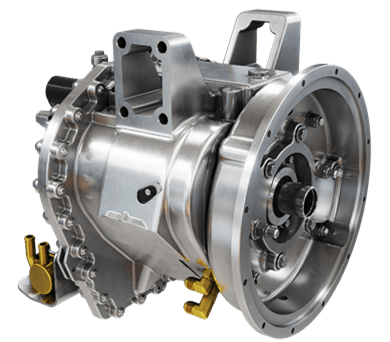
Component makers like Eaton are working toward electriification; this 4-speed transmission is designed for use in electric vehicles.
Photo: Eaton
Coalition members include ABB, Adomani, Arrival, Bollinger Motors, BYD, Calstart, Chanje, ChargePoint, Cummins, Daimler, Eaton, the Environental Defense Fund, eNow, Lion Electric, Mack Trucks, Morgan Olson, Motiv Power Systems, Navistar, Nikola, Odyne Systems, Paccar, Proterra, Revolv, Rivian, SDG&E, South Coast AQMD, Tesla, TransPower, Viatec, and Volvo Trucks.
According to the coalition, federal investments would enable the production of tens of thousands of zero-emission commercial vehicles by 2025, as well as support domestic manufacturing jobs, promote technology leadership and U.S. competitiveness, and improve air quality in communities most impacted by heavy-duty vehicle emissions.
“America has the power to lead in the expanding, zero-emission truck market,” said Bill Van Amburg, executive vice president of Calstart. “But we must take an active role. Other nations are investing aggressively. Our industry coalition believes a strong federal partnership can create jobs that also clean our nation’s air, foster innovation and solidify American competitiveness in this global field.”
More Fuel Smarts

How Volvo Updated Its D13 for EPA 2027 [Watch]
Volvo’s updated D13 promises lower emissions without sacrificing performance or fuel economy. Take a closer look at what changed inside the engine in this HDT Spotlight video.
Read More →
Diesel Price Spike Shortens Payback for Natural Gas Trucks, Report Says
Energy Vision estimates fleets could recover the higher purchase price of an RNG-fueled Class 8 tractor in 1.3 to 2.8 years under current fuel-price scenarios.
Read More →
Calstart Becomes Catalyst Mobility, Reflecting Broader Focus
Calstart is now Catalyst Mobility, reflecting the nonprofit’s growing national role in clean transportation, including zero-emission trucks, infrastructure and incentive programs.
Read More →

Record Diesel Prices Squeeze Trucking Fleets
Average U.S. diesel prices have climbed to nearly $6 a gallon, surpassing the 2022 record as tight refinery capacity and Middle East disruptions keep fuel costs elevated.
Read More →
Sponsored•September 9, 2026
How Fuel Delivery Shapes Engine Performance
Fuel delivery depends on more than what happens at the injector. For fleet, maintenance and technical professionals, looking at the full path from pump to injector can provide useful context for understanding engine performance.
Read More →
East Coast Port Launches $45M Electric Truck Push
The Port Authority of New York and New Jersey announced millions in incentives for zero-emission drayage trucks, yard tractors, and new charging hubs near the port.
Read More →
California Bill Could Shed Light on Electric Truck Prices
Why do battery-electric Class 8 trucks remain so expensive? A California bill headed to Gov. Gavin Newsom would give fleets and state agencies more visibility into what manufacturers charge.
Read More →
Detroit Opens Orders for EPA 2027 Engines
Detroit isn’t starting from scratch to meet EPA 2027 diesel emissions standards. Its Gen 6 DD13 and DD15 engines keep much of today’s platform while updating the fuel and aftertreatment systems.
Read More →
Zero-Emission Truck Corridor Planned for West Coast
California, Oregon, Washington, British Columbia and Baja California are coordinating plans for truck charging and hydrogen fueling from Canada to Mexico.
Read More →
A Closer Look at Kenworth’s Electric T880E Vocational Truck [Video]
Learn more about Kenworth's T880E battery-electric vocational truck at the Paccar Technical Center, including its range, applications, upfitting considerations, and PTO options, in this HDT Spotlight video.
Read More →