




Retail Container Traffic Drops Below Last Year, Expected to See Gains as Holidays Approach

Import cargo volume at the nation's major retail container ports will remain below last year's levels for the remainder of the summer before seeing year-over-year gains again this fall as retailers begin to stock up for the holiday season
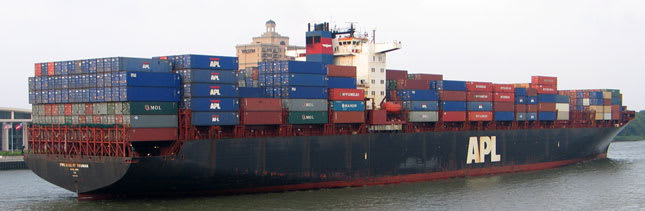
Year-over-year increases in retail container shipping are expected to resume in September. (Photo by Evan Lockridge)
Import cargo volume at the nation's major retail container ports will remain below last year's levels for the remainder of the summer before seeing year-over-year gains again this fall as retailers begin to stock up for the holiday season.
The prediction comes from the Global Port Tracker report released by the National Retail Federation and Hackett Associates.
"Cargo numbers have been down this summer, but that's a reflection of last year's unusual shipping patterns more than the economy," NRF Vice President for Supply Chain and Customs Policy Jonathan Gold said. "The economy continues to face challenges, but job growth has been steady and retailers have been adding jobs themselves as sales improve."
Cargo figures for this fall clearly show that retailers are expecting a healthy holiday season, Gold said.
U.S. ports followed by Global Port Tracker handled 1.25 million Twenty-foot Equivalent Units in June, the latest month for which numbers are available. That was down 2.6% from May and 5% from June 2010. One TEU is one 20-foot cargo container or its equivalent.
June's volume broke an 18-month streak of year-over-year improvement dating to December 2009, and declines continued in July, which was estimated at 1.3 million TEU, down 5.7% from July 2010. August is forecast at 1.4 million TEU, a 1.6% decrease from a year ago.
Rather than indicating an economic downturn, however, the numbers are a skewed comparison against higher-than-normal numbers last summer, when fears of shortages in shipping capacity caused many retailers to bring holiday merchandise into the country earlier than usual. Actual retail sales have seen 12 straight months of growth.
Year-over-year increases are expected to resume in September, which is forecast at 1.48 million TEU, up 10.4% from last year.
The first half of 2011 totaled 7.15 million TEU, up 3.9% from the first half of 2010, and the full year is forecast at 15.28 million TEU, up 3.6% from 2010. Imports during 2010 totaled 14.7 million TEU, a 16% increase over unusually low numbers in 2009.
While cargo volume is expected to increase through this fall's holiday shipping cycle, Hackett Associates founder Ben Hackett said a number of key economic indicators are raising concerns about future cargo growth.
"Industrial production in China is weak, bulk commodity imports are declining, and ports are beginning to report reduced export volumes," Hackett said. "In the U.S., we have lower private consumption, lower government expenditure and lower indices like the purchasing managers' index. This is cause for concern because it could lead to lower growth of trade volumes."
IANA's 2Q numbers
Meanwhile, the Intermodal Association of North America reported that domestic and international intermodal volumes posted solid gains in the second quarter.
IANA's Intermodal Market Trends & Statistics report notes that domestic container volume grew 9% year-over-year, a stronger pace than during the previous two individual quarters. This rate of increase is especially impressive considering that the highest gain recorded, 16.4%, was posted in Q2 2010.
Although domestic containers recorded significant increases, trailer volumes had more modest gains, rising 4.6% over 2010 levels, a slightly slower pace than in the previous quarters that likely represents a continued equipment shift toward domestic containers. Domestic intermodal's strong pace was bolstered by a steep rise in diesel prices that likely made it more cost-effective for shippers to shift freight off the highway.
International intermodal volumes during the quarter increased 5.4% year-over-year. While this is the slowest rate of international growth since late 2009, it should be noted that previous quarters benefited from weak comparisons, says IANA. International shipments also would likely have been higher were it not for the disasters in Japan that reduced the volume of Japanese imports.
While the rate of intermodal growth slowed from the first quarter to the second quarter, IANA says it still remains in-line with many industry analyst estimates of 6-8% year-over-year expansion.
More Fleet Management
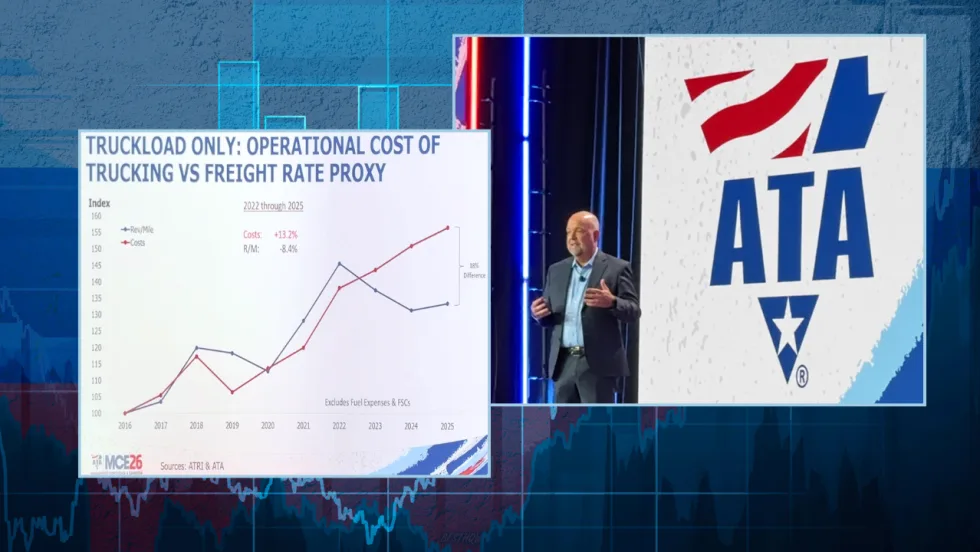
Why This Trucking Recovery Is Different
Freight demand remains sluggish, but rising costs and tougher enforcement have taken enough capacity out of the market to change the outlook for motor carriers.
Read More →
Platform Science Adds Dispatch and Safety Tools
Four additions to PS Fleet help fleets monitor loads, manage driver coaching, share truck locations and adjust video system settings.
Read More →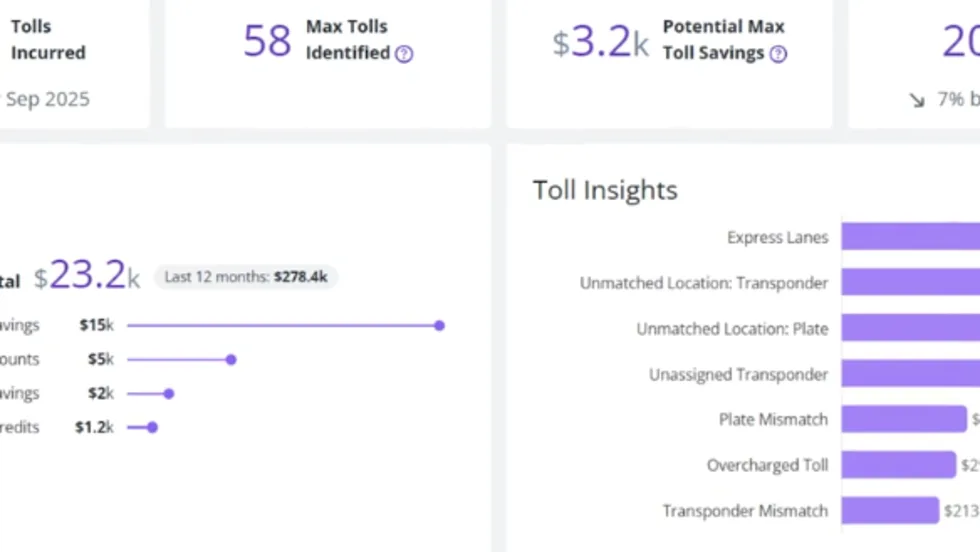
PrePass Intelligence Mines Fleet Bypass, Toll and Safety Data
PrePass Intelligence helps fleets measure bypass savings, flag potential toll overcharges, and spot suspicious transactions by combining data from separate systems.
Read More →
Motive Adds AI Agents for Fleet Operations
New tools automate follow-up on fleet data, from maintenance work orders to driver alerts, with two-way voice conversations planned for later this year.
Read More →
Can You Beat Our Trucking Trivia Challenge?
Test your truck knowledge with 19 trivia questions from Heavy Duty Trucking Exchange. Can you keep up with the fleet pros?
Read More →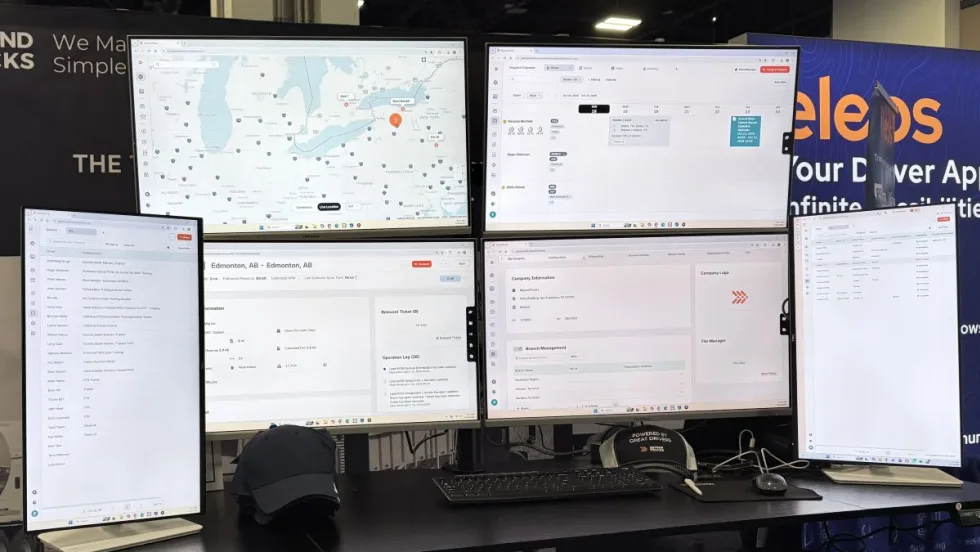
BeyondTrucks Adds Rules Checks to Dispatch
New Compatibility Engine checks driver qualifications, equipment requirements and fleet policies before loads are dispatched.
Read More →
Diesel Prices Hijack Trucking’s Worry List
ATRI’s annual survey finds cautious optimism about freight, but diesel costs, litigation, and insurance continue to squeeze fleets. Drivers have different priorities on several issues.
Read More →
Nomination Deadline Extended for HDT Emerging Leaders
Just a few more days to nominate accomplished trucking fleet professionals under 40 who are making an impact and helping lead the industry forward for the HDT Emerging Leaders award. Deadline extended to October 20!
Read More →
What Will ATA’s New Leader Bring to Trucking's Table?
Incoming President and CEO Mark Colson’s record in Alabama offers clues about his priorities and approach following Chris Spear’s abrupt departure as the head of the American Trucking Associations.
Read More →
Volvo, Waabi Start Commercial Autonomous Operations in Texas
Volvo VNL Autonomous trucks, powered by the Waabi Driver, are hauling freight directly to third-party facilities for a customer in Texas.
Read More →