




Passenger Rail Grants Will Also Help Intermodal Lines
The focus of last week's announcement of DOT's $2.4 billion in grants for rail corridors was on passenger trains, but it turns out about $1 billion of that will benefit freight corridors, as well
The focus of last week's announcement of DOT's $2.4 billion in grants for rail corridors was on passenger trains, but it turns out about $1 billion of that will benefit freight corridors, as well.
In total, 54 applications were selected to receive approximately $2.5 billion in FY10 and remaining FY09 funding. DOT Undersecretary for Policy Roy Kienitz said most of the other $1 billion goes into tracks shared with major freight railroads, reports the Journal of Commerce.
Many of the projects are laying the foundation for high-speed rail. These include things like putting signaling and safety systems in place that increase the capacity to run more trains more quickly on these lines. That will help the railroads run more freight trains more quickly -- including those carrying intermodal containers -- as well as us running more passenger trains more quickly.
Some of the funds will go into automated train control technology, projects to eliminate road-rail grade crossings on shared freight and passenger tracks that can slow train service, and some double-tracking in existing freight corridors.
Transportation Secretary Ray LaHood also pointed out that high-speed passenger train routes can alleviate congestion on crowded highways and allow freight to flow more freely by truck.
More Fleet Management
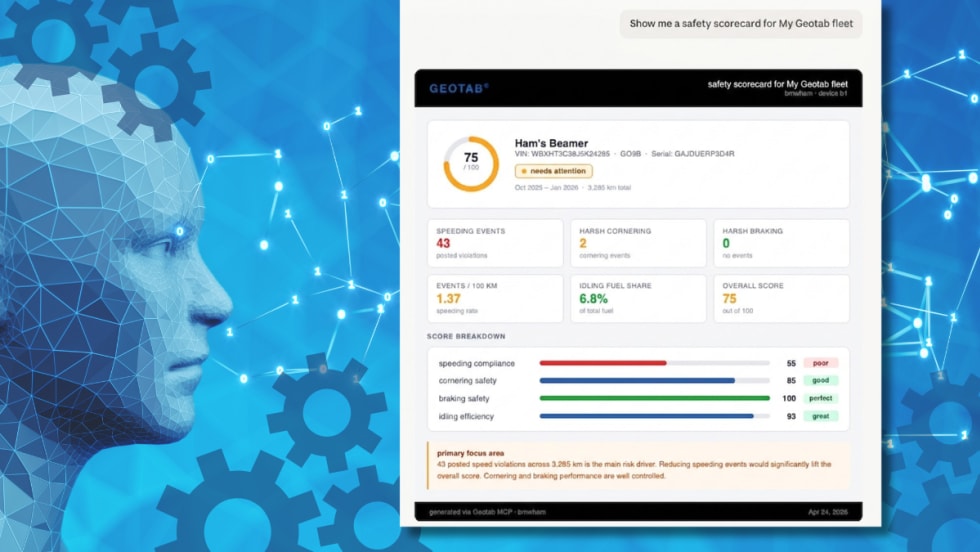
What Geotab's New AI Connector Means for Fleets
Fleets can now ask their usual AI assistants questions about maintenance, safety, fuel use, and vehicle performance, using their live Geotab data, and take action on the answers without leaving their preferred AI tool.
Read More →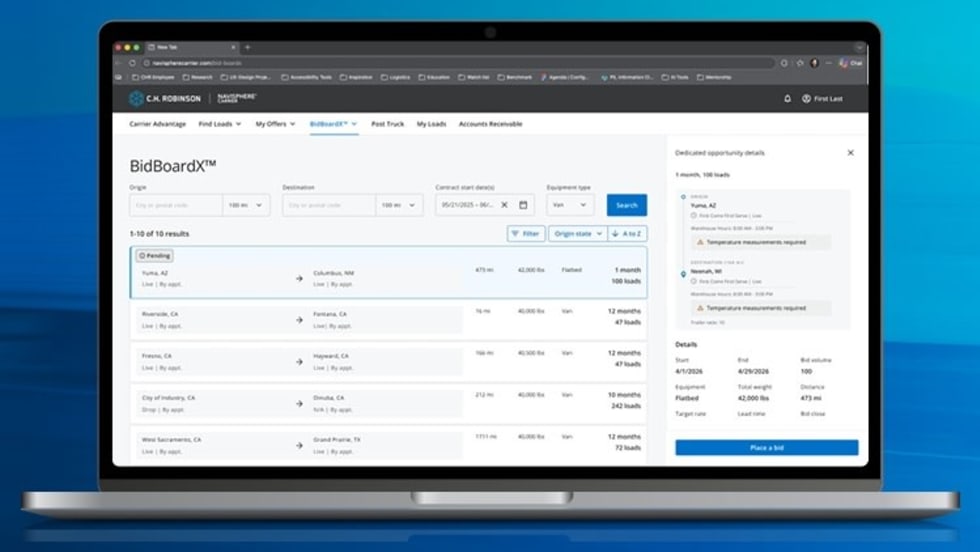
New C.H. Robinson Tool Opens Door to More Predictable Freight
BidBoardX lets carriers search, bid on, and secure committed freight opportunities through a single digital marketplace.
Read More →
New York City's Microhub Project is Delivering Results
Trucking, last-mile delivery companies, and environmental advocates like what they are seeing so far with New York's microhub program.
Read More →
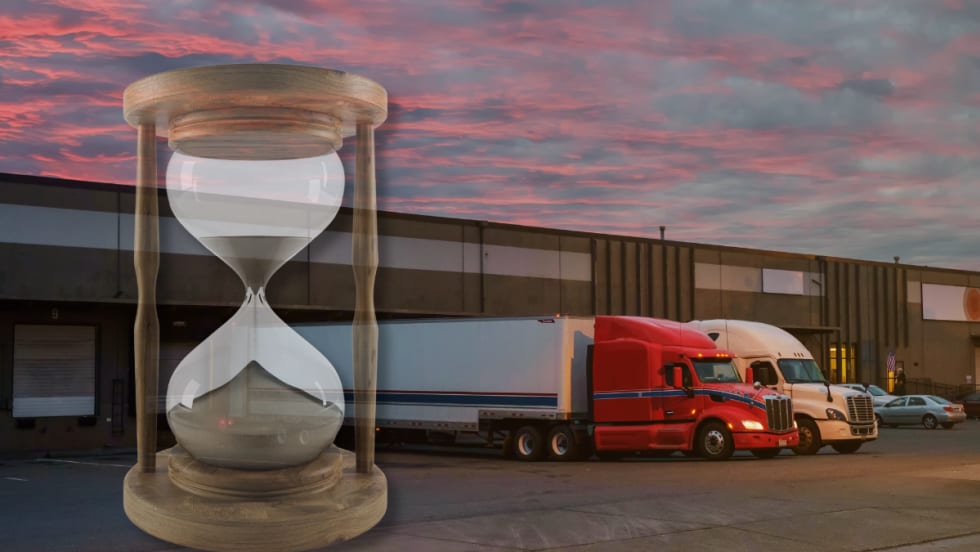
Why Truck Detention Keeps Costing Fleets Time and Money
A 2024 ATRI study found detention affects nearly 40% of truckload stops and costs the industry more than $15 billion annually. Despite the toll on drivers, fleets, and supply chains, the problem remains stubbornly persistent.
Read More →
Time is Running Out to Apply for Exclusive HDT Event
Heavy Duty Trucking Exchange brings fleet managers and suppliers together for the deeper conversations that lead to ideas, partnerships, and solutions. Time is running out to apply for the September event.
Read More →
Amazon Launches Less-Than-Truckload Freight Offering for All Businesses
This launch is the latest addition to Amazon Supply Chain Services, a portfolio of supply chain capabilities from Amazon, including freight, distribution, fulfillment, and parcel shipping.
Read More →
Import Cargo Volume to See Year-Over-Year Gain Again in June, Then Remain Below 2025 Levels Into Fall
After July, the report predicts a weakening in import volume as consumer uncertainty remains high and the impact of increasing inflation takes its toll.
Read More →
AUCTION OF EQUITY INTEREST IN HEAVY HAUL TRUCKING COMPANY!!
Mark your calendar: June 30, 2026 (10:00 a.m. PDT). A 37.5% ownership interest in MagnaTrans, LLC, a California limited liability company doing business as Magna Transportation Group, will be sold in an in-person and online auction to the highest bidder or bidders under Article 9 of the Uniform Commercial Code. The Rancho Cucamonga-based heavy haul and over-dimensional trucking company operates across California, Oregon, and Arizona.
Read More →
Volvo Trucks Adds Unattended Over-the-Air Software Update Capabilities
The latest evolution of Volvo’s over-the-air update technology allows software updates to run while trucks are parked, helping fleets keep vehicles current without disrupting operations.
Read More →
How Waste Connections is Using Data, Telematics, and AI
How do you manage and maintain more than 18,000 connected trucks? Data. Lots of it.
Read More →