




New Agentic Predictive Maintenance Report Demonstrates How Degraded Aftertreatment Systems Waste Fuel
Questar analyzed a large mixed-class fleet and discovered it was wasting as much as $30 in fuel per vehicle, per day, because of mechanically degraded aftertreatment systems.

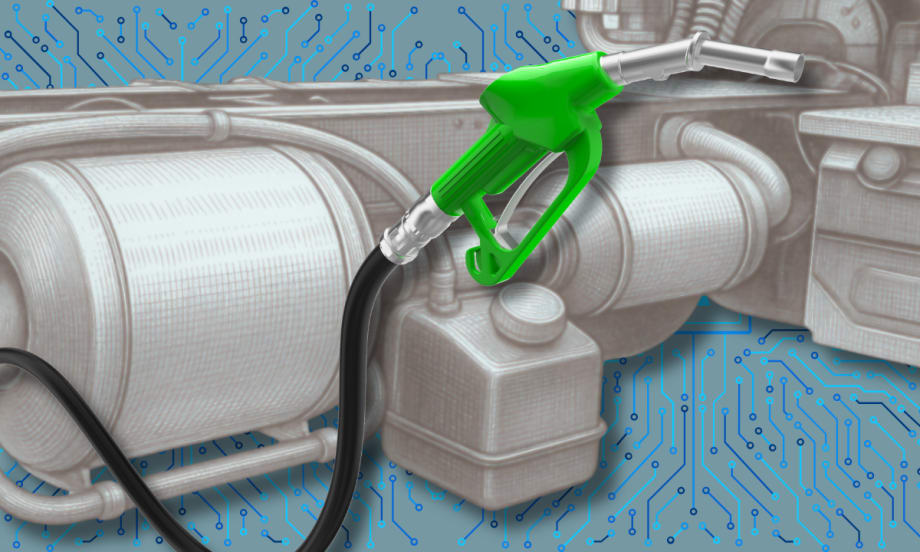
Questar analyzed a large mixed-class fleet and discovered it was wasting as much as $30 in fuel per vehicle, per day, because of mechanically degraded aftertreatment systems.
HDT Graphic
Degraded aftertreatment systems aren’t just a maintenance headache. They also could be wasting fuel.
While it’s no secret that a truck’s mechanical condition can affect fuel economy, that’s not as easily quantifiable as some other fuel-saving strategies. But artificial intelligence can change that, according to predictive maintenance provider Questar.
Questar analyzed a large mixed-class fleet and discovered it was wasting as much as $30 in fuel per vehicle, per day, because of mechanically degraded aftertreatment systems.
A clogged diesel particulate filter creates exhaust backpressure, forcing engines to work harder (and burn more fuel) to expel combustion gases. Degraded SCR systems trigger frequent, fuel-wasting active regeneration cycles to burn off soot.
In a new white paper, The Hidden Fuel Cost of Mechanical Degradation, Questar describes its findings. Excess fuel burned in vehicles operating with degraded diesel particulate filters and selective catalytic reduction systems was running $25 to $30 per day, an average of $27 per vehicle, per day.
In one example, a fleet vehicle showed an average of 0.13 – over 10% – gallons per hour wasted while idling.
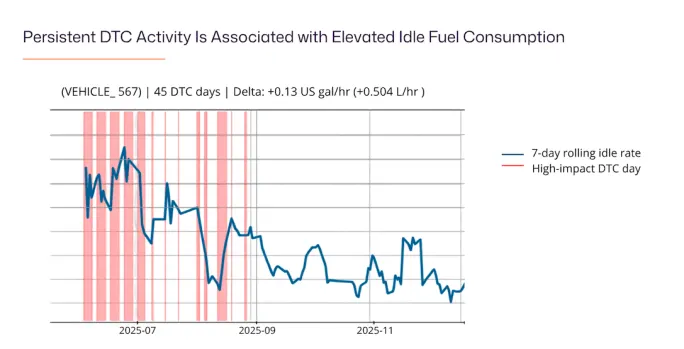
When the aftertreatment system is throwing persistent trouble codes, Questar found, it correlates to more fuel consumption
Questar
How AI Can Help
Questar’s AI-driven predictive maintenance platform gives companies real-time visibility into their fleet's health and the ability to ask questions in plain language.
The white paper explains how Questar's platform continuously collects and structures rich vehicle data, from raw telematics signals to diagnostic trouble codes, and runs machine learning models that produce accurate, explainable health scores for every major vehicle system.
The question, "Show me the quantifiable impact of aftertreatment system health on fuel consumption across my fleet's historical data,” initiated an autonomous research agent‘s exploration of the heavy-duty commercial fleet explored in the white paper.
Questar’s Deep Research Agent looked at thousands of vehicle-days, ingesting hundreds of sensor parameters and building predictive models of fuel consumption based on operating conditions, vehicle manufacturer, and type.
The agent built predictive models, trained them on fleet data, then used them to estimate how much fuel each vehicle should use given how it’s being driven on any given day. There were separate models for idle fuel consumption and for driving fuel efficiency.
Then it measured the gap between predicted and actual consumption.
Putting Numbers to the Problem
“Fleets have long understood that mechanical degradation can increase operating costs, but until now had no way to accurately identify and quantify the cause,” said Yuval Shalev, Questar VP for Data Science and AI, the paper’s author.
“Any experienced fleet engineer knows that a clogged DPF or a failing SCR system forces the engine to work harder. What has been missing is the ability to quantify how much fuel is actually being wasted — vehicle by vehicle, day by day, separated from every other factor that affects consumption.
“Aftertreatment system health — the condition of the DPF and SCR system — emerged as the dominant mechanical driver of excess fuel consumption, and now we can put numbers on it.”
More Maintenance

Truck Drivers Need More Than Another Alert
Fleets have more visibility into truck health, safety events, and driver activity than ever. The next challenge is turning all that information into useful guidance for the person who has to decide what to do next.
Read More →
The Maintenance Checks Trucking Fleets Should Prioritize Before Fall Freight Picks Up
Making it through August isn’t the same as being ready for the next several months of operation. Find out what systems may have suffered from summer heat and need to be checked out before fall.
Read More →
What Three Fleets Are Doing Differently When Buying Truck Parts in 2026
With freight improving but costs still climbing, fleet maintenance executives explain how they're balancing price, quality, and supplier relationships.
Read More →
Paccar Recalls 2027 Trucks Built This Summer for Possible Electrical Problem
The nearly 6,000 Kenworth and Peterbilt trucks in the recall could potentially lose engine power, among other things.
Read More →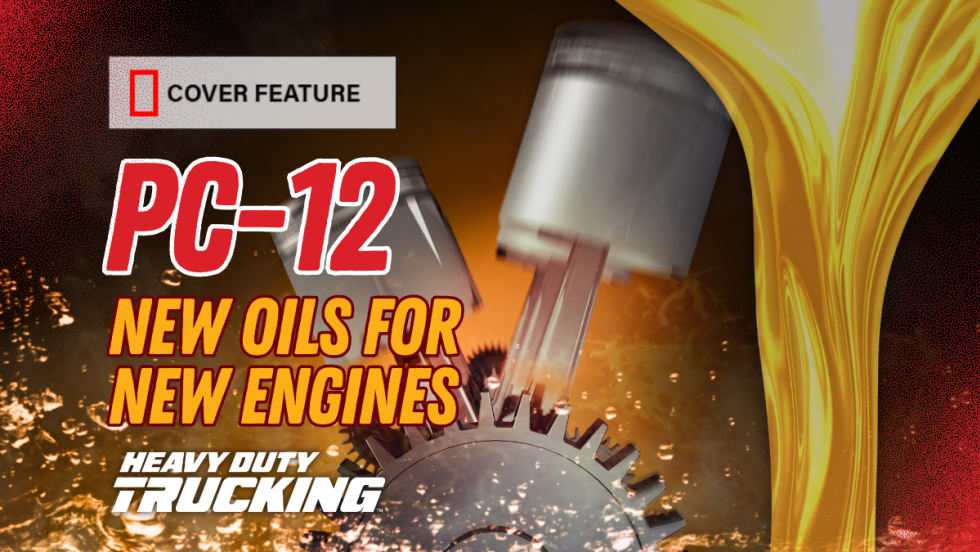
Will API PC-12 Oil Change Trucking Fleet Maintenance?
The new API PC-12 heavy-duty engine oil category reflects the changing demands of modern diesel engines. But fleets like Foodliner are looking to getting their own data before making decisions on adopting the new oils and questions such as extending oil drain intervals.
Read More →
Brake Safety Week to Focus on Drums and Rotors
Commercial vehicle inspectors are focusing on truck brakes during CVSA's Brake Safety Week, August 23-29.
Read More →
Possible Battery-Cable Fires Prompt Recall of 15,000+ International MV and HV Trucks
On the recalled vehicles, manufacturing variations can cause the battery interconnect cable to contact the auxiliary stud and hold down the bracket.
Read More →
Rush, MCT Team Up to Grow Refrigeration Service Network
The joint venture will operate MCT's network of Carrier Transicold dealerships and mobile service locations, with the companies promising greater service capacity and uptime for refrigerated fleets.
Read More →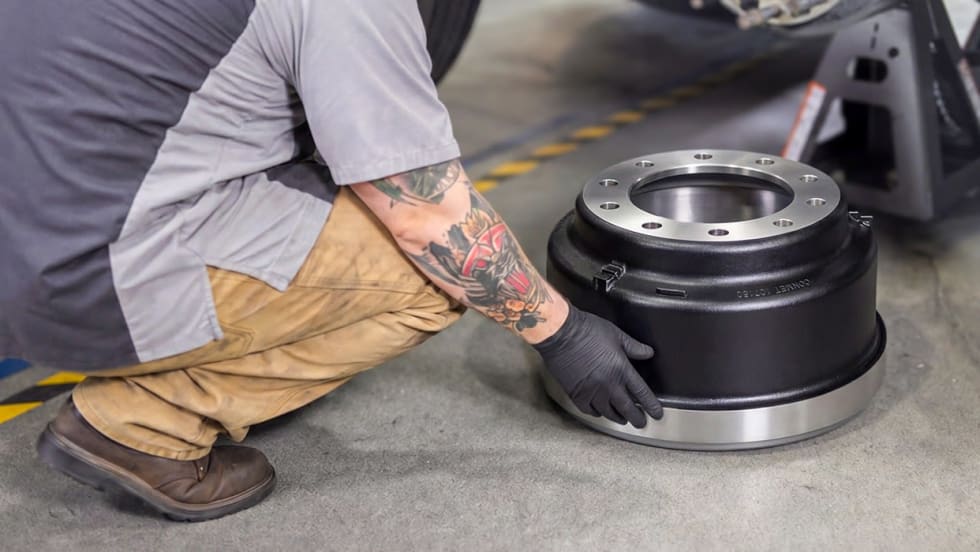
ConMet Expands Aftermarket Brake Drum Lineup With TruCast
A new heavy-duty truck brake drum option in the aftermarket gives customers more flexibility within the ConMet product family.
Read More →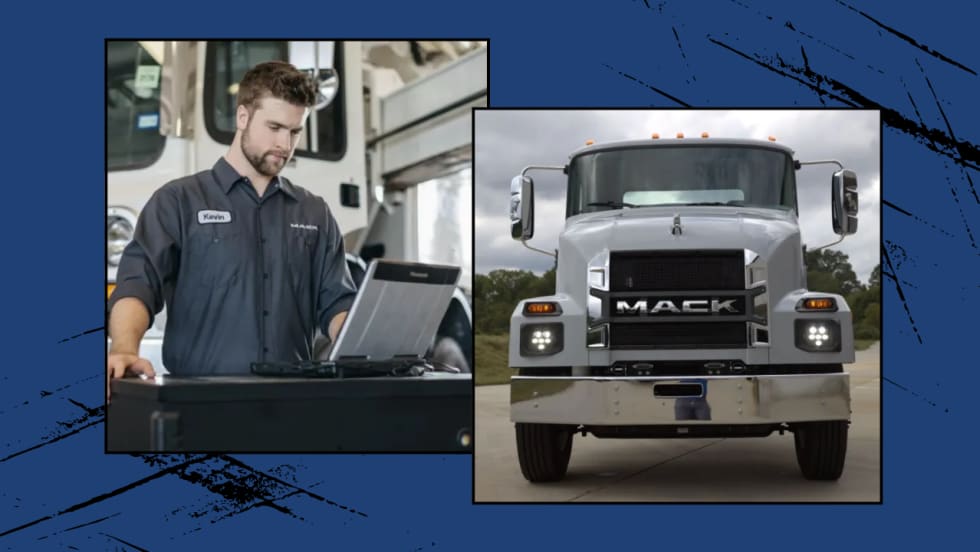
Mack Expands Premium Service Contract Coverage to Medium-Duty MD
With a service contract, inspections, preventive maintenance and repairs can be handled in a single visit instead of multiple ones.
Read More →