




Lytx Launches Surfsight AI-14 Dash Cam
Lytx’s new Surfsight AI-14 is designed to help fleets to elevate safety, reduce liability, and attain best-in-class performance.

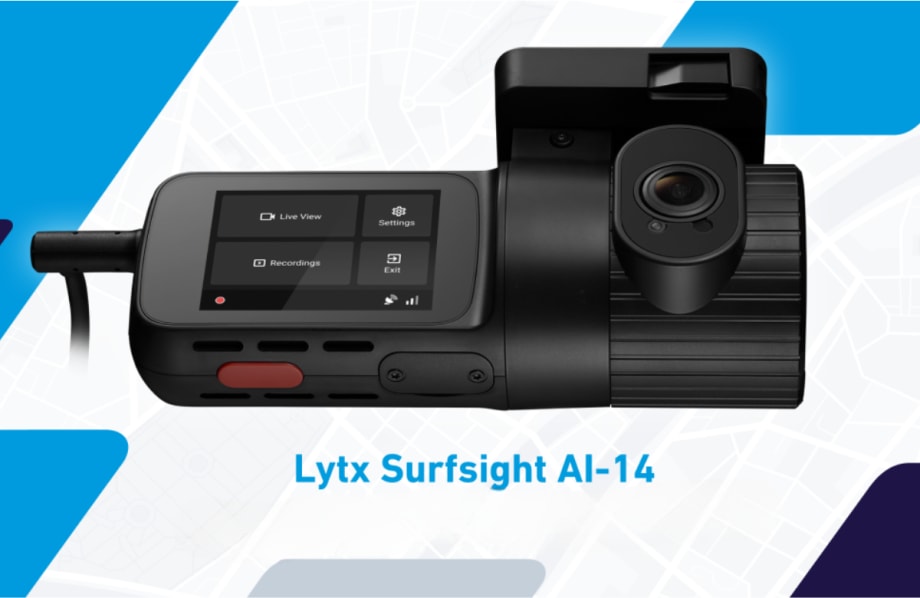
The Lytx Surfsight AI-14 dash camera uses visual and audio in-cab alerts help keep drivers attentive and focused.
Photo: Lytx
Lytx has launched the Lytx Surfsight AI-14 dash cam. The new unit features the next generation of Lytx’s machine vision and artificial intelligence (MV+AI) technology.
According to Lytx, the AI-14 dash cam offers greater risk detection, durability, intelligence, global coverage, and versatile privacy controls to meet the evolving needs of fleets and ecosystem partners across the globe.
Designed for Future Technologies
The AI-14 is built on the culmination of decades of Lytx’s video safety expertise and innovation, the company said.
According to Lytx, the global demand for smarter, safer, and more efficient fleet solutions is accelerating. To meet those needs, the AI-14 is designed emerges not just to meet today’s challenges, but to deliver future innovations.
The AI-14 offers fleets beneficial insights, real-time risk detection, and the power to elevate fleet safety and efficiency, the company said.
“Centered on improving fleet and driver safety, the AI-14 was developed for evolving reseller partner and fleet needs and delivers a flexible, open platform, powerful hardware, configurability, and enables fast time to market,” said Casey McGee, chief revenue officer at Lytx. “With these enterprise-ready devices being deployed now, our reseller partners and fleets worldwide are better equipped to meet the unique challenges of the road and their daily operations.”
Powered with the AI-14 dash cam, Lytx Surfsight delivers:
Proactive Risk Detection: On-board award-winning MV+AI technology to proactively identify and detect driving risk at the edge.
Real-Time Driver Alerts: Visual and audio in-cab alerts help keep drivers attentive and focused, promoting safer road habits.
Integrated Touchscreen: The only dash cam in its class with an LCD touchscreen, making installation, configuration, and operation intuitive and efficient.
Configurable Audio Recording: Flexible audio recording options can enable the capture of sound inside and outside the vehicle.
Road-Facing ADAS Features: Includes following distance, critical distance, and rolling stop. Pedestrian detection and red light detection will be added soon.
Passenger Limit: Notifies fleets when cabin occupancy exceeds the defined threshold and captures valuable data to support investigations, enforce policy, and recover assets.
Tamper-Resistant Design: Built to deter unauthorized removal, vandalism, and theft for added security and reliability.
Event Tagging Made Easy: Convenient record buttons let drivers mark key events, simplifying video review and retrieval.
Seamless Updates: Over-the-air firmware updates ensure the device stays current, eliminating the need for manual downloads.
“Surfsight AI-14 elevates and enhances what our reseller partners and fleets already love about the Surfsight platform, such as the lens as a sensor setting, which captures risk without recording, and streaming recorded video on demand,” said Rajesh Rudraradhya, chief technology officer at Lytx. “Our innovation helps protect a world in motion and we’re driven by fleets who prioritize telematics and want to add video, while also keeping safety top of mind. The AI-14 will continue to support those endeavors with fatigue detection and as new front-facing ADAS features like pedestrian and red light detection are added.”
The Lytx Surfsight AI-14 is available now in North America and will be released in other regions in the coming months (release dates vary by region).
For Geotab customers, it will be available through their Order Now program starting in September 2025.
More Safety & Compliance

A Camera Isn't a Safety Program. Here's What Brokers Are Screening for Now
Footage alone may not be enough to pass broker vetting processes. Here's what counts as a defensible safety program now.
Read More →
Marijuana and Trucking’s Drug-Testing Dilemma
Marijuana is getting stronger, laws are changing, and drug tests still can’t reliably establish impairment. What does that mean for truck drivers and the fleets that employ them?
Read More →
PrePass, Kodiak Connect Driverless Trucks to Roadside Enforcement
The system will allow enforcement agencies to verify Enhanced Inspection information and decide whether Kodiak’s autonomous trucks can bypass roadside screening sites.
Read More →

From One Generation to the Next: How Mentorship Builds Safer Truck Drivers
After three decades in trucking, Harold Perry shares what he's learned about driver safety, mentorship, and helping the next generation build confidence behind the wheel.
Read More →
FMCSA Pauses Biennial-Update Enforcement Amid Motus Transition
Carriers whose updates were due on or after June 1 have more time, while FMCSA works to stabilize its new registration system and warns of phishing sites impersonating its new carrier registration system, Motus.
Read More →
ZF Expands Commercial Vehicle Push in North America
ZF is expanding its North American commercial-vehicle presence with new transmission applications, electrification, trailer technology and autonomous-driving systems.
Read More →
Truck Drivers Need More Than Another Alert
Fleets have more visibility into truck health, safety events, and driver activity than ever. The next challenge is turning all that information into useful guidance for the person who has to decide what to do next.
Read More →
Tesla Wants a Self-Driving Semi. Are Cameras Enough?
Could Tesla’s camera-only autonomous driving technology work on an 80,000-pound Semi? In this commentary, HDT's Deborah Lockridge takes a look at Tesla, Cybercab, and how autonomous trucks see the road.
Read More →
What DOT’s Automated Vehicle Strategy Means for Trucking
The U.S. Department of Transportation issued a new automated-vehicle strategy that outlines plans for driverless-truck regulations, cross-state freight corridors, and federal safety standards.
Read More →
NYC Expands Speed, Pedestrian Safety Tech Across Fleet
New York City is expanding intelligent speed assistance and pedestrian-alert systems across its municipal fleet, moving the technologies from pilot programs into vehicle procurement and retrofit requirements.
Read More →