




Intermodal Groups Say They Can't Meet Reflective Retrofit Deadline
The intermodal industry says it can't meet a June 1 deadline for retrofitting trailers and chassis with required reflective materials
The intermodal industry says it can't meet a June 1 deadline for retrofitting trailers and chassis with required reflective materials.
The Assn. of American Railroads, the Institute of International Container Lessors, the Intermodal Assn. of North America, and the Ocean Carrier Equipment Management Assn. have petitioned the Federal Motor Carrier Safety Administration for a one-year extension of the deadline. In March 1999, the FMCSA mandated relective retrofits to all trailers and chassis made before Dec. 1, 1993. (New trailers and chassis made since that date already were required to have reflective materials.)
"Unanticipated technical problems in applying the reflective material, as well as unexpectedly high cargo levels placing severe demands on intermodal equipment, have made the original effective date unrealistic," says the petition.
Intermodal operators found that attaching reflective materials with adhesive didn't work, because it wouldn't stick to the protective coating used on chassis. Mounting the reflective material onto metal or plastic strips then riveting them to the chassis didn't work, either; plastic strips buckled after a few weeks, and the riveting process was too time-consuming. Finally a special tool known as the "Hilti Fastener" was developed to weld reflector-mounted aluminum strips onto chassis, but a lack of trained and qualified labor slowed the process.
In addition, it wasn't possible to do the retrofitting as part of routine equipment inspection and maintenance programs, says the petition, because much of this is done while the chassis is loaded with a container, which doesn't allow access to some parts of the chassis frame.
On June 1, the groups say, there will still be about 193,000 intermodal chassis and trailers still to be retrofitted - out of the estimated 430,000 intermodal units covered by the regulations. However, because most chassis only travel very short distances, the groups note that less than 7 percent of chassis and trailers currently operating on U.S. highways will need retrofitting after the current deadline.
The groups say that unless the deadline is extended, severe equipment shortages could occur during the peak shipping period, leading to congestion and gridlock at ports and inland intermodal facilities.
More Fleet Management

What the U.S.-Canada Trade War Means for Trucking
Escalating U.S.-Canada tariffs could disrupt cross-border freight, reduce truck volumes, raise costs, and create new uncertainty for carriers on both sides of the border.
Read More →
What Are Trucking’s Top Concerns for 2026?
The American Transportation Research Institute wants to know what's worrying trucking fleet managers, drivers, and other stakeholders in its annual Industry Issues survey.
Read More →
American Trucking Associations Looks for a New Leader
ATA President and CEO Chris Spear abruptly left his job at the association on August 21, at a pivotal time for the trucking industry.
Read More →
Public Wi-Fi Cybersecurity Risks: How Truck Drivers and Fleets Can Protect Their Data
Public Wi-Fi can expose truck drivers and fleets to credential theft, malware, and other cyber threats. Here’s how to reduce the risk on the road.
Read More →
For Nicky Cupp, Fleet Innovation Starts With Frustration
HDT Truck Fleet Innovator Nicky Cupp turns everyday pain points at Fraley & Schilling into opportunities for better technology and smarter processes.
Read More →
Adam Buttgenbach’s Approach to Electric Trucks: Start With Where They Fit
HDT Truck Fleet Innovator Adam Buttgenbach helped PepsiCo build one of North America’s largest EV fleets by focusing on where electric trucks make operational sense.
Read More →
Deen Albert: Let Automation Do the Math, People Make the Decisions
HDT Truck Fleet Innovator Deen Albert makes sure people are still at the heart of operations at Grand Island Express, even while adopting artificial intelligence tools. AI-assisted dispatch helped boost revenue 25% with the same number of trucks.
Read More →
Trimble’s New AI Agent Takes Aim at Fleet Back-Office Busywork
Arc Agent works across Trimble TMS products to automate repetitive tasks such as freight orders, maintenance, invoices, fuel costs and more.
Read More →
How HDT’s 2026 Truck Fleet Innovators Are Rethinking Fleet Operations
Meet five trucking leaders who are challenging assumptions, solving operational problems, and putting innovative ideas to work.
Read More →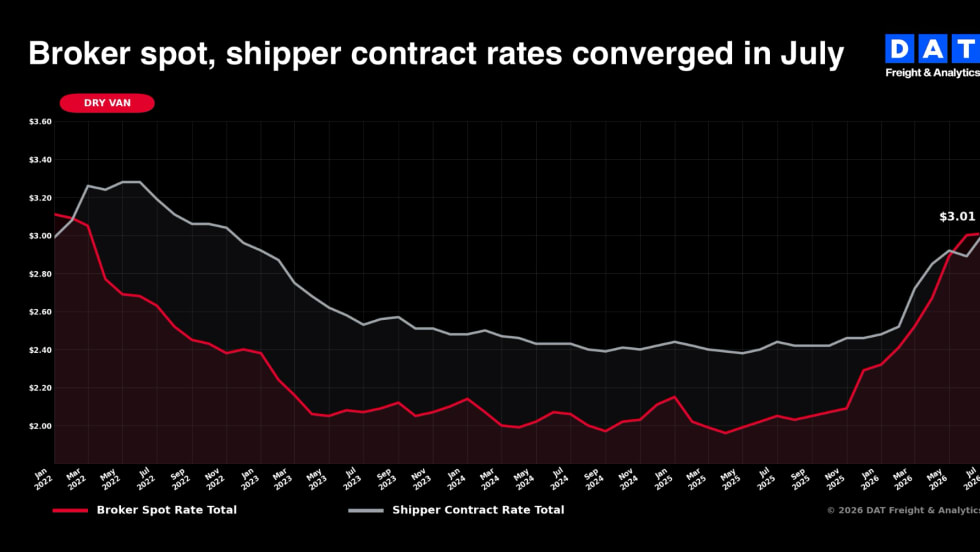
Tight Trucking Capacity Pushes Rates Higher Even as Freight Volumes Fall
“Spot rates moving ahead of contract rates have historically signaled a tightening market, but we haven’t seen a capacity-driven market quite like this one,” said DAT's Dean Croke.
Read More →