




How Long Will Congress Keep Highway Bill on Back Burner?
The Capitol Hill recess is finally over and trucking can hope that during their weeks away from Capitol Hill, every Member of Congress heard earfuls from constituents about the abysmal condition of roads and bridges in their home states and districts.

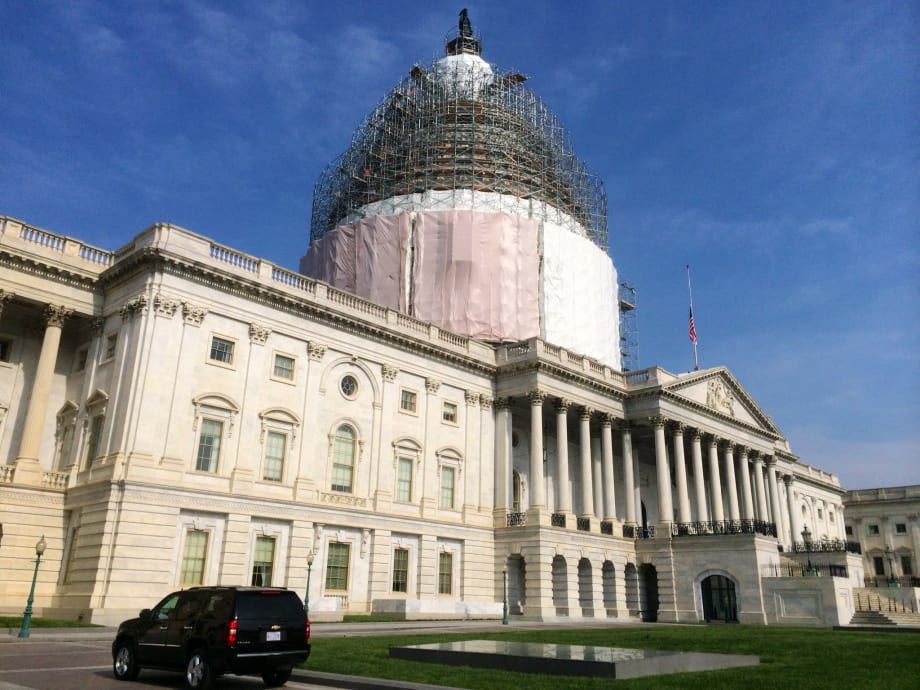
U.S. Capitol Photo: David Cullen

U.S. CapitolPhoto: David Cullen
The Capitol Hill recess is finally over and everyone in trucking can hope that during their weeks away from Capitol Hill, every Member of Congress heard earfuls from constituents about the abysmal condition of roads and bridges in their home states and districts.
Whether they did or not, not to mention whether or not they listened, won’t necessarily compel them to quickly pass a fully funded, multi-year surface transportation package.
Before heading out of town, Congress did pass a three-month extension of highway funding authorization. That runs out on Oct. 29— a scant seven weeks from now.
While the Senate separately passed a $50-billion, six-year highway bill in late July (although it funds federal highway and other surface-transportation infrastructure projects for just three years), the House has yet to even float its version of a multi-year bill.
So, the lower chamber must quickly draw up and pass a long-term measure and then it must be reconciled with the existing Senate bill in conference.
And if all that doesn’t happen by late October, yet another short-term patch will have to be slapped in place to keep the Highway Trust Fund solvent for a few more months.
On a positive note, according to a Politico.com post, the House Transportation and Infrastructure Committee could present its own multi-year transportation bill sometime this week and possibly mark it up as early as next week.
“Committee leaders are hoping to move the bill through committee and onto the House floor before the end of the month, setting the stage for House and Senate dealmakers to negotiate a final agreement in October,” reported Heather Caygle for Politico.
Getting a long-term highway bill passed will also require sorting out which of the many policy riders favored by trucking will make it into the final measure.
These entail everything from reforming the Carrier, Safety, Accountability compliance program to enabling the use of hair samples in drug-testing to setting up a pilot program to allow 18- to 21-year old CDL holders to run interstate.
And then there is the proposal to permit nationwide operation of twin 33-ft highway doubles and the measure seeking to raise the minimum insurance level required for carriers and to require that drivers be paid by the hour.
In any event, it’s good to know that rebuilding the nation’s crumbling infrastructure via a fully funded, multi-year surface transportation package remains a bipartisan mission.
Exemplifying how roads and bridges still transcend politics is a news conference to be held this week at the National Press Club in Washington.
At that event,Transportation Secretary Anthony Foxx, Teamsters President Jim Hoffa and former Governor or Mississippi Haley Barbour, who also once served as Chairman of the Republican National Committee, will “address the immediate need to fund infrastructure building, maintenance and repair.”
The trouble is there are highly partisan battles over other measures that will be waged on Capitol Hill starting this month that threaten to keep long-term highway legislation simmering away on a back burner.
Chief among these is authorizing overall federal funding by a September 30 deadline while averting another politically damaging government shutdown.
Then there’s the all-but-promised bruising fight over ratifying President Obama’s no-nukes treaty with Iran that will take place this month on the Senate floor.
And while the historic address before a joint session of Congress by Pope Francis on September 24 will be a welcome distraction from partisan politics for many, it will be a distraction nonetheless for lawmakers with urgent business to conduct— and complete.
More Fleet Management

Color Match Smarter: Tools That Restore & Perform
For fleet managers and collision repair professionals keeping heavy-duty trucks on the road, getting the color right the first time isn't just about appearance — it's about efficiency, turnaround time, and bottom-line results. Discover how today's digital color tools are transforming the repair process from guesswork to precision.
Read More →
FMCSA Pauses Biennial-Update Enforcement Amid Motus Transition
Carriers whose updates were due on or after June 1 have more time, while FMCSA works to stabilize its new registration system and warns of phishing sites impersonating its new carrier registration system, Motus.
Read More →
2026 Blueprint for Countering Smarter Supply Chain Theft
Cargo theft is no longer just the cost of doing business. It's a multi-billion-dollar criminal enterprise exploiting vulnerabilities across your fleet, drivers, and supply chain.
Read More →


How Telematics Improves Visibility, Control, and Performance in Refrigerated Fleets
Explore how telematics help refrigerated fleets improve visibility, uptime, efficiency, compliance, and cargo protection across connected cold chain operations.
Read More →
What the U.S.-Canada Trade War Means for Trucking
Escalating U.S.-Canada tariffs could disrupt cross-border freight, reduce truck volumes, raise costs, and create new uncertainty for carriers on both sides of the border.
Read More →
What Are Trucking’s Top Concerns for 2026?
The American Transportation Research Institute wants to know what's worrying trucking fleet managers, drivers, and other stakeholders in its annual Industry Issues survey.
Read More →
American Trucking Associations Looks for a New Leader
ATA President and CEO Chris Spear abruptly left his job at the association on August 21, at a pivotal time for the trucking industry.
Read More →
Public Wi-Fi Cybersecurity Risks: How Truck Drivers and Fleets Can Protect Their Data
Public Wi-Fi can expose truck drivers and fleets to credential theft, malware, and other cyber threats. Here’s how to reduce the risk on the road.
Read More →
For Nicky Cupp, Fleet Innovation Starts With Frustration
HDT Truck Fleet Innovator Nicky Cupp turns everyday pain points at Fraley & Schilling into opportunities for better technology and smarter processes.
Read More →
Adam Buttgenbach’s Approach to Electric Trucks: Start With Where They Fit
HDT Truck Fleet Innovator Adam Buttgenbach helped PepsiCo build one of North America’s largest EV fleets by focusing on where electric trucks make operational sense.
Read More →