





Related: Do Low Spot Freight Rates Mean Brokers Are Gouging Truckers?
FMCSA Asks for Comments on Broker Transparency Petitions
The Federal Motor Carrier Safety Administration is asking for public comment on a proposal backed by owner-operator/small-fleet groups to address the transparency of broker rates.
August 19, 2020
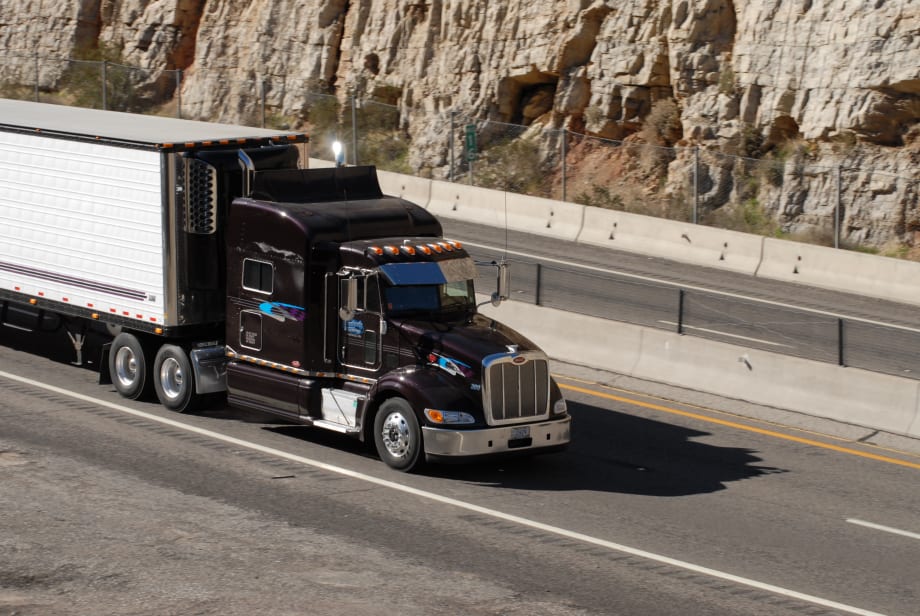
Owner-operators and small fleets say brokers skirt federal regulations regarding recordkeeping.
Photo: Jim Park
4 min to read
The Federal Motor Carrier Safety Administration is asking for public comment on a proposal backed by owner-operator/small-fleet groups to address the transparency of broker rates. The notice is in response to petitions filed by the Owner-Operator Independent Drivers Association and the Small Business in Transportation Coalition.
As spot rates plummeted earlier this year due to the drop in demand caused by the COVID-19 shutdown, many owner-operators and small fleets were convinced that brokers were taking unfair advantage of the situation. With rates hitting five-year lows in April, owner-operators staged protests all over the country, calling for more broker regulation.
One problem is that carriers, despite regulations that require it, don’t have transparency into what shippers are actually paying brokers, according to critics.
The Owner-Operator Independent Drivers Association contends that brokers often find ways of avoiding federal regulations (49 C.F.R. 371.3) requiring them to keep records of transactions and make them available to motor carriers.
Many carriers, including owner-operators, sign contracts with brokers that waive Part 371.3 requirements, the association explained in a May 6 letter to Congress. OOIDA said the practice is so prevalent that truckers often have no other choice if they want to haul a brokered load.
In an interview with HDT earlier this year, OOIDA Executive Vice President Lewie Pugh said the association has asked FMCSA repeatedly for years to have some oversight on this transparency rule.
Pugh outlined two issues. One is the fact that most brokers have a clause in the contracts carriers must sign waiving their right to 371.3. “We don't even think that's legal to do that, to exempt yourself from a regulation. I mean, drivers can't exempt themselves from hours of service or any of the rules or the regs, and if they do, or they don't follow them, they get fined and they may even get their authority revoked. But brokers are doing this every day. And there's no penalty for their actions.”
Secondly, he said, brokers often will insist that if a carrier wants to see those records, “they tell them they have to come to their office. Well, the broker might be in Cincinnati, Ohio, and the truck owner might be in California. So that's not really convenient.”
In response to OOIDA's letter to Congress, the Transportation Intermediaries Association, a group representing brokers, sent a letter to members recommending that when faced with trucker requests for transparency, “to explain that if they do this, that you will be unable to load them with any shipper freight requiring confidentiality, and that represents ‘X’ percent of your available loads,” which OOIDA characterized as essentially threatening anyone who asks brokers respect the regulations with fewer loads.
What the Broker Transparency Petition Asks, and What FMCSA Wants to Know
Both OOIDA and SBTC petitioned the FMCSA to address the problem:
OOIDA requests that FMCSA require property brokers to provide an electronic copy of each transaction record automatically within 48 hours after the contractual service has been completed, and prohibit explicitly brokers from including any provision in their contracts that requires a motor carrier to waive its rights to access the transaction records.
SBTC requests that FMCSA prohibit brokers from coercing or otherwise requiring parties to brokers' transactions to waive their right to review the record of the transaction as a condition for doing business. SBTC also requests that FMCSA adopt regulatory language indicating that brokers' contracts may not include a stipulation or clause exempting the broker from having to comply with the transparency requirement.
In a news alert on the rulemaking, the trucking attorneys at Scopelitis, Garvin, Light, Hanson & Feary noted that FMCSA has specifically requested comment on these issues:
whether the agency has statutory authority to provide the requested redress
what actions the agency should take to ensure appropriate exercise of such authority (assuming it exists)
whether perceived roadblocks to receiving records are more common amongst large brokers, small brokers, or is the issue more widely spread
if large brokers only, what revenue threshold should be adopted with a rule (if one is adopted)
how would electronic records be provided to carriers as OOIDA demands;
cost estimates related to complying with OOIDA’s request;
quantitative benefit to motor carriers if FMCSA adopted OOIDA’s and SBTC’s requests; and
a quantitative estimate of the economic costs to brokers or others if FMCSA adopted the rules OOIDA and SBTC request.
Questions About FMCSA's Jurisdiction
There has been some question about whether the FMCSA has the authority to regulate brokers in this fashion. As Pugh said, “our argument is if drivers are paid correctly, they're usually safer. But regardless, we feel that this is a regulation, it's FMCSA’s job to enforce these regulations.”
In fact, a document put out by the FMCSA as a guide for small brokers talks about the broker recordkeeping requirements. On 49 CFR 371.3, it says, “All brokers must keep records of all transactions and all shipments for which they arrange transportation,” and lists the information required for each transaction, including “the amount of compensation received by you for the brokerage service you performed and the name of the person who paid,” and says, “you must allow shippers and motor carriers involved in your brokered transactions to review records pertinent to them.”
Comments on the petitions will be accepted through October 19; more information at www.federalregister.gov.
HDT Equipment Editor Jim Park contributed to this story.
More Fleet Management

Sponsored•September 16, 2026
Color Match Smarter: Tools That Restore & Perform
For fleet managers and collision repair professionals keeping heavy-duty trucks on the road, getting the color right the first time isn't just about appearance — it's about efficiency, turnaround time, and bottom-line results. Discover how today's digital color tools are transforming the repair process from guesswork to precision.
Read More →
FMCSA Pauses Biennial-Update Enforcement Amid Motus Transition
Carriers whose updates were due on or after June 1 have more time, while FMCSA works to stabilize its new registration system and warns of phishing sites impersonating its new carrier registration system, Motus.
Read More →
Sponsored•September 14, 2026
2026 Blueprint for Countering Smarter Supply Chain Theft
Cargo theft is no longer just the cost of doing business. It's a multi-billion-dollar criminal enterprise exploiting vulnerabilities across your fleet, drivers, and supply chain.
Read More →


Sponsored•September 1, 2026
How Telematics Improves Visibility, Control, and Performance in Refrigerated Fleets
Explore how telematics help refrigerated fleets improve visibility, uptime, efficiency, compliance, and cargo protection across connected cold chain operations.
Read More →
What the U.S.-Canada Trade War Means for Trucking
Escalating U.S.-Canada tariffs could disrupt cross-border freight, reduce truck volumes, raise costs, and create new uncertainty for carriers on both sides of the border.
Read More →
What Are Trucking’s Top Concerns for 2026?
The American Transportation Research Institute wants to know what's worrying trucking fleet managers, drivers, and other stakeholders in its annual Industry Issues survey.
Read More →
American Trucking Associations Looks for a New Leader
ATA President and CEO Chris Spear abruptly left his job at the association on August 21, at a pivotal time for the trucking industry.
Read More →
Public Wi-Fi Cybersecurity Risks: How Truck Drivers and Fleets Can Protect Their Data
Public Wi-Fi can expose truck drivers and fleets to credential theft, malware, and other cyber threats. Here’s how to reduce the risk on the road.
Read More →
For Nicky Cupp, Fleet Innovation Starts With Frustration
HDT Truck Fleet Innovator Nicky Cupp turns everyday pain points at Fraley & Schilling into opportunities for better technology and smarter processes.
Read More →
Adam Buttgenbach’s Approach to Electric Trucks: Start With Where They Fit
HDT Truck Fleet Innovator Adam Buttgenbach helped PepsiCo build one of North America’s largest EV fleets by focusing on where electric trucks make operational sense.
Read More →