





Is Your MCS-150 Hurting Your CSA Scores?
Fleet Advantage: Top Logistics Fleets Outperform National Safety Benchmarks
Fleet Advantage's latest TRUST Safety Index found leading logistics fleets maintained significantly lower out-of-service rates and stronger safety scores than national averages, while highlighting persistent challenges related to tires, brakes, and unsafe driving behaviors.
June 3, 2026
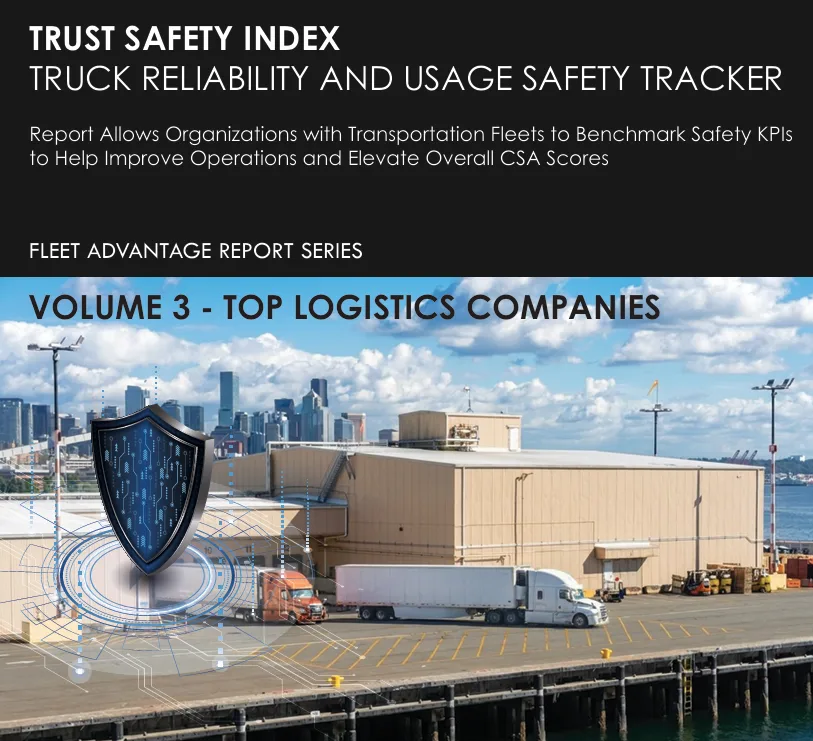
Fleet Advantage's latest TRUST Safety Index found that leading logistics fleets continue to outperform national averages across several key safety and compliance metrics.
Credit:
Fleet Advantage
3 min to read
Fleet Advantage has released the latest edition of its Truck Reliability and Usage Safety Tracker (TRUST) Safety Index, offering a new look at how top-performing logistics fleets compare with national safety benchmarks and other private fleets.
The Fort Lauderdale, Florida-based fleet financing and analytics company said the report is designed to help fleets use safety, compliance, and maintenance data to proactively address risk as federal regulators place greater emphasis on data-driven oversight and predictive safety management.
According to Fleet Advantage, the latest TRUST Safety Index found that leading logistics fleets continue to outperform national averages across several key safety and compliance metrics.
Among the report's findings, top logistics organizations posted an average Inspection Selection System (ISS) score of 34.17. That’s well below the Federal Motor Carrier Safety Administration's intervention threshold of 65 and better than the average score of 46.33 recorded among top private fleets.
The report also found that logistics fleets maintained relatively strong Compliance, Safety, Accountability (CSA) scores.
Average Unsafe Driving BASIC scores measured 18.08, compared with the FMCSA intervention threshold of 65, while Hours-of-Service BASIC scores averaged 41.91.
Top Logistics Fleets Score Well Below FMCSA Intervention Thresholds
Fleet Advantage said the findings come as the FMCSA continues shifting toward a more data-centric oversight model. This new approach increasingly incorporates telematics, predictive analytics, and behavioral data into safety monitoring efforts.
Fleet Advantage found that fleets leveraging advanced analytics can identify emerging risks before they result in violations, crashes, or regulatory intervention.
The report also noted that insurance providers are placing greater scrutiny on fleet safety performance. Fleet Advantage cited American Transportation Research Institute data showing trucking insurance premiums reached a record 10.2 cents per mile in 2024 following a 12.5% increase the previous year. The company also pointed to a sharp rise in so-called nuclear verdicts, which have increased 235% since 2012.
Out-of-Service Rates Remain Far Below National Averages
One of the report's most notable findings was the gap between top logistics fleets and national inspection results.
The TRUST Safety Index found that total out-of-service inspection rates averaged 9.28% among leading logistics fleets, less than half the national average of 20.18%.
Vehicle out-of-service rates averaged 13.23%, compared with a national average of 22.26%, while driver out-of-service rates measured just 1.11%, significantly below the national average of 6.67%.
Fleet Advantage noted that the national out-of-service rate increased from 19.61% in the previous benchmark period, suggesting broader compliance challenges across the industry.
Tires and Brakes Continue to Drive Maintenance Violations
The report identified maintenance-related issues as an ongoing opportunity for fleets seeking additional safety and operational gains.
According to the analysis, tire-related violations accounted for 50% of all vehicle maintenance violations and 92% of out-of-service events. Fleet Advantage said the findings reinforce the value of proactive tire management programs and preventive maintenance practices.
Brake-related issues also remained a significant concern. The report found that "Brakes, All Other" violations represented 42% of vehicle maintenance violations. The findings align with recent Commercial Vehicle Safety Alliance brake enforcement efforts that continue to identify brake defects as a leading cause of out-of-service violations.
Data Analytics Become Increasingly Important for Fleet Safety
The report also found that dangerous driving behaviors accounted for 75% of unsafe-driving violations among the fleets studied.
Fleet Advantage said the findings underscore the importance of technologies and programs. These include advanced driver assistance systems such as inward- and outward-facing cameras, driver scorecards, and ongoing driver coaching initiatives.
As regulators, insurers, and shippers increasingly focus on safety performance, the company said data analytics and predictive modeling will play a growing role in helping fleets improve CSA scores, reduce risk exposure, and lower operating costs.
More Safety & Compliance

Sponsored•October 6, 2026
A Camera Isn't a Safety Program. Here's What Brokers Are Screening for Now
Footage alone may not be enough to pass broker vetting processes. Here's what counts as a defensible safety program now.
Read More →
Marijuana and Trucking’s Drug-Testing Dilemma
Marijuana is getting stronger, laws are changing, and drug tests still can’t reliably establish impairment. What does that mean for truck drivers and the fleets that employ them?
Read More →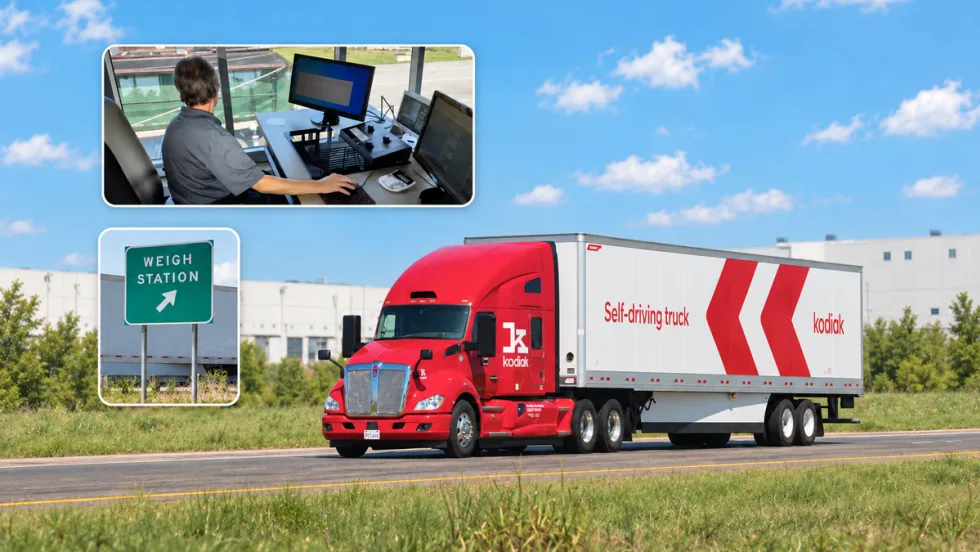
PrePass, Kodiak Connect Driverless Trucks to Roadside Enforcement
The system will allow enforcement agencies to verify Enhanced Inspection information and decide whether Kodiak’s autonomous trucks can bypass roadside screening sites.
Read More →

From One Generation to the Next: How Mentorship Builds Safer Truck Drivers
After three decades in trucking, Harold Perry shares what he's learned about driver safety, mentorship, and helping the next generation build confidence behind the wheel.
Read More →
FMCSA Pauses Biennial-Update Enforcement Amid Motus Transition
Carriers whose updates were due on or after June 1 have more time, while FMCSA works to stabilize its new registration system and warns of phishing sites impersonating its new carrier registration system, Motus.
Read More →
ZF Expands Commercial Vehicle Push in North America
ZF is expanding its North American commercial-vehicle presence with new transmission applications, electrification, trailer technology and autonomous-driving systems.
Read More →
Truck Drivers Need More Than Another Alert
Fleets have more visibility into truck health, safety events, and driver activity than ever. The next challenge is turning all that information into useful guidance for the person who has to decide what to do next.
Read More →
Tesla Wants a Self-Driving Semi. Are Cameras Enough?
Could Tesla’s camera-only autonomous driving technology work on an 80,000-pound Semi? In this commentary, HDT's Deborah Lockridge takes a look at Tesla, Cybercab, and how autonomous trucks see the road.
Read More →
What DOT’s Automated Vehicle Strategy Means for Trucking
The U.S. Department of Transportation issued a new automated-vehicle strategy that outlines plans for driverless-truck regulations, cross-state freight corridors, and federal safety standards.
Read More →
NYC Expands Speed, Pedestrian Safety Tech Across Fleet
New York City is expanding intelligent speed assistance and pedestrian-alert systems across its municipal fleet, moving the technologies from pilot programs into vehicle procurement and retrofit requirements.
Read More →