





Related: EPA Aims to Cut NOx Emissions from Heavy-Duty Trucks
EPA Truck NOx Pre-Rule Faces Bumpy Ride
The EPA is looking to establish more stringent heavy-duty diesel truck emission standards for oxides of nitrogen (NOx) and other pollutants. The exact rule may well hinge on public comments— and the agency may be deluged by them, both pro and con, given the early reaction.
January 6, 2020
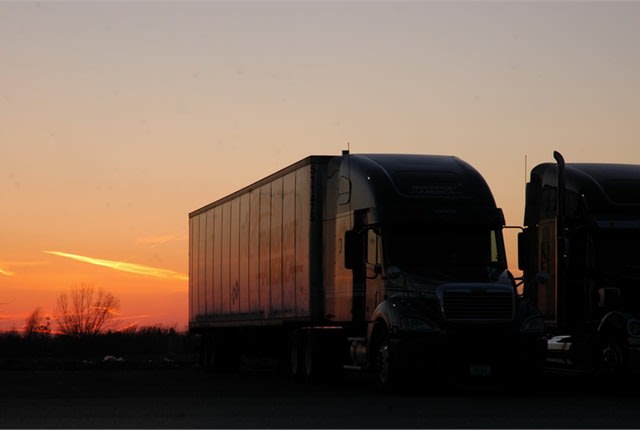
The repeated references to anti-NOx action taken by the separate states, not just the federal government, by stakeholders both pro and con underscores that the EPA initiative is not a mere technical update.
File Photo
6 min to read
An Environmental Protection Agency pre-rule issued Jan. 6 is the first formal step in an attempt by the agency to establish more stringent heavy-duty diesel truck emission standards for oxides of nitrogen (NOx) and other pollutants. The effort will also seek ways to streamline certification to reduce compliance costs for engine manufacturers.
The advance notice of proposed rulemaking announced by EPA Administrator Andrew Wheeler is the agency’s call for comments from the public and interested stakeholders on what should or should not be included in a proposed final rule, which EPA intends to release early this year.
How exactly the proposed rule is written may well hinge on those comments— and the agency may be deluged by them, both pro and con, given the early reaction to Wheeler’s action.
The pre-rule announcement follows the EPA’s announcement in November 2018 that it would pursue a new rulemaking, dubbed the Cleaner Trucks Initiative, to update NOx emission standards for heavy-duty vehicles operating on highways.
“The trucking industry touches nearly every part of our economy,” said Wheeler at an event held in Marshall, Virginia, to announce the pre-rule. “A strong and resilient trucking industry is imperative to maintaining a strong and resilient economy. Through this initiative, we will modernize heavy-duty truck engines, improving their efficiency and reducing their emissions, which will lead to a healthier environment."
He added that while the U.S. has made major reductions in NOx emissions, “through this initiative we will continue to reduce emissions, while spurring innovative new technologies, ensuring heavy-duty trucks are clean and remain a competitive method of transportation.”
EPA noted that it last revised NOx standards for on-highway heavy-duty trucks and engines in January 2001. But now, pursuant to the requirements of the Clean Air Act, the agency said its proposed rule, once issued, “will provide manufacturers sufficient time to comply with new standards and ensure that updated standards consider feasible emissions control technologies. Working together with state and industry partners, we can achieve environmental results through the pursuit of commonsense regulations that encourage economic growth.”
A number of stakeholders, including leading lobbies for truck engine makers and trucking interests, praised the proposal as it now stands.
But a top environmental lobby— which along with several public-health advocacy groups (including the American Lung Association) had petitioned EPA to tighten up truck NOx standards – was far less sanguine about the outcome of the pre-rule.
Upbeat Reactions to Cleaner Trucks Proposal
Among the positive reactions (included in an EPA press release on the pre-rule) were those of Truck and Engine Manufacturers Association President Jed Mandel, who stated that the group “looks forward to working with EPA on potential improvements to the heavy-duty on-highway engine regulations that can reduce the overall costs of compliance, preserve the necessary diversity of the commercial vehicle marketplace, and protect our customers’ need for fuel-efficient, durable, and reliable trucks.”
“With the release of the ANPRM, the Cleaner Trucks Initiative moves forward in setting the vision for the heavy-duty diesel engines of the future as high-value assets which help achieve our nation’s future energy and clean air goals while also expanding economic growth,” said Allen Schaeffer, executive director of the Diesel Technology Forum, which advocates for cleaner diesel. He added that the EPA move “follows support for a new low-NOx standard from truck and engine makers and petitions for rulemaking from a number of state and local air agencies.”
“MEMA looks forward to continuing to work with both EPA and CARB [California Air Resources Board] on this important initiative that will achieve additional NOx emissions reductions on the road and encourages implementation of best available technologies,” noted Motor and Equipment Manufacturers Association Senior Director of Environmental Policy Laurie Holmes. “The initiative will also provide regulatory certainty for motor vehicle suppliers who have made significant investments in these important technologies.”
Both the American Trucking Associations and the Owner-Operator Independent Drivers Association also applauded the approach laid out in the pre-rule.
“Since 1985, newly manufactured trucks have reduced NOx emissions by over 98%, but our work is not yet done,” said ATA Executive Vice President of Advocacy Bill Sullivan. “ATA is committed to continuing to work closely with EPA on developing the next generation of low-NOx emitting trucks through the Cleaner Trucks Initiative. To this end, the trucking industry seeks one national, harmonized NOx emissions standard that will result in positive environmental progress while not compromising truck performance and delivery of the nation’s goods.”
OOIDA President Todd Spencer remarked that, “Serious problems with earlier rulemakings have left small-business truckers justifiably wary of new emissions reduction proposals. However, over the last year, representatives of the EPA have gone to great lengths to fully understand how new policies may affect our members, which wasn’t standard practice under previous administrations… We’re hopeful our ongoing conversations with EPA and the feedback our members will soon provide during the ANPRM comment period will lead to the development of an acceptable new standard.”
Another Take
A less-positive take came from the Environmental Defense Fund, which issued its own statement on the heels of the EPA announcement. “Several states have been working on standards to protect millions of people from the oxides of nitrogen pollution that contributes to unhealthy smog and the greenhouse gases that cause climate change," said EDF General Counsel Vickie Patton.
Patton laid out the impact of NOx pollution, stating that it has been “linked to asthma attacks and other serious and sometimes fatal lung diseases. It is particularly dangerous for children and for anyone living near a highway or busy road, which means it disproportionately harms low income Americans and communities of color that have been afflicted with harmful pollution for far too long.
“The transportation sector is responsible for almost 60% of the NOx pollution in America and is the single largest source of climate pollution, and heavy-duty trucks are a major source of both dangerous NOx and climate pollution,” she continued. Patton said EDF will be engaged in the new rulemaking “to ensure it protects all Americans and is anchored in collaboration with the leading states.”
She concluded her remarks by asking, “Will EPA achieve meaningful reductions in the smog and climate pollution that is putting public health at risk? Will EPA protect the communities most affected because of their location near pollution hot spots by major roads? Will Trump’s EPA work with the numerous states that are already trying to protect millions of people from heavy-duty truck pollution, or will its proposal interfere with the states’ efforts? Will EPA support the development of the zero-emission technologies that will be crucial for making lasting progress toward protecting human health and the environment?”
Will EPA Supplant State Truck Emissions Efforts?
To be sure, even under a blue sky, the devil— and therefore also the politics— is always in the details.
The repeated references to anti-NOx action taken by the separate states, not just the federal government, by stakeholders both pro and con underscores that the EPA initiative is not a mere technical update.
Rather, turning the pre-rule into a proposed rule and ultimately a final rule will likely entail fierce lobbying by some states and public-health and environmental advocacy groups to thwart the federal agency from promulgating new NOx restrictions that while tighter than current limits, will not be as strict as those that certain states, especially California, want to hammer into place.
More Fuel Smarts

How Volvo Updated Its D13 for EPA 2027 [Watch]
Volvo’s updated D13 promises lower emissions without sacrificing performance or fuel economy. Take a closer look at what changed inside the engine in this HDT Spotlight video.
Read More →
Diesel Price Spike Shortens Payback for Natural Gas Trucks, Report Says
Energy Vision estimates fleets could recover the higher purchase price of an RNG-fueled Class 8 tractor in 1.3 to 2.8 years under current fuel-price scenarios.
Read More →
Calstart Becomes Catalyst Mobility, Reflecting Broader Focus
Calstart is now Catalyst Mobility, reflecting the nonprofit’s growing national role in clean transportation, including zero-emission trucks, infrastructure and incentive programs.
Read More →

Record Diesel Prices Squeeze Trucking Fleets
Average U.S. diesel prices have climbed to nearly $6 a gallon, surpassing the 2022 record as tight refinery capacity and Middle East disruptions keep fuel costs elevated.
Read More →
Sponsored•September 9, 2026
How Fuel Delivery Shapes Engine Performance
Fuel delivery depends on more than what happens at the injector. For fleet, maintenance and technical professionals, looking at the full path from pump to injector can provide useful context for understanding engine performance.
Read More →
East Coast Port Launches $45M Electric Truck Push
The Port Authority of New York and New Jersey announced millions in incentives for zero-emission drayage trucks, yard tractors, and new charging hubs near the port.
Read More →
California Bill Could Shed Light on Electric Truck Prices
Why do battery-electric Class 8 trucks remain so expensive? A California bill headed to Gov. Gavin Newsom would give fleets and state agencies more visibility into what manufacturers charge.
Read More →
Detroit Opens Orders for EPA 2027 Engines
Detroit isn’t starting from scratch to meet EPA 2027 diesel emissions standards. Its Gen 6 DD13 and DD15 engines keep much of today’s platform while updating the fuel and aftertreatment systems.
Read More →
Zero-Emission Truck Corridor Planned for West Coast
California, Oregon, Washington, British Columbia and Baja California are coordinating plans for truck charging and hydrogen fueling from Canada to Mexico.
Read More →
A Closer Look at Kenworth’s Electric T880E Vocational Truck [Video]
Learn more about Kenworth's T880E battery-electric vocational truck at the Paccar Technical Center, including its range, applications, upfitting considerations, and PTO options, in this HDT Spotlight video.
Read More →