




“There’s a series of more than suspicious circumstances surrounding this particular action.” – EDF's Jason Mathers
Environmental Group, State Attorneys Urge EPA to Keep Glider Kit GHG Rules
Environmental advocates, state attorneys general, and others are urging the Environmental Protection Agency to maintain the Obama administration’s ruling on glider kits under the Greenhouse Gas Phase 2 rules, calling the current efforts to reverse the rule at odds with the Clean Air Act.

Steven Martinez・Web Editor
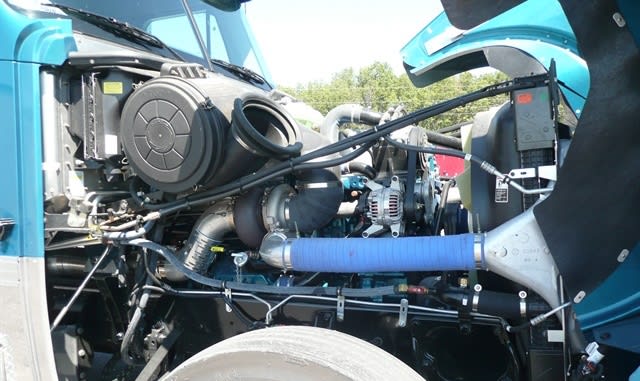
Photo: Tom Berg
5 min to read
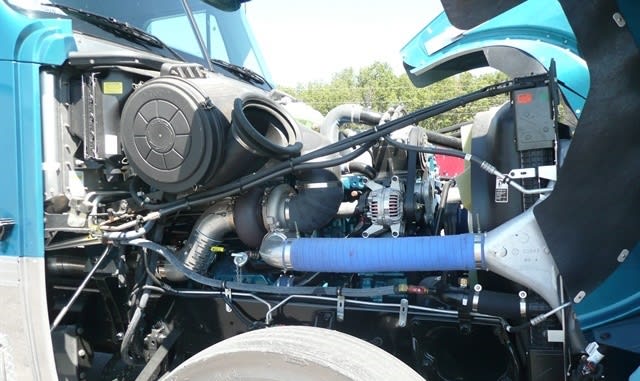
Photo: Tom Berg
Environmental advocates, state attorneys general, and others are urging the Environmental Protection Agency to maintain the Obama administration’s regulation restricting the use of glider kits under the Greenhouse Gas Phase 2 rules, calling the current efforts to reverse the rule at odds with the Clean Air Act.
Last November, EPA moved ahead with its promise to repeal the glider provision found in the 2016 GHG rules. EPA’s proposed repeal contended that glider kits should not be included in GHG regulations because glider vehicles are not technically “new motor vehicles” and glider engines are not “new motor vehicle engines," and thus are not subject to the EPA’s authority on environmental regulations.
In a phone conference Monday, the Environmental Defense Fund challenged this reading as intentionally misrepresentative of the CAA, saying it went against the principles upon which the legislation was founded.
“For EPA to propose an interpretation of the Clean Air Act that would exclude these extremely high-polluting trucks from emissions standards is not only an unreasonable reading of the plain text of the CAA, it’s also at odds with and severely undermines the core purpose of the Clean Air Act,” said Alice Henderson, EDF attorney.
EDF representatives also pointed out that industry stakeholders didn't challenge the EPA's authority over glider kits at the time the Phase 2 standards were being written.
In fact, some of those stakeholders late last year signed a letter supporting the original mandate. The letter, signed by executives from Volvo Group North America, Cummins, and Navistar, stated that glider kits should not be used to bypass currently certified powertrains.
In addition, a coalition of 12 attorneys general from California, Connecticut, Illinois, Maryland, Massachusetts, New Mexico, New York, North Carolina, Oregon, Pennsylvania, Vermont, and Washington filed a comment strongly opposing the glider rule repeal, saying that the group was prepared to take any action to protect the emissions regulation, including legal challenges.
“Repealing the glider rule is bad for our environment, for the health of our families, and for truckers and shippers who play by the rules and operate trucks with cleaner fuel-burning engines,” said California Attorney General Xavier Becerra. “Under the Clean Air Act, the EPA is required to set and enforce motor-vehicle emissions standards. If EPA Administrator Scott Pruitt decides to neglect this legal responsibility by doing away with the glider rule, we are prepared to take any and all action to protect the air our children breathe and the vitality and level playing field of the trucking industry, an important sector of our economy.”
Fitzgerald Glider Kits Petition
In May 2017, Pruitt held a meeting with Fitzgerald Glider Kits, according to a report by The Washington Post, but the details of that meeting were not publicly discussed. Just two months later, Fitzgerald petitioned EPA for the repeal of the rule, citing EPA’s lack of authority to do so as its first reason.
Fitzgerald also challenged the validity of EPA’s assessment of the environmental impact that glider kits would have, saying that it was based on unsupported assumptions rather than data. This petition was directly cited in EPA’s proposed repeal of the glider rule.
EDF criticized EPA’s lack of transparency on the meeting with Fitzgerald Glider Kits, saying that the apparent impact of the meeting had "concerning implications" for the Pruitt-led EPA.
The advcocay group also called attention to a study conducted by Tennessee Technical University – underwritten by Fitzgerald – that appeared to show that glider kits would not have as significant an environmental impact as previously argued by the EPA’s own study, as also reported by The Washington Post. The Tennessee Tech study was included in the EPA’s repeal proposal instead of the agency's own report.
“EPA itself put in the docket an extensive documentation of a test program that they had conducted at their own research facility and that was not even mentioned or cited in the proposal to roll back the provision,” said Jason Mathers, EDF director for on-road vehicles. “There’s a series of more than suspicious circumstances surrounding this particular action.”
Public Comments
As part of the proposed repeal of the glider rule, the EPA held a public comment period for citizens and industry stakeholders to voice opinions on the rollback. More than 24,000 comments were received by EPA before the comment period closed on Jan. 5.
Daimler Trucks North America (which offers glider kits itself) and Detroit Diesel Corporation filed a comment in opposition to EPA’s proposal, stating it supports the Phase 2 rules as written.
“EPA’s proposed revisions to the glider rules would undermine the investments that DTNA and Detroit Diesel Corporation — and all other U.S. manufacturers — made in advanced technologies and exhaust aftertreatment, while opening the vehicle and engine markets to manufacturers who find simple options to skirt EPA regulations altogether and market high-emitting engines or vehicles.”
However, some small trucking businesses filed comments supporting easing the rules on gliders.
For instance, Micha Miller of MJ Miller Inc. cited its reliance on glider kits for profitable business. “Being a small company, profit margins are slim. Glider kits give us the ability to do our own maintenance and repairs, which decreases our downtime. We have tried the later model trucks and the results of that ended in a fuel mileage that did not even compare to the glider kit's fuel mileage. We get an average of over a mile to the gallon better fuel mileage on the gliders. The glider kits also give us an advantage of availability of parts, due to our local part stores having the majority of older engine parts in stock. The loss of the glider kit truck would devastate our business and the way we operate.”
All public comments on the rule are archived and searchable on Regulation.gov.
More Fuel Smarts

How Volvo Updated Its D13 for EPA 2027 [Watch]
Volvo’s updated D13 promises lower emissions without sacrificing performance or fuel economy. Take a closer look at what changed inside the engine in this HDT Spotlight video.
Read More →
Diesel Price Spike Shortens Payback for Natural Gas Trucks, Report Says
Energy Vision estimates fleets could recover the higher purchase price of an RNG-fueled Class 8 tractor in 1.3 to 2.8 years under current fuel-price scenarios.
Read More →
Calstart Becomes Catalyst Mobility, Reflecting Broader Focus
Calstart is now Catalyst Mobility, reflecting the nonprofit’s growing national role in clean transportation, including zero-emission trucks, infrastructure and incentive programs.
Read More →

Record Diesel Prices Squeeze Trucking Fleets
Average U.S. diesel prices have climbed to nearly $6 a gallon, surpassing the 2022 record as tight refinery capacity and Middle East disruptions keep fuel costs elevated.
Read More →
Sponsored•September 9, 2026
How Fuel Delivery Shapes Engine Performance
Fuel delivery depends on more than what happens at the injector. For fleet, maintenance and technical professionals, looking at the full path from pump to injector can provide useful context for understanding engine performance.
Read More →
East Coast Port Launches $45M Electric Truck Push
The Port Authority of New York and New Jersey announced millions in incentives for zero-emission drayage trucks, yard tractors, and new charging hubs near the port.
Read More →
California Bill Could Shed Light on Electric Truck Prices
Why do battery-electric Class 8 trucks remain so expensive? A California bill headed to Gov. Gavin Newsom would give fleets and state agencies more visibility into what manufacturers charge.
Read More →
Detroit Opens Orders for EPA 2027 Engines
Detroit isn’t starting from scratch to meet EPA 2027 diesel emissions standards. Its Gen 6 DD13 and DD15 engines keep much of today’s platform while updating the fuel and aftertreatment systems.
Read More →
Zero-Emission Truck Corridor Planned for West Coast
California, Oregon, Washington, British Columbia and Baja California are coordinating plans for truck charging and hydrogen fueling from Canada to Mexico.
Read More →
A Closer Look at Kenworth’s Electric T880E Vocational Truck [Video]
Learn more about Kenworth's T880E battery-electric vocational truck at the Paccar Technical Center, including its range, applications, upfitting considerations, and PTO options, in this HDT Spotlight video.
Read More →