





Building an Autonomous Truck Driver: The Technology Behind Self-Driving Trucks
Embark Tackles Autonomous-Truck Work Zone Safety
Embark said it is the first automated truck technology company to introduce a work-zone navigation system, and it's working with Arizona to improve work-zone safety.
March 25, 2021
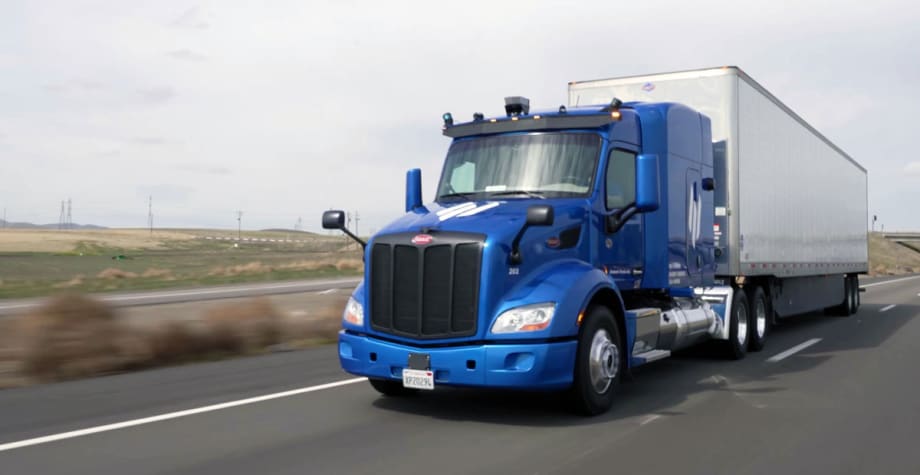
Embark is pursuing a middle-mile approach to automated trucking, operating only on limited access highways and short off-highway segments to distribution centers. But work zones are still a challenge.
Photo: Embark
2 min to read
Embark said it is the first automated truck technology company to introduce a work-zone navigation system.
Safely handling unexpected road conditions is one of the challenges facing self-driving truck development. They represent a unique and often unexpected situation that AVs need to be able to react to in-real time, the company noted.
Embark said it prioritizes a sensors-first approach, allowing trucks to drive in a manner similar to a human driver. “That means our trucks can safely react to work zone and lane closures as they appear on the road, including ones they've never seen before,” according to company officials.
The truck can identify warning signs and cones and merge into the adjacent lane to avoid work zones.
To support this initiative, Embark is partnering with the Arizona Department of Transportation to share data about work zones and road infrastructure, to ultimately improve safe navigation of highway work zones by autonomous trucks.
In announcing the memorandum of understanding, Embark noted that 123,000 work zone related crashes occurred nationally in 2018, resulting in 757 preventable fatalities, and 30% of work zone fatal crashes and 10% of work zone injury crashes involved at least one large truck.
Using data collected from its operations, Embark will provide Arizona with feedback on mutually-defined areas of interest such as infrastructure health, road design, and quality of publicly available work zone data. Embark will also provide technical briefings to Arizona officials to contribute to awareness of rapidly developing AV technology. ADOT, in turn, will share open-source data on work zones that can contribute to safe navigation. Both Embark and ADOT may seek to share with other public sector stakeholders any relevant findings that would facilitate the safe deployment of autonomous vehicles.
Embark is pursuing a middle mile approach to automated trucking, operating only on limited access highways and short off-highway segments to distribution centers. Nevertheless, work zones present the most common variable in long haul trucking that must be overcome for automated deployment, it said in the announcement.
“Safely navigating work zones is an important requisite for any driver, including autonomous trucks. By working with ADOT, we’ve accelerated our ability to understand and safely navigate corner cases, moving us closer to our goal of deploying autonomous trucks,” said Embark Co-founder and Chief Technology Officer, Brandon Moak. "We are excited that our system's ability to read signs, respond to traffic control devices, and detect workers, combined with its 'always-on' state that never gets fatigued or distracted, can be an important contributor to road safety in Arizona.”
More Safety & Compliance
PrePass, Kodiak Connect Driverless Trucks to Roadside Enforcement
The system will allow enforcement agencies to verify Enhanced Inspection information and decide whether Kodiak’s autonomous trucks can bypass roadside screening sites.
Read More →
From One Generation to the Next: How Mentorship Builds Safer Truck Drivers
After three decades in trucking, Harold Perry shares what he's learned about driver safety, mentorship, and helping the next generation build confidence behind the wheel.
Read More →
FMCSA Pauses Biennial-Update Enforcement Amid Motus Transition
Carriers whose updates were due on or after June 1 have more time, while FMCSA works to stabilize its new registration system and warns of phishing sites impersonating its new carrier registration system, Motus.
Read More →
ZF Expands Commercial Vehicle Push in North America
ZF is expanding its North American commercial-vehicle presence with new transmission applications, electrification, trailer technology and autonomous-driving systems.
Read More →
Truck Drivers Need More Than Another Alert
Fleets have more visibility into truck health, safety events, and driver activity than ever. The next challenge is turning all that information into useful guidance for the person who has to decide what to do next.
Read More →
Tesla Wants a Self-Driving Semi. Are Cameras Enough?
Could Tesla’s camera-only autonomous driving technology work on an 80,000-pound Semi? In this commentary, HDT's Deborah Lockridge takes a look at Tesla, Cybercab, and how autonomous trucks see the road.
Read More →
What DOT’s Automated Vehicle Strategy Means for Trucking
The U.S. Department of Transportation issued a new automated-vehicle strategy that outlines plans for driverless-truck regulations, cross-state freight corridors, and federal safety standards.
Read More →
NYC Expands Speed, Pedestrian Safety Tech Across Fleet
New York City is expanding intelligent speed assistance and pedestrian-alert systems across its municipal fleet, moving the technologies from pilot programs into vehicle procurement and retrofit requirements.
Read More →
FMCSA Removes 110 Truck Driver Training Schools from Certified ELDT List
Federal regulators also are targeting more than 160 additional training providers and launching a nationwide audit of third-party CDL skills testers as part of a broader crackdown on trucking fraud.
Read More →
Beyond DOT Compliance: What Makes a Trucking Fleet Truly Safe?
A trucking fleet can follow every rule and still make unsafe decisions. The real test comes when safety conflicts with freight, productivity, or cost.
Read More →