




Economic Experts Look at Economy During ATA Session
This economic recovery looks very different in some aspects from the "typical" recovery as a recession - but some of those differences are actually helping trucking recover faster than the general economy. In a panel discussion on the state of the economy during the American Trucking Associations' annual management conference in Phoenix this week, ATA Chief Economist Bob Costello said he was taking a "glass half full" approach to his outlook.

This economic recovery looks very different in some aspects from the "typical" recovery as a recession - but some of those differences are actually helping trucking recover faster than the general economy.
In a panel discussion on the state of the economy during the American Trucking Associations' annual management conference in Phoenix this week, ATA Chief Economist Bob Costello said he was taking a "glass half full" approach to his outlook.
For one thing, he thinks the changes for a double-dip recession are slim.
Unemployment is a big concern, Costello said, and it's likely to be the end of 2013 before the country regains all the jobs lost during the recession. Yet the unemployment figure is very uneven, he pointed out. The private sector is creating some jobs, but state and local governments are laying people off. For people with a college degree, unemployment is only 4.4. percent. For this without a high school diploma, it's 15 percent.
Manufacturing And Consumer Spending
That high unemployment is contributing to another anemic number in this recovery, and that's consumer spending on services. David Huether, chief economist for the National Association of Manufacturers, showed a chart comparing various figures from this recovery with the average of the past 10 recoveries. Consumer purchases of services, which account for 48 percent of the economy, were a fraction of the average.
On the other hand, the chart showed manufacturing is much higher than in past recoveries -- in fact it's growing twice as fast as the rest of the economy. This is largely thanks to exports, another higher-than-average figure in this recovery. U.S. exports have gorwn about 14 percent, about 3.5 times faster than average growth in the first-year recovery. And manufactured goods mean more truckloads, as trucks transport both raw materials and finished products.
"One thing to keep in mind is that even with the loss of millions of jobs in manufacturing in the U.S., the U.S. manufacturing sector remains by far the largest in the world," Huether said. "Even with the sharp rise in China's manufacturing, it's still a little less than half of the U.S. The U.S. still makes things."
Manufacturing, he predicted, will grow a little faster than the economy, but not strong enough to actually add employment for another six months or so. As far as GDP, he predicted growth of 1.8 to 2.5 percent in the next three quarters, "but look for the economy to start running on all cylinders in the third or fourth quarter of 2011."
Interestingly, said Scott Krugman, vice president with the National Retail Federation, the luxury sector is coming back. More customers are looking for jewelry, for example. And, he said, customers are starting to look at some big-ticket items again, such as computers, TVs, new cars and vacation travels, according to a survey. He's forecasting about a 2.5 percent increase in retail sales for 2010, compared to a 2.5 percent decline last year.
Supply And Demand
ATA's Costello pointed out that it won't take much of an increase for things to really get better for the trucking industry, and that's because of the basic concept of supply and demand.
"I have never seen so much supply come out of this industry," he said. "It wasn't easy; you had to lay people off, you had to get rid of equipment. But it is not going to start paying dividends. You're already starting to see that. Yes, we had a historic drop in demand, but we also had a historic drop in supply."
And there is nothing on the horizon that suggests there will be more capacity any time soon, he said. "I think failures are going to stay high, because a lot of fleets still owe money to their lenders." New government regulations such as CSA 2010 if anything will be taking more capacity out of the system, he said. Carriers will be buying trucks to replace their aging fleets, not to add capacity, he predicted.
"Even though demand's not going to grow a whole lot, I think the trucking industry's going to do very well." In fact, he said, "I think when we meet next year we will be on the cusp of some of the best years in trucking."
More Fleet Management
What Trucking Events are Happening in 2026?
Looking for trucking-related conventions, expos, and other events? Heavy Duty Trucking has developed this list of national and larger regional trucking shows and events.
Read More →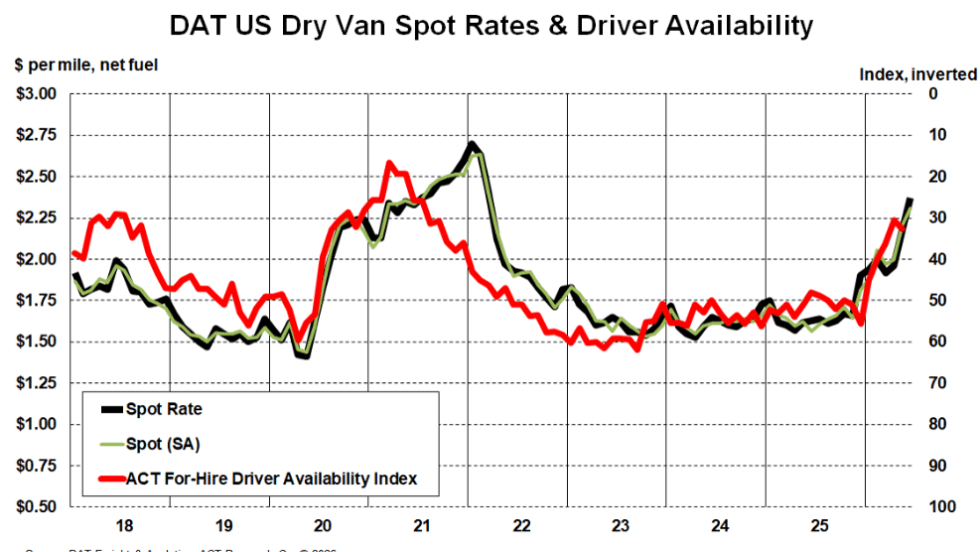
Truckload Rates Keep Rising as Tight Capacity Fuels Freight Market Recovery
Spot and contract rates continued climbing in May and June, not because freight demand is surging, but because fewer trucks and drivers are available.
Read More →
What Geotab's New AI Connector Means for Fleets
Fleets can now ask their usual AI assistants questions about maintenance, safety, fuel use, and vehicle performance, using their live Geotab data, and take action on the answers without leaving their preferred AI tool.
Read More →
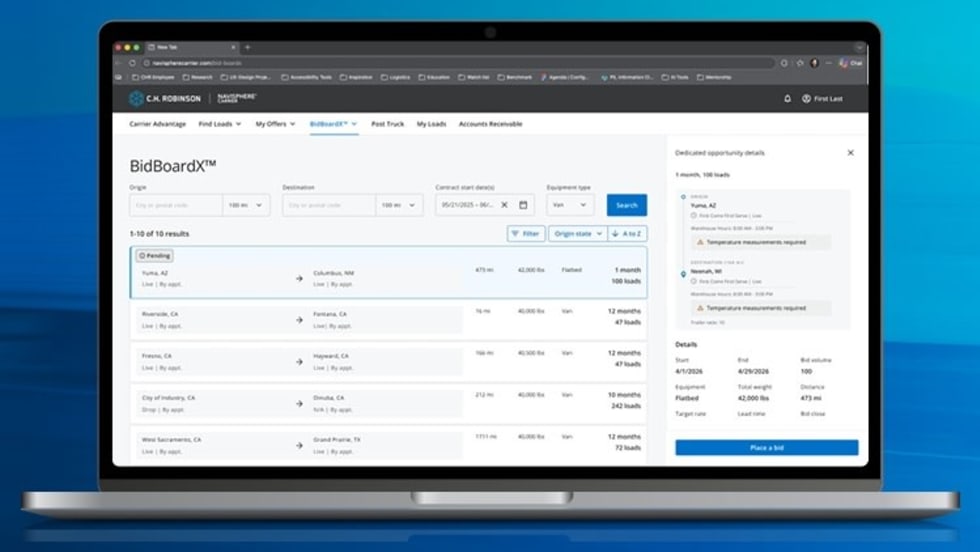
New C.H. Robinson Tool Opens Door to More Predictable Freight
BidBoardX lets carriers search, bid on, and secure committed freight opportunities through a single digital marketplace.
Read More →
New York City's Microhub Project is Delivering Results
Trucking, last-mile delivery companies, and environmental advocates like what they are seeing so far with New York's microhub program.
Read More →
Why Truck Detention Keeps Costing Fleets Time and Money
A 2024 ATRI study found detention affects nearly 40% of truckload stops and costs the industry more than $15 billion annually. Despite the toll on drivers, fleets, and supply chains, the problem remains stubbornly persistent.
Read More →
Time is Running Out to Apply for Exclusive HDT Event
Heavy Duty Trucking Exchange brings fleet managers and suppliers together for the deeper conversations that lead to ideas, partnerships, and solutions. Time is running out to apply for the September event.
Read More →
Amazon Launches Less-Than-Truckload Freight Offering for All Businesses
This launch is the latest addition to Amazon Supply Chain Services, a portfolio of supply chain capabilities from Amazon, including freight, distribution, fulfillment, and parcel shipping.
Read More →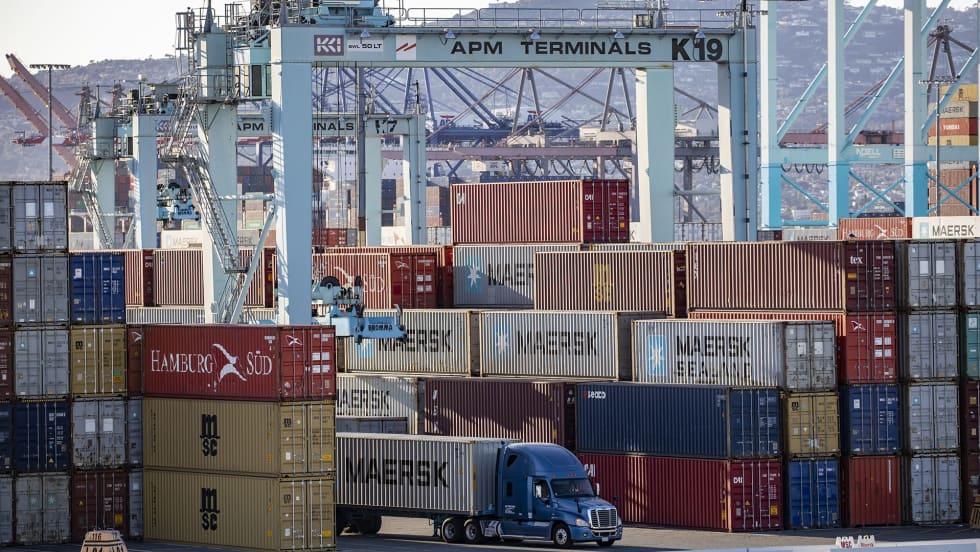
Import Cargo Volume to See Year-Over-Year Gain Again in June, Then Remain Below 2025 Levels Into Fall
After July, the report predicts a weakening in import volume as consumer uncertainty remains high and the impact of increasing inflation takes its toll.
Read More →
AUCTION OF EQUITY INTEREST IN HEAVY HAUL TRUCKING COMPANY!!
Mark your calendar: June 30, 2026 (10:00 a.m. PDT). A 37.5% ownership interest in MagnaTrans, LLC, a California limited liability company doing business as Magna Transportation Group, will be sold in an in-person and online auction to the highest bidder or bidders under Article 9 of the Uniform Commercial Code. The Rancho Cucamonga-based heavy haul and over-dimensional trucking company operates across California, Oregon, and Arizona.
Read More →