




Calstart: Medium-Duty Trucks Leading Transition to Zero Emissions
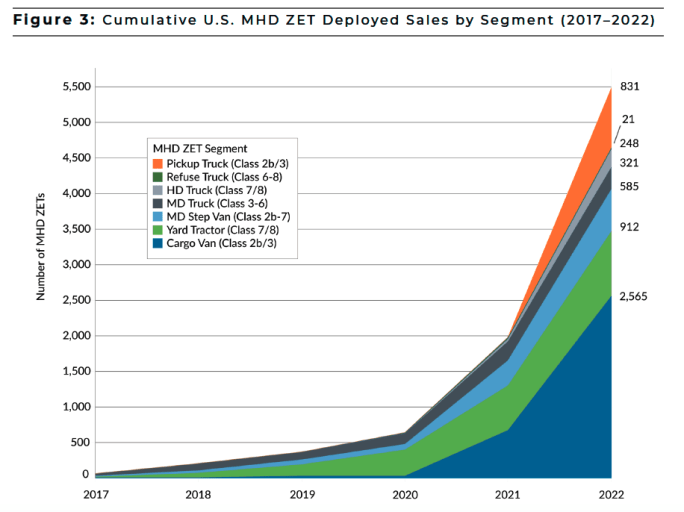
According to Calstart, 3,510 electric trucks entered service in 2022 – for a total of 5,483 units working around the U.S. today. Most of those vehicles are employed in medium-duty fleet applications.

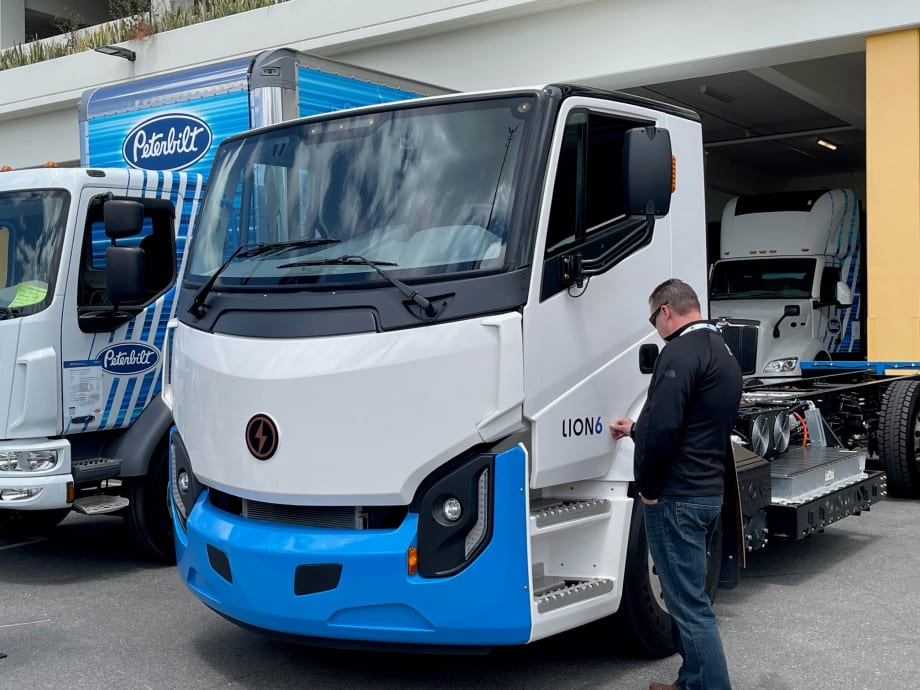
Heavy-duty electric truck sales continue to lag behind fleet deployments in the U.S., a Calstart study has found.
Photo: Jack Roberts
The deployment of zero-emission trucks grew by 163% in 2023, adding another 3,510 units to fleets in the U.S. That’s according to a new report issued by Calstart, “Zeroing in on ZETs: May 2023 Market Update.”
Calstart is a nonprofit organization that works nationally and internationally with businesses and governments to develop clean, efficient transportation solutions. In the new report, Calstart tracks the continued increase in medium- and heavy-duty zero-emission truck deployments in the United States.
Zero-emission cargo vans and yard tractors are achieving a significant share of total medium- and heavy-duty ZET sales. Cargo vans account for 47% and yard tractors account for 17% of all new medium- and heavy-duty ZET registrations.
This is followed by: zero-emission pickup trucks (which have been available for purchase since 2022) at 15%; zero-emission, medium-duty step vans at 11%; medium-duty ZETs at 6%, HD ZETs at 5%, and zero-emission refuse trucks at 1%.
Other key findings include:
Since January 2017, annual medium- and heavy-duty ZET deployments increased year-over-year by 104% in 2018, 23% in 2019, 60% in 2020, 397% in 2021, and 163% in 2022.
Cumulative U.S. medium- and heavy-duty ZET deployments (from January 2017 through December 2022) have grown to 5,483 vehicles. Of medium- and heavy-duty ZETs with known locations, 59% were deployed in states that have adopted California's Advanced Clean Trucks (ACT) rule as of December 2022.
In 2022 alone, 3,510 medium- and heavy-duty ZETs were deployed across the country, surpassing deployments of the previous five years (2017–2021) combined.
Seven states deployed their first zero-emission trucks since Calstart’s "Zeroing in on ZETs: June 2022 Market Update:" Arkansas, Delaware, Montana, Nebraska, Oklahoma, Rhode Island, and Wyoming, as well as the District of Columbia.
Class 8 ZET Deployment Jumped by 7,167% in 2023
Calstart analysts noted that the growth in the zero-emission cargo van segment experienced a 315-fold increase in deployments from 2017 to 2022. That makes zero-emission vans far and away the most popular application for ZEV fleets. Calstart expects this market segment to continue to grow quickly, thanks in part to the new Commercial Clean Vehicle Credit, which provides up to $7,500 in tax credits to mitigate the incremental cost.
Yard tractors have proven to be a excellent entry point for fleets exploring ZETs.
Graph: Calstart
Electric yard tractors are also proving to be popular ZETs for fleet operations. Calstart reports 1,541% growth in deployments from January 2017 to December 2022, while adding that the deployment of Class 8 ZETs experienced 7,167% growth from January 2020 to December 2022.
These figures, Calstart analysts argue, reflect the increasing ability of zero-emission technologies to meet and exceed fleets’ demanding operational requirements that have historically been served by internal combustion engine vehicles.
The report also notes that vouchers and other forms of government incentives designed to boost ZEV and ZET purchases appear to be driving ZET sales, as well.
From 2011 through 2022, redeemed and unredeemed vouchers from California’s Hybrid and Zero-Emission Truck and Bus Voucher Incentive Project (HVIP) for medium- and heavy-duty zero-emission vehicles totaled $315 million, helping with the purchase of more than 3,149 ZEVs. That's an average of $100,000 per medium- and heavy-duty ZET or 41% of the average original retail price for a deployed medium- and heavy-duty ZET.
The report notes that California’s “strong” ZET policy ecosystem is a major factor that has enabled the state to lead in ZEV/ZET deployments, representing 47% of total U.S. market. The report goes on to quantify this finding by noting that each dollar invested in medium- and heavy-duty ZETs through California’s HVIP program has unlocked $1.42 in private industry investment thus far. This goes a long way toward explaining why currently, about half of all the ZETs deployed in the U.S. (46%) are in California, according to the report.
Slow Growth Likely for the Foreseeable Future
The Calstart report shows an industry that is still very much feeling its way into the ZET market. Not surprisingly, given the applications, the main thrust of activity currently is focused on light- and medium-duty vehicles.
An interesting aside are sales to individual owners, as opposed to businesses. It stands to reason that as these owners learn to understand the differences between ZEVs and vehicles powered by internal combustion engines they will increasingly recommend and purchase ZEVs and ZETs for business applications as time passes.
When it comes to heavy-duty ZETs, yard tractors are clearly the out-of-the-gate favorite for fleets. This, too, stands to reason. Yard tractors obviously don’t have the longer-range requirements that Class 7 and Class 8 ZETs must contend with in regional-haul applications.
Moreover, yard tractors are also able to take advantage of what the North American Council for Freight Efficiency has dubbed “opportunity charging” – placing the truck on a charger during driver lunch or rest breaks during the day.
Taken as a whole, approximately 5,500 medium- and heavy-duty ZEVs is a mere drop in the ocean, compared to the millions of ICE-powered trucks and vans working in the U.S. today. But, until something dynamic happens to reshape the current marketplace for BEVs, and challenges with charging infrastructure are addressed, this current slow-growth trend will likely remain in play for the foreseeable future.
More Equipment

How Volvo Updated Its D13 for EPA 2027 [Watch]
Volvo’s updated D13 promises lower emissions without sacrificing performance or fuel economy. Take a closer look at what changed inside the engine in this HDT Spotlight video.
Read More →
Michelin Tire Improves Efficiency and Durability for Regional Fleets
The Michelin X Multi Energy D2 is a regional haul drive tire engineered to help fleets improve fuel efficiency, durability and traction in demanding stop-and-go operations.
Read More →
ZF Expands Commercial Vehicle Push in North America
ZF is expanding its North American commercial-vehicle presence with new transmission applications, electrification, trailer technology and autonomous-driving systems.
Read More →
Tesla Wants a Self-Driving Semi. Are Cameras Enough?
Could Tesla’s camera-only autonomous driving technology work on an 80,000-pound Semi? In this commentary, HDT's Deborah Lockridge takes a look at Tesla, Cybercab, and how autonomous trucks see the road.
Read More →
Kodiak: Driverless Long-Haul Truck Launch on Track for 2026
Kodiak AI says its driverless long-haul safety case is 93% complete and it remains on track to begin commercial operations by year-end 2026.
Read More →
What DOT’s Automated Vehicle Strategy Means for Trucking
The U.S. Department of Transportation issued a new automated-vehicle strategy that outlines plans for driverless-truck regulations, cross-state freight corridors, and federal safety standards.
Read More →
East Coast Port Launches $45M Electric Truck Push
The Port Authority of New York and New Jersey announced millions in incentives for zero-emission drayage trucks, yard tractors, and new charging hubs near the port.
Read More →
PlusAI Going Public to Fund Autonomous Truck Launch
A SPAC deal could provide PlusAI with up to $300 million as it works toward a 2027 commercial launch of factory-built autonomous trucks.
Read More →
NHTSA Moves to Rewrite Truck Fuel-Economy Rules
The National Highway Traffic Safety Administration says it lacks authority to regulate medium- and heavy-duty truck engines separately from complete vehicles, but the existing standards have not yet been eliminated.
Read More →
Detroit Opens Orders for EPA 2027 Engines
Detroit isn’t starting from scratch to meet EPA 2027 diesel emissions standards. Its Gen 6 DD13 and DD15 engines keep much of today’s platform while updating the fuel and aftertreatment systems.
Read More →