




Bosch Details Vehicle Software Advances at CES
Bosch is researching the role AI will play in future active vehicle safety systems, the company said at CES 2025.


Paul Thomas, president, Bosch North America, speaks to the media during a press conference at CES 2025.
Photo: Bosch
Bosch is a huge global company with products that span many products and industries.
At CES (formerly the Consumer Electronics Show) in Las Vegas, on January 5, 2025, the company held a wide-ranging press conference. Paul Thomas, president, Bosch, North America, included an update on the company’s mobility software developments.
Thomas opened his remarks by noting that software will change not only how people use and experience cars and trucks, but how we develop them as well.
Cloud-Enabled Vehicle Performance
In the age of software-defined mobility, Thomas said Bosch programmers approach cars from a software perspective. They are developing technologies and solutions for new centralized architectures that effortlessly manage all interactions between automotive electronics and the cloud.
This, Thomas said, will be essential in the future if cars are to be able to download new functions for areas such as infotainment or driver assistance easily and conveniently over the air.
One recent development by Bosch is a new software function allows vehicles to brake smoothly and without jerking.
Bosch said this feature helps drivers in slow-moving traffic. It can also help passengers who suffer from motion sickness.
“No one understands the requirements and needs of the automotive industry as comprehensively as Bosch,” Paul Thomas said. “With our mobility-specific software expertise, we’re the ideal partner for the world’s major tech players.”
AI-Enabled Safety Systems
Artificial intelligence has dominated headlines for well over a year now. And Bosch is working on AI-enabled software solutions for assisted and automated driving
One example Thomas pointed to is the Bosch MPC3 multifunctional camera.
This unit has been in volume production since 2019. It can reliably recognize objects and people as well as distinguish between the road and the edge of the road, thereby keeping vehicles safely in their lanes.
The camera combines conventional image-processing algorithms with AI methods for a complete understanding of what it is recording.
“Our AI-based multifunction camera not only makes driving more relaxed, but also makes the roads safer for all users,” Thomas noted.
To achieve this, Bosch is combining its automotive engineering knowledge and its AI expertise with a pool of in-house sensor data to increase the efficiency its vehicle assistance systems.
Bosch is also investigating how generative AI can be used to further improve automated driving functions.
The expectation is that it will enable vehicles to assess situations and react accordingly to keep drivers safer.
In the future, Bosch believes generative AI will train automated driving functions more quickly. This will reduce the number of test miles required to validate them.
And by adding conditions such as snow to the road, generative AI will quickly be in a position to alter the context of a driving sequence recorded by cameras or radar sensors.
In other words, systems can be trained for snow without having to wait until snow actually falls – the AI will do it itself.
More Equipment

How Volvo Updated Its D13 for EPA 2027 [Watch]
Volvo’s updated D13 promises lower emissions without sacrificing performance or fuel economy. Take a closer look at what changed inside the engine in this HDT Spotlight video.
Read More →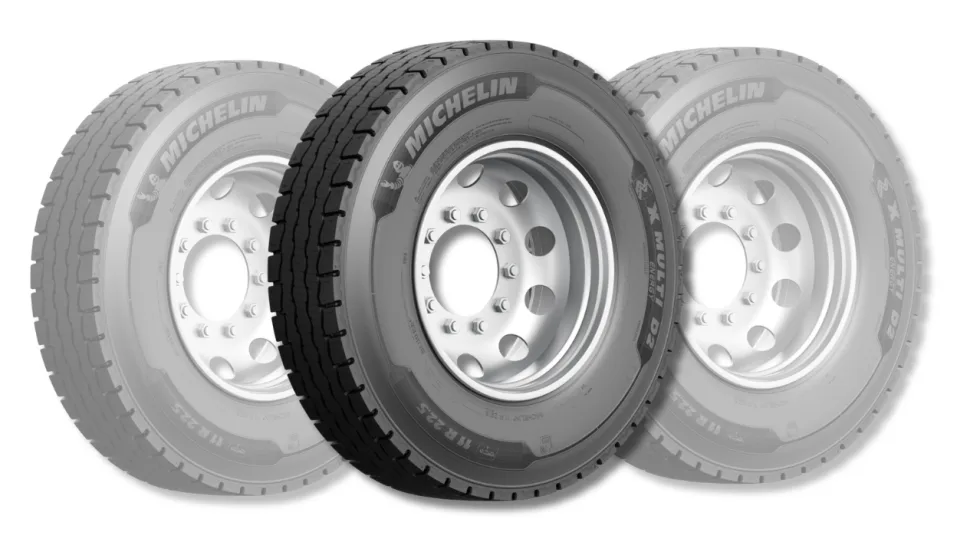
Michelin Tire Improves Efficiency and Durability for Regional Fleets
The Michelin X Multi Energy D2 is a regional haul drive tire engineered to help fleets improve fuel efficiency, durability and traction in demanding stop-and-go operations.
Read More →
ZF Expands Commercial Vehicle Push in North America
ZF is expanding its North American commercial-vehicle presence with new transmission applications, electrification, trailer technology and autonomous-driving systems.
Read More →
Tesla Wants a Self-Driving Semi. Are Cameras Enough?
Could Tesla’s camera-only autonomous driving technology work on an 80,000-pound Semi? In this commentary, HDT's Deborah Lockridge takes a look at Tesla, Cybercab, and how autonomous trucks see the road.
Read More →
Kodiak: Driverless Long-Haul Truck Launch on Track for 2026
Kodiak AI says its driverless long-haul safety case is 93% complete and it remains on track to begin commercial operations by year-end 2026.
Read More →
What DOT’s Automated Vehicle Strategy Means for Trucking
The U.S. Department of Transportation issued a new automated-vehicle strategy that outlines plans for driverless-truck regulations, cross-state freight corridors, and federal safety standards.
Read More →
East Coast Port Launches $45M Electric Truck Push
The Port Authority of New York and New Jersey announced millions in incentives for zero-emission drayage trucks, yard tractors, and new charging hubs near the port.
Read More →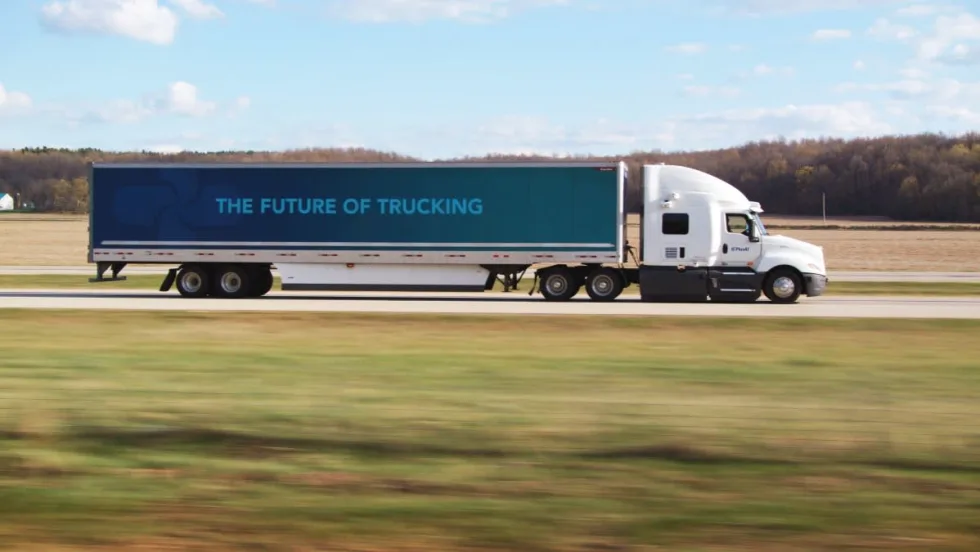
PlusAI Going Public to Fund Autonomous Truck Launch
A SPAC deal could provide PlusAI with up to $300 million as it works toward a 2027 commercial launch of factory-built autonomous trucks.
Read More →
NHTSA Moves to Rewrite Truck Fuel-Economy Rules
The National Highway Traffic Safety Administration says it lacks authority to regulate medium- and heavy-duty truck engines separately from complete vehicles, but the existing standards have not yet been eliminated.
Read More →
Detroit Opens Orders for EPA 2027 Engines
Detroit isn’t starting from scratch to meet EPA 2027 diesel emissions standards. Its Gen 6 DD13 and DD15 engines keep much of today’s platform while updating the fuel and aftertreatment systems.
Read More →