




Red ICE and Blue: The Hunt for a Hydrogen Truck Engine Part 1
At ACT Expo 2024, Bosch and the Southwest Research Institute showcased the industry-wide push to develop hydrogen-fueled heavy truck and industrial engines by the end of the decade.

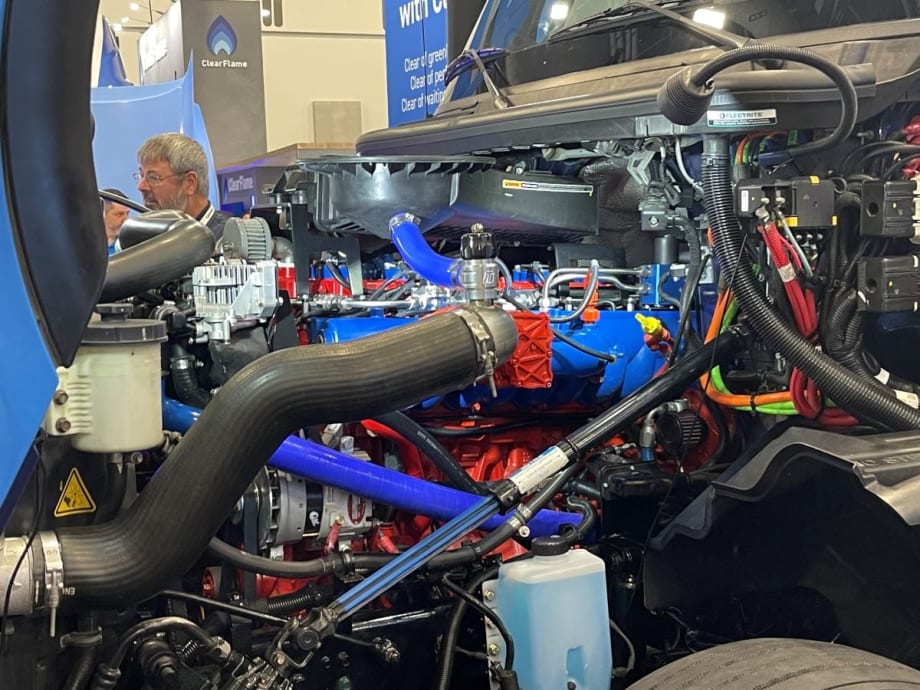
SwRI used a Cummins X15N as the base platform for its hydrogen engine. New, hydrogen-specific engine components are painted blue in order to be readily identified by viewers.
Photo: Jack Roberts
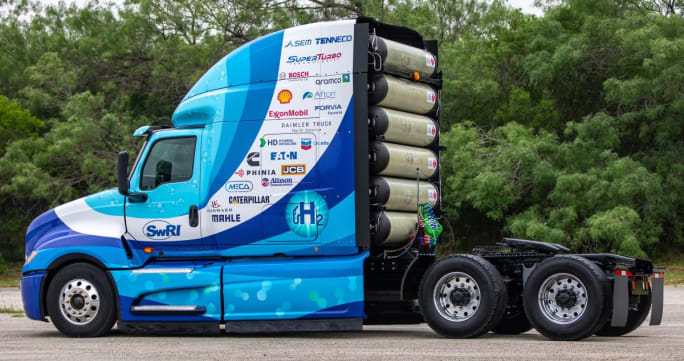
More than 20 major trucking and industrial companies have joined forces to develop an liquid-fuel hydrogen engine by the end of the decade.
Photo: Southwest Research Institute
Hydrogen is one of the most abundant substances in the universe. It is also an incredibly powerful, energy dense fuel. A gallon of hydrogen contains three times the energy content as a gallon of gasoline. That’s why it’s been used as rocket fuel since the earliest days of the Space Age.
Hydrogen is a clean fuel, too. Water is the only by-product of the hydrogen combustion process.
At a glance, hydrogen seems like the perfect fuel for a modern, transportation-dependent society threatened by climate change.
But there are significant problems with hydrogen, as well.
It’s a very expensive, and energy-intensive fuel to produce in large quantities. It’s also unsafe. The fuel is so volatile that it can ignite, without a spark, at much lower air temperatures than fossil fuels. It’s also odorless and colorless. When ignited, it burns with an intense blue flame that cannot be seen in daylight.
Obviously, those realities also make hydrogen a difficult fuel to store, transport and carry on vehicles.
But those hurdles notwithstanding, there is widespread hope that hydrogen will prove to be the Holy Grail for modern transportation systems. Work is being carried out all over the world now to find ways to make hydrogen safe and reliable to use in everything from container ships, aircraft, passenger cars and – yes – trucks.
And Bosch has taken an early lead in that technology race.
An All-New Energy Economy
At the CES 2024 (formerly the Consumer Electronics Show) Bosch announced that it was working on a liquid-hydrogen internal combustion engine. The German technology company even ventured that it might every well have a prototype engine ready for public viewing at the IAA Truck Show in Hannover, Germany, in the Fall.
At ACT Expo in Las Vegas, on May 22, Bosch engineers gave journalists an overview of their progress. This included a look at an early prototype engine built in collaboration with the Southwest Research Institute (SwRI).
Peter Tadros, regional president for power solutions at Bosch began by saying that the company believes that hydrogen fuel can help achieve a “climate neutral state” for transportation in the near future. Which is why Bosch is involved in all stages of this hydrogen value chain.
Tadros said to date, Bosch has already invested $530 million in hydrogen research and development. By 2030, the company expects to have hydrogen internal combustion engines ready for global markets. And it expects revenue streams of around 5 billion euros from hydrogen technologies once they have matured.
These technologies obviously include the hydrogen fuel cell system Bosch developed for Nikola, Tadros added.
But the next step is a hydrogen internal combustion engine. And for that portion of the presentation, Tadros turned things over to Ryan Williams, spark-ignited engine research and development for SwRI.
Williams began by outlining a few of the reasons it has been so difficult to develop hydrogen ICEs. “The first reason is there's simply not enough hydrogen available at scale,” he noted. “Although we think the time is approaching when it is becoming more readily available.”
A more pressing issue from an engineering standpoint is developing a robust fuel system that can deal with hydrogen, Williams added. To address this issue, he said that Bosch is working on two parallel development paths. One is a direct-injection fuel system. And the other is a port-injection system.
“We are all in with both of them,” he said. “We believe we have a faster-to-market solution with the port fuel injection system. And we're planning to go into production with some OEM customers within two years with it.”
It’s Still an Engine
Just a few feet away from the Bosch booth on the ACT Expo show floor was the SwRI booth, dominated by an International RH tractor. The truck was covered in corporate logos – much like a NASCAR stock car – with companies actively supporting SwRI’s hydrogen ICE research.
The RH model’s hood was pitched forward, revealing an oddly colored red and blue engine. The powerplant was immediately identifiable as an ICE. Although it did have some unusual-looking components – particularly on the top portion of the engine.
Williams explained that all the red components were exactly the same as on the Cummins X15N CNG engine that SwRI engineers modified to run on hydrogen. For demonstration purposes, all new, hydrogen-specific components on the engine had been colored blue to differentiate them.
“You can recognize that this still an engine,” Williams said. “And about 90% of its parts are going to stay the same as if this were a diesel engine. In fact, everything below the head gasket is going to stay the same. We're only adapting the air system and the fuel system of the engine to run on hydrogen.”
That means, Williams explained, that hydrogen engines can use the existing engine manufacturing base and all the human capital that supports them.
“With a hydrogen engine, you’re still going to need a crankshaft specialist, camshaft designer, an expert in engine blocks, and so forth,” he said. “And that extends all the way into production and when products are out in the field. So, if you have a service issue, it’s going to be well understood. Because servicing a hydrogen engine is very much the same as servicing a diesel engine.”
In Red, ICE and Blue: The Hunt for a Hydrogen Truck Engine Part 2, learn the differences between a diesel engine and one powered by hydrogen, as well as some indications as to how they'll perform in real-world fleet operations.
More Fuel Smarts
Why Small Fuel Savings Matter in Trucking
Can better fuel economy help pay for driver raises? In this podcast, GP Transco explains how small efficiency gains create room to reinvest in its people.
Read More →
How GP Transco Cuts Trucking Fuel Costs, a Tenth of a Gallon at a Time
What’s another tenth of a mile per gallon worth? GP Transco shares how equipment upgrades and driver coaching turn small gains into meaningful fuel savings.
Read More →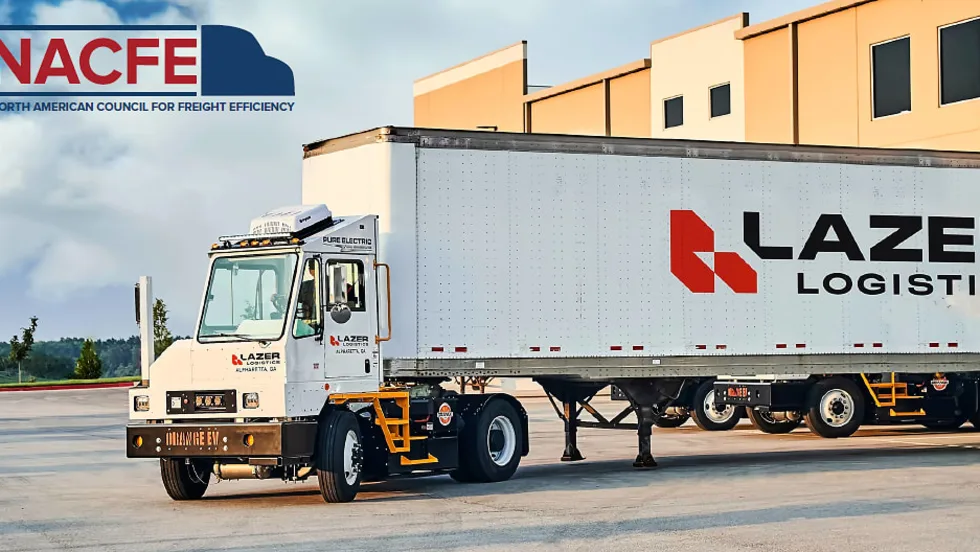
Electric Yard Tractors Move Beyond Pilots
Operating-cost savings have overtaken sustainability goals as the leading reason surveyed fleets are adopting battery-electric terminal tractors, according to new NACFE research.
Read More →
Geotab Links Fleet Card to Vehicle Data
The new card combines fuel discounts with telematics-based purchase controls. Geotab’s analysis also points to potential savings from choosing lower-priced fuel stops.
Read More →
Fleet Economics Shape Electric Truck Outlook
ACT Research expects costs, charging infrastructure, and technology improvements to drive zero-emission commercial vehicle adoption as federal regulations and incentives retreat.
Read More →
Wex Adds Cardless Fuel Payments for Over-the-Road Customers
A new fuel card feature for Wex customers offers convenience and security.
Read More →
New California Law Could Shed Light on Electric Truck Prices
Why do battery-electric Class 8 trucks remain so expensive? A California bill signed by Gov. Gavin Newsom would give fleets and state agencies more visibility into what manufacturers charge.
Read More →
How Volvo Updated Its D13 for EPA 2027 [Watch]
Volvo’s updated D13 promises lower emissions without sacrificing performance or fuel economy. Take a closer look at what changed inside the engine in this HDT Spotlight video.
Read More →
Diesel Price Spike Shortens Payback for Natural Gas Trucks, Report Says
Energy Vision estimates fleets could recover the higher purchase price of an RNG-fueled Class 8 tractor in 1.3 to 2.8 years under current fuel-price scenarios.
Read More →
Calstart Becomes Catalyst Mobility, Reflecting Broader Focus
Calstart is now Catalyst Mobility, reflecting the nonprofit’s growing national role in clean transportation, including zero-emission trucks, infrastructure and incentive programs.
Read More →