




ATA: Truck Tonnage Slipped in June
After a May increase, North American truck tonnage fell in June, according to the American Trucking Associations.

It appears truck tonnage is slowly going in the right direction, according to ATA Chief Economist Bob Costello.
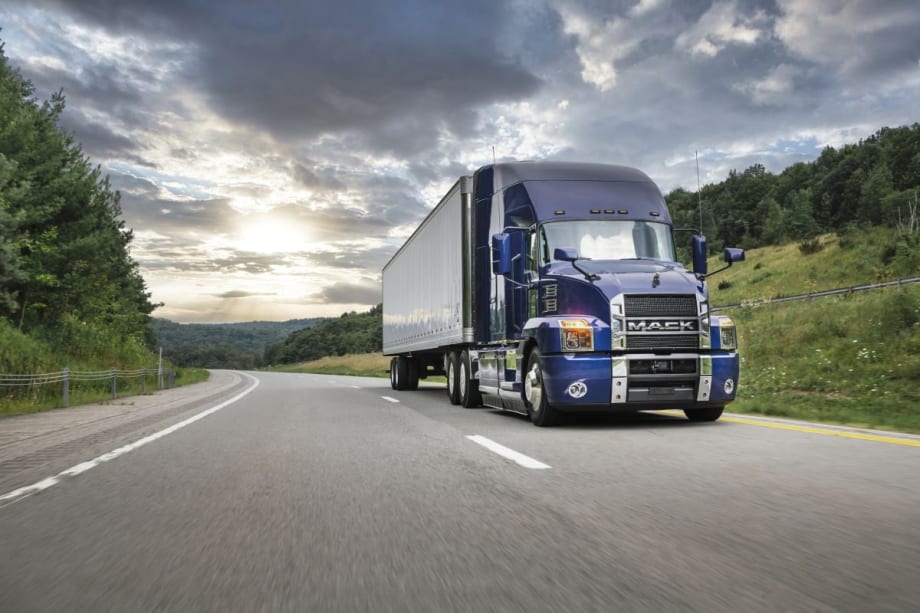
Photo: Mack Trucks
American Trucking Associations’ advanced seasonally adjusted For-Hire Truck Tonnage Index decreased 1.6% in June after increasing 3% in May, the organization said.
In June, the index equaled 113.5 (2015=100) compared with 115.3 in May.
May’s increase was revised down from our June 18 press release.
Slow But Steady Positive Trend
Compared with June 2023, the index decreased 0.4%. In May, the index was up 1% from a year earlier, which was the first year-over-year gain since February 2023.
“While giving back some of the gain from May, it appears that truck freight tonnage is slowly going in the right direction since hitting a recent low in January,” said ATA Chief Economist Bob Costello. “Despite June’s decline, the second quarter average was 0.2% above the first quarter and only 0.2% below the second quarter in 2023, which are good signs that truck freight might be finally turning the corner.”
The not-seasonally adjusted index, which represents the change in tonnage actually hauled by the fleets before any seasonal adjustment, equaled 113.1 in June, 5.5% below May.
ATA’s For-Hire Truck Tonnage Index is dominated by contract freight as opposed to traditional spot market freight.
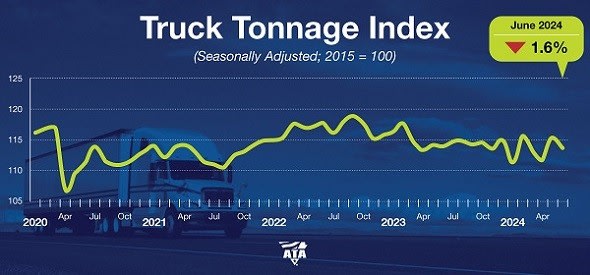
In June, the index equaled 113.5 (2015=100) compared with 115.3 in May.
Graphic: ATA
In calculating the index, 100 represents 2015.
ATA noted that trucking serves as a barometer of the U.S. economy, representing 72.6% of tonnage carried by all modes of domestic freight transportation, including manufactured and retail goods.
Trucks hauled 11.46 billion tons of freight in 2022. Motor carriers collected $940.8 billion, or 80.7% of total revenue earned by all transport modes.
ATA calculates the tonnage index based on surveys from its membership and has been doing so since the 1970s.
This is a preliminary figure and subject to change in the final report issued around the 5th day of each month. The report includes month-to-month and year-over-year results, relevant economic comparisons, and key financial indicators.
More Fleet Management

Color Match Smarter: Tools That Restore & Perform
For fleet managers and collision repair professionals keeping heavy-duty trucks on the road, getting the color right the first time isn't just about appearance — it's about efficiency, turnaround time, and bottom-line results. Discover how today's digital color tools are transforming the repair process from guesswork to precision.
Read More →
FMCSA Pauses Biennial-Update Enforcement Amid Motus Transition
Carriers whose updates were due on or after June 1 have more time, while FMCSA works to stabilize its new registration system and warns of phishing sites impersonating its new carrier registration system, Motus.
Read More →
2026 Blueprint for Countering Smarter Supply Chain Theft
Cargo theft is no longer just the cost of doing business. It's a multi-billion-dollar criminal enterprise exploiting vulnerabilities across your fleet, drivers, and supply chain.
Read More →


How Telematics Improves Visibility, Control, and Performance in Refrigerated Fleets
Explore how telematics help refrigerated fleets improve visibility, uptime, efficiency, compliance, and cargo protection across connected cold chain operations.
Read More →
What the U.S.-Canada Trade War Means for Trucking
Escalating U.S.-Canada tariffs could disrupt cross-border freight, reduce truck volumes, raise costs, and create new uncertainty for carriers on both sides of the border.
Read More →
What Are Trucking’s Top Concerns for 2026?
The American Transportation Research Institute wants to know what's worrying trucking fleet managers, drivers, and other stakeholders in its annual Industry Issues survey.
Read More →
American Trucking Associations Looks for a New Leader
ATA President and CEO Chris Spear abruptly left his job at the association on August 21, at a pivotal time for the trucking industry.
Read More →
Public Wi-Fi Cybersecurity Risks: How Truck Drivers and Fleets Can Protect Their Data
Public Wi-Fi can expose truck drivers and fleets to credential theft, malware, and other cyber threats. Here’s how to reduce the risk on the road.
Read More →
For Nicky Cupp, Fleet Innovation Starts With Frustration
HDT Truck Fleet Innovator Nicky Cupp turns everyday pain points at Fraley & Schilling into opportunities for better technology and smarter processes.
Read More →
Adam Buttgenbach’s Approach to Electric Trucks: Start With Where They Fit
HDT Truck Fleet Innovator Adam Buttgenbach helped PepsiCo build one of North America’s largest EV fleets by focusing on where electric trucks make operational sense.
Read More →