





Daimler Unveils new "Electric Island" Truck Charging Demonstration Center
Pushing to Reach 100% Zero-Emission Truck and Bus Sales by 2050
A new, global effort is pushing to reach 100% zero-emission new truck and bus sales in just 30 years.
December 3, 2020
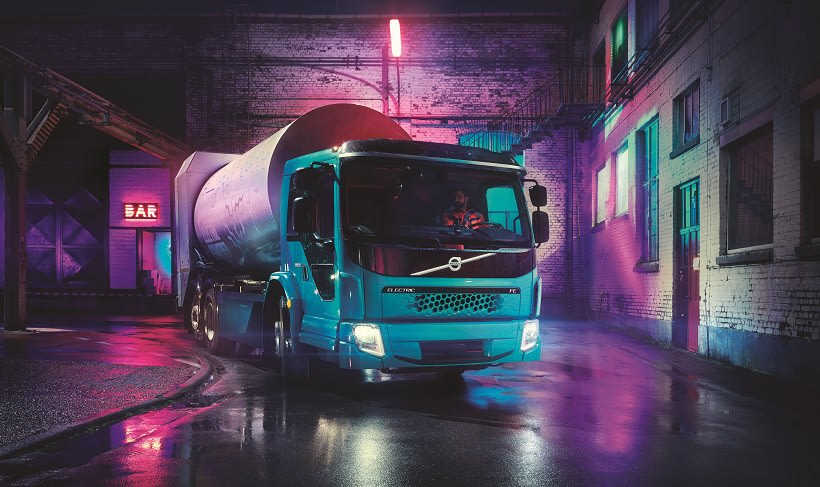
A new global group of environmental activists wants to achieve 100% zero-emissions new truck and bus sales by the year 2050.
Photo: Volvo Trucks North America
4 min to read
A new global push to reach 100% new zero-emission truck and bus sales by 2050 has been announced by a consortium of transportation and environmental groups. The new Global Memorandum of Understanding was unveiled by the Transport Decarbonisation Alliance in partnership with Calstart’s Global Commercial Vehicle Drive to Zero program and campaign.
“No one nation alone can change the course of the global truck and bus sector’s increasing climate and air quality impacts,” said Bill Van Amburg, executive vice president of Calstart and its Global Drive to Zero campaign, which will convene national governments that sign onto the new Global MOU. “But together we can. By working collaboratively, we can send the most effective and globally aligned market signals, via common goals coupled with smart and supportive policies, regulations, incentives and investments, to cause this change. Drive to Zero is proud to coordinate this effort. The Global MOU allows us all to pull together in the same direction, at the same time – and speed the pace of decarbonization.”
In advance of the 2050 sales goal, the newly launched Global MOU has an interim target of 30% new zero-emission medium- and heavy-duty truck and bus sales by 2030. Under the agreement, frontrunners should aim to reach zero-emission benchmarks sooner.
“The temperature on earth is increasing faster than we thought,” said Stientje van Veldhoven, minister for the environment of The Netherlands and chair of the TDA. “Zero-carbon transport worldwide is essential to keep climate change in check and meet our Paris Agreement ambitions. If we want all our transport to be carbon-neutral by 2050, we know we need at least 30% of the freight fleet carbon-neutral by 2030. So we will need to speed up and accelerate the market for zero-emission vehicles. Rallying the largest possible group of countries behind these targets is why I launched this Global MOU process.”
One of Several New Global Initiatives
This new Global MOU process comes on the heels of two significant zero-emission truck and bus efforts announced earlier this year in the U.S.
In June, the California Air Resources Board adopted the Advanced Clean Trucks rule, or ACT. ACT calls on commercial truck and van manufacturers in California to incrementally shift to zero-emission new commercial truck and van sales and reach 100% new zero-emission truck and bus sales by 2045.
In July, 15 U.S. states and the District of Columbia signed the Multi-State Zero-Emission Medium- and Heavy-Duty Vehicle Initiative memorandum of understanding. Like the new Global MOU announced today, the goal of this agreement to reach 100% zero-emission sales of new trucks and buses by 2050 in participating states with an interim target of 30% zero-emission vehicle sales by 2030. California, Connecticut, Colorado, Hawaii, Maine, Maryland, Massachusetts, New Jersey, New York, North Carolina, Oregon, Pennsylvania, Rhode Island, Vermont, and Washington are all signatories.
“Many international clean truck and bus innovators and leaders in the private and public sector are already working to accelerate the development and deployment of zero-emission trucks and buses. Working in isolation, these efforts will fall short of what is possible," said Cristiano Façanha, global director of Drive to Zero. “We must work strategically and collaboratively to achieve ambitious but attainable goals through smart policies and requirements, incentives, innovative financing models, supportive programs and global alignment.”
The new Global MOU will be presented at the UN Climate Change Conference (UNFCCC COP26) in Glasgow in November 2021. Between now and then, organizers will work collaboratively to gain as many signatory nations as possible. Future signatory jurisdictions will be convened by and work through the Clean Energy Ministerial Campaign under the Electric Vehicle Initiative, Calstart’s Global Commercial Vehicle Drive to Zero program.
CEM is a global forum for top energy ministers designed to drive policies and programs that advance clean energy technology. It includes 25 countries and the European Commission, representing roughly 90% of global clean energy investments and 75% of global greenhouse gas emissions. Calstart’s Drive to Zero program and campaign was named an official CEM campaign in September when Canada, China, Chile, Finland, Germany, Japan, Netherlands, Norway and Sweden announced they would work collaboratively – under the auspices of the Drive to Zero campaign and program – to grow zero-emission commercial vehicle manufacturing, infrastructure and deployment at home and globally.
Drive to Zero’s goal is to drive market viability for zero-emission commercial vehicles in key vehicle segments in urban communities by 2025 and achieve full market penetration by 2040. It is built upon a technology strategy, called the beachhead strategy, that identifies the commercial vehicle market segments where zero- and near-zero emission technology can succeed first. Those early successes drive pathways into new segments where the technology can flourish next.
More Fuel Smarts

How Volvo Updated Its D13 for EPA 2027 [Watch]
Volvo’s updated D13 promises lower emissions without sacrificing performance or fuel economy. Take a closer look at what changed inside the engine in this HDT Spotlight video.
Read More →
Diesel Price Spike Shortens Payback for Natural Gas Trucks, Report Says
Energy Vision estimates fleets could recover the higher purchase price of an RNG-fueled Class 8 tractor in 1.3 to 2.8 years under current fuel-price scenarios.
Read More →
Calstart Becomes Catalyst Mobility, Reflecting Broader Focus
Calstart is now Catalyst Mobility, reflecting the nonprofit’s growing national role in clean transportation, including zero-emission trucks, infrastructure and incentive programs.
Read More →

Record Diesel Prices Squeeze Trucking Fleets
Average U.S. diesel prices have climbed to nearly $6 a gallon, surpassing the 2022 record as tight refinery capacity and Middle East disruptions keep fuel costs elevated.
Read More →
Sponsored•September 9, 2026
How Fuel Delivery Shapes Engine Performance
Fuel delivery depends on more than what happens at the injector. For fleet, maintenance and technical professionals, looking at the full path from pump to injector can provide useful context for understanding engine performance.
Read More →
East Coast Port Launches $45M Electric Truck Push
The Port Authority of New York and New Jersey announced millions in incentives for zero-emission drayage trucks, yard tractors, and new charging hubs near the port.
Read More →
California Bill Could Shed Light on Electric Truck Prices
Why do battery-electric Class 8 trucks remain so expensive? A California bill headed to Gov. Gavin Newsom would give fleets and state agencies more visibility into what manufacturers charge.
Read More →
Detroit Opens Orders for EPA 2027 Engines
Detroit isn’t starting from scratch to meet EPA 2027 diesel emissions standards. Its Gen 6 DD13 and DD15 engines keep much of today’s platform while updating the fuel and aftertreatment systems.
Read More →
Zero-Emission Truck Corridor Planned for West Coast
California, Oregon, Washington, British Columbia and Baja California are coordinating plans for truck charging and hydrogen fueling from Canada to Mexico.
Read More →
A Closer Look at Kenworth’s Electric T880E Vocational Truck [Video]
Learn more about Kenworth's T880E battery-electric vocational truck at the Paccar Technical Center, including its range, applications, upfitting considerations, and PTO options, in this HDT Spotlight video.
Read More →