



A Day in the Life of an Amazon Delivery Agent
Delivering up to 330 packages a day while meeting performance metrics around truck load time, deliveries per hour, and driving behaviors can be rewarding — but isn’t for the faint of heart.
 MENU
MENU SEARCH
Success at last-mile delivery rides on fielding safety-focused and customer-oriented drivers.
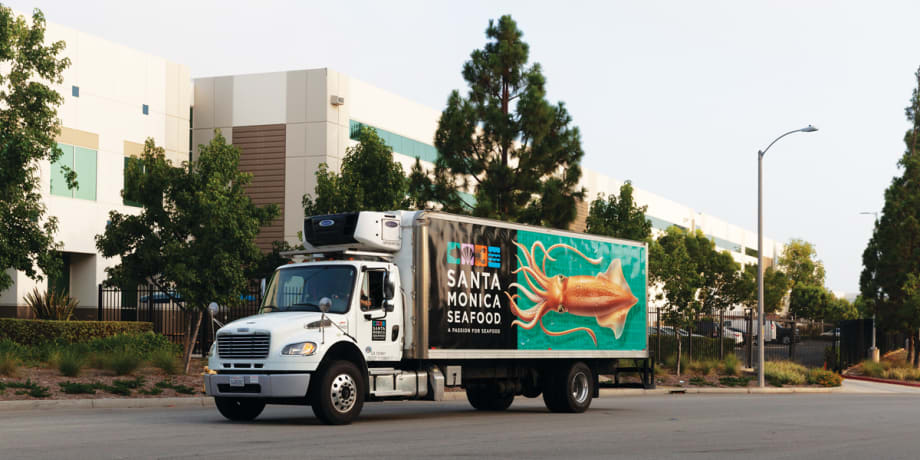
Training on backing up gets special attention at Santa Monica Seafood, where the acronym GOAL, for “Get Out And Look” appears on stickers in every truck to help keep drivers aware of potential hazards.
Photo: Santa Monica Seafood
It’s no secret that last-mile delivery is growing by leaps and bounds, offering opportunities for companies ranging from Amazon contractors with a few vans to big trucking fleets adding last-mile divisions.
But rapid and timely delivery by truck to homes, offices, and business sites can’t be provided, let alone expanded, without safety- and quality-oriented drivers who enjoy the job enough to keep doing it.
The last-mile delivery market in North America is expected to post a year-over-year growth rate of 16% between 2021 and 2025, according to a recent study by Technavio, a global technology research and advisory company. This will result in the market growing by $58.91 billion between 2021 and 2025.
“The ‘Amazon effect’ is real,” advises a new Omnitracs report on industry activity. Last year, “last-mile fleets continued to meet the demand of growth in e-commerce by servicing more stops… 21% more stops were serviced in 2020, compared to 2019, with growth on an upward trajectory after the April [2020] pandemic dip,” according to the report.
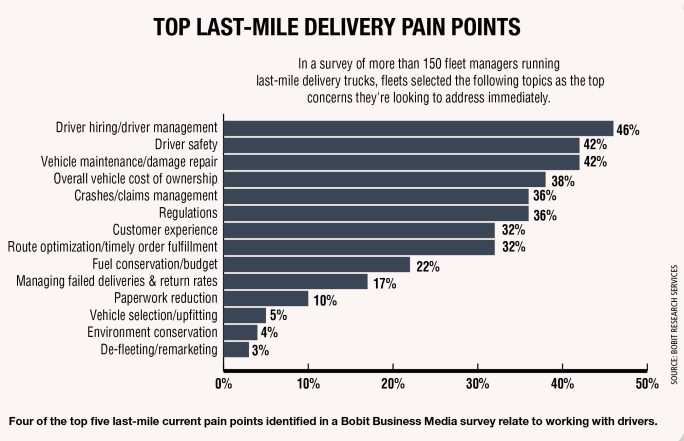
Four of the top five last-mile current pain points identified in a Bobit Business Media survey relate to working with drivers.
Source: Bobit Research Services
On the one hand, given that many last-mile truck driving jobs don’t require a commercial driver’s license, fleets in this segment may pull from a wider labor pool. On the other hand, it’s harder to ascertain the driving skill and safety performance of a candidate without a CDL and the federal PSP (Pre-employment Screening Program) five-year crash and three-year inspection history that attaches to it.
Still, given that trucking is constantly battling a shortage of quality drivers, having more potential drivers to fill last-mile slots is encouraging.
Especially if this opportunity is viewed long range, a fleet manager at a nationwide plumbing supply firm told HDT: “While the [last-mile] work may be varied slightly, the overall skillset is on par with other driving positions. The advantage being that smaller vehicles allow gaining experience while providing for career progression to larger vehicles and loads. Last mile or over the road, the industry as a whole needs to find more ways to draw in drivers and provide career paths that appeal to them.”
Why would those without a CDL consider applying for a last-mile position? There are several likely draws.
These deliveries tend to be localized and varied so no two days are exactly alike. Time behind the wheel is considerably less than driving over the road, and drivers return home every night. There’s also the opportunity to engage with customers, which appeals to many who would not want to drive solo long-haul.
A survey of more than 150 managers of fleets running last-mile delivery trucks in a range of duty cycles indicates driver management is a key concern as these operations ramp up or expand.
The survey, conducted last fall among subscribers to Heavy Duty Trucking and sister fleet business publications, found that of the 55% of participants whose fleets run deliveries, the percentage with 100% of their fleets dedicated to last-mile delivery is between 45% and 58%.
Over a quarter of the respondents reported having a contract with a major parcel delivery company, such as Amazon, FedEx or UPS. And about two-thirds described their overall business as for-hire truckload or private carriage.
The vehicle types of the surveyed fleets underscore the variety of last-mile services offered, as they run from Class 7 and 8 tractor-trailers and Class 6 straight trucks down to large commercial vans.
The survey makes it clear that managing the driving force behind last mile is a challenge to all engaged in this expanding segment of trucking. Four of the top five last-mile pain points identified relate to working with drivers:
Also charting were these driver-influenced impacts: customer experience (32%) and fuel conservation (22%).
While the driver is the critical factor in every on-highway trucking operation, there are some apparent differences in last-mile operations.
Some last-mile operations use Class 8 trucks that require a commercial driver’s license. But for CDL holders used to on-highway operations, last-mile delivery can be a very different environment.
Last-mile drivers of Class 6 and lighter box trucks and vans are generally not required to hold a CDL, so they are likely to come to trucking with little experience driving a vehicle larger than a pickup. What’s more, without the regulatory requirements of hiring CDL drivers, fleets hiring them may have less certainty going in of their driving skills.
To make up for that deficiency, fleets hiring non-CDL holders may opt for completing thorough background checks as well as reviewing the applicant’s motor vehicle record. The idea is to move past applicants who have a history of unsafe driving behaviors. Requiring completion of skills tests can also smarten the pre-hiring process.
Once hired, drivers likely will need training in areas such as loading/unloading at various locations such as in close quarters, polishing customer-service skills, defensive driving, and driving in adverse weather and traffic conditions.
Last fall, regional less-than-truckload carrier Southeastern Freight Lines announced that its final mile service had expanded across all its 89 service centers. At that time, the Lexington, South Carolina-based company reported a 70% increase since the previous June in daily residential deliveries alone. To date, SEFL’s final mile fleet is scoring 99.3% on-time service, according to Rob Smith, vice president of service center operations.

At Southeastern Freight Lines, all last-mile drivers receive the same comprehensive training as the carrier’s other drivers. Likewise, these drivers are outfitted with branded uniforms and trucks.
Photo: Southeastern Freight Lines
SEFL’s final mile trucks are spec’ed for making deliveries to residences, freestanding retail stores, locations where a dock is not available, strip malls with limited access and other similar places. The fleet consists of Hino 195 Class 6 GVW cab-over-engine trucks equipped with liftgates, pallet jacks and hand trucks.
Smith says that to provide the level of service customers expect, the carrier strategically built its last-mile offering over time.
“We started with a small number of trucks in select markets to test both efficiencies and market demand,” he says. “With more than 350 trucks now in our fleet, our company is better equipped to efficiently make final-mile deliveries across our footprint.”
He explains that when routing final mile shipments, Southeastern tries to stay in very specific geographic areas, which opens up options for “long-haul truckers looking for work closer to their homes or a whole different type of driver.”
All Southeastern’s final mile drivers go through the same comprehensive training as its other drivers and are likewise equipped with branded uniforms and trucks.
“When we hire Class 6 drivers, we go the extra step to hire the best and treat them the same as Class A drivers in terms of maintaining the highest safety standards to support our customers’ last-mile deliveries,” says Stephen Wetterau, vice president of logistics for Frisco, Texas-based Quality Custom Distribution.
“We conduct a road test and review their motor vehicle records to ensure we recruit the safest drivers,” he says. “Once they’re onboarded, we use the same safety technologies across all classes of trucks in our fleet. For example, we use video-based in-cab coaching technology that helps our drivers continuously improve their safety performance.”
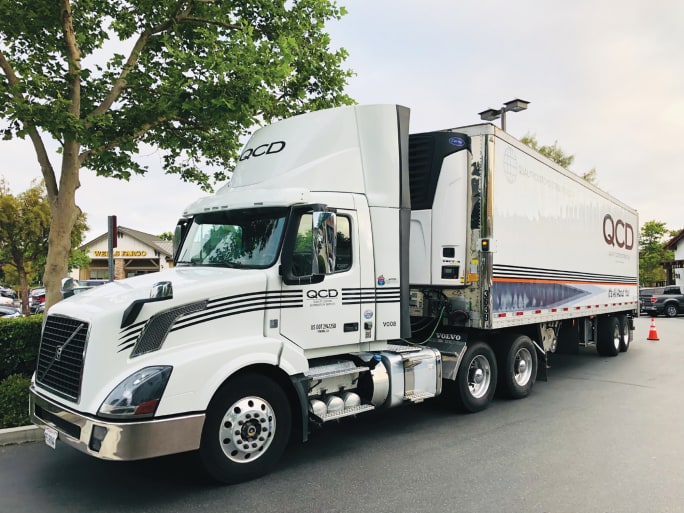
QCD uses both Class 8 and Class 6 trucks in its delivery operations. When it comes to non-CDL drivers for Class 6 trucks, QCD goes “the extra step to hire the best and treat them the same as Class A drivers” to keep up the fleet’s high safety standards, says Stephen Wetterau.
Photo: Quality Custom Distribution
The national food-service distribution firm uses its Class 6 trucks mostly for special deliveries as well as in “dense markets” that require smaller vehicles than the tractor-trailers used in the rest of its fleet.
“The differences in the job depend on how we customize these services to support our customers where and how they need us,” Wetterau says. “Our drivers remain flexible and customer-focused, which is key to QCD’s completely customized approach to servicing last-mile delivery.”
He agrees there’s a wider pool of talent for last-mile drivers, prospects “who prefer to stay closer to home, rather than spending extended periods away on the road.” That helps make up for the fact that there’s generally more physical labor required in making deliveries than in longer-haul operations.
“Our safety culture, ongoing training and commitment to taking care of our associates allow drivers to maintain long careers with us,” he says. “Additionally, we offer warehouse-to-driver growth opportunities that help our associates progress in their careers.”
QCD equips all its trucks with artificial intelligence-enhanced in-cab cameras “to keep our drivers as safe as possible in real time,” Wetterau adds. “This technology helps us maintain the highest standards in safety and helps our drivers continuously improve their performance.”
At California’s Santa Monica Seafood, Matt Cook, logistics manager of delivery operations and safety, says all candidates must provide a copy of their state-issued motor vehicle record during the hiring process.
“If the candidate has a clean MVR with no accidents or tickets, we move on to the interview process.”
That process includes having one of the fleet’s trained driver supervisors ride with the candidate.
“During this ride-along, the supervisor monitors the candidate’s driving skills and behaviors very closely,” Cook says. “Our number-one priority during these ride-along sessions is safety – but we’re also paying close attention to the driver’s behaviors while behind the wheel.”
Once hired, new drivers undergo “a pretty extensive training period of about two weeks. Drivers learn about their daily route, where to deliver, safe parking areas, noise ordinances, proper streets to use, and even how to ‘meet-and-greet’ with customers.”
Backing up gets special attention, Cook says.
“We use the acronym GOAL, which stands for ‘Get Out And Look.’ We have placed GOAL stickers in every truck to keep our drivers aware of potential hazards, whether below or above them, at all times.
"In other training, we discuss the dangers of crowded parking lots, what to do if you must enter a crowded parking lot, and even tips on avoiding backing maneuvers in general.”Last-mile drivers also need a different skillset beyond driving skills, Cook says.
"Last-mile delivery drivers need to be willing to communicate with various types of customers. A lot of our drivers develop relationships with customers after seeing them five or six times a week. Often a customer will see our drivers more than any other representative from our company. This means our drivers are often seen as the face of the company by many customers.”
He notes that last-mile delivery seems to appeal to drivers for a couple of reasons.
“First, drivers are able to start their day and finish their day in the same location,” he says. “Second, last- mile drivers can return home after their shift as opposed to over-the-road drivers, who may be out on the road for days or even weeks at a time.”
Regardless of the GVW class of their trucks, if fleets follow the right recruiting, training, and safety tactics, all last-mile drivers can deliver a competitive edge that’s built both on safety performance and customer service.

For fleet managers and collision repair professionals keeping heavy-duty trucks on the road, getting the color right the first time isn't just about appearance — it's about efficiency, turnaround time, and bottom-line results. Discover how today's digital color tools are transforming the repair process from guesswork to precision.
Read More →
Carriers whose updates were due on or after June 1 have more time, while FMCSA works to stabilize its new registration system and warns of phishing sites impersonating its new carrier registration system, Motus.
Read More →
Cargo theft is no longer just the cost of doing business. It's a multi-billion-dollar criminal enterprise exploiting vulnerabilities across your fleet, drivers, and supply chain.
Read More →
Explore how telematics help refrigerated fleets improve visibility, uptime, efficiency, compliance, and cargo protection across connected cold chain operations.
Read More →
Escalating U.S.-Canada tariffs could disrupt cross-border freight, reduce truck volumes, raise costs, and create new uncertainty for carriers on both sides of the border.
Read More →
The American Transportation Research Institute wants to know what's worrying trucking fleet managers, drivers, and other stakeholders in its annual Industry Issues survey.
Read More →
ATA President and CEO Chris Spear abruptly left his job at the association on August 21, at a pivotal time for the trucking industry.
Read More →
Public Wi-Fi can expose truck drivers and fleets to credential theft, malware, and other cyber threats. Here’s how to reduce the risk on the road.
Read More →
HDT Truck Fleet Innovator Nicky Cupp turns everyday pain points at Fraley & Schilling into opportunities for better technology and smarter processes.
Read More →
HDT Truck Fleet Innovator Adam Buttgenbach helped PepsiCo build one of North America’s largest EV fleets by focusing on where electric trucks make operational sense.
Read More →
