




3 Tools for Finding the Best Qualified Drivers
Few things will impact your overall recruiting, driver qualification, and safety results more than the quality of new drivers you bring into the organization.
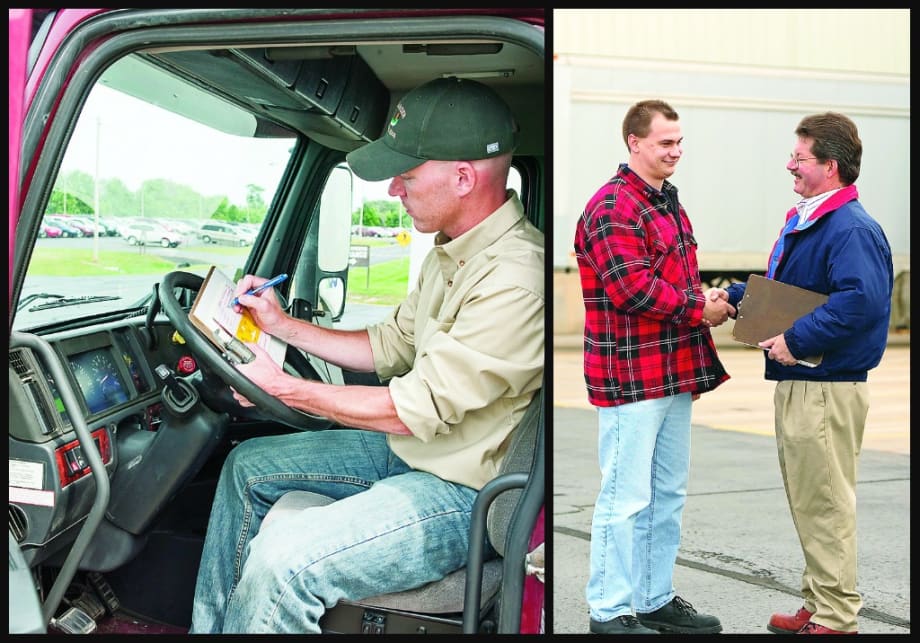
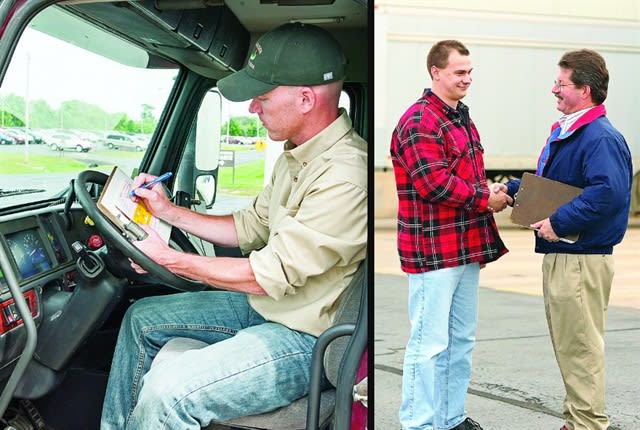
Motor carriers may have the intent to hire qualified drivers, but do they have the capability to draw qualified and safe drivers to their company? What’s more, do they have the capability to retain these same drivers once they are hired?
Home time, wages, equipment, and other issues must be a big part of recruiting and retention programs for motor carriers. But a carrier’s capability to hire hinges on first impressions, word of mouth, and expectations. This begins with a job description that matches reality.
Few things will impact your overall recruiting, driver qualification and safety results more than the quality of new drivers you bring into the organization. Because of this, it becomes critically important to develop a thorough and comprehensive driver screening and qualification process that effectively weeds out poor or high-risk drivers before they are ever hired.
The following three tools can help:
1. Job descriptions
A job description contains specific information on the knowledge, training, education, and skills required. This helps to ensure the carrier is hiring the right person with the right skills and experience. In addition, a job description can be used to:
Clarify roles and responsibilities. It outlines who is responsible for what within the company to help eliminate surprises about job responsibilities. For example, a job description could describe hand-load or unload expectations as a percentage of all loads assigned by the company.
Define relationships. This shows the driver how the job relates to others in the organization, such as the mechanic, dispatcher, and customer service representatives, and identifies how much interaction may be required or expected.
Determine initial training needs. A job description helps your driver-trainers and others responsible for training and orientation to adjust and revise their programs according to the demands of the job.
Establish career paths. A job description can show how the education, experience, and skills gained from the current job can lead to advancement within the company. This progression shows the driver the position is not a dead-end job.
Evaluate employee performance. Since a job description should clearly outline the job expectations in measurable terms, use it as a basis for developing performance standards.
2. Driver qualification policy
The driver qualification requirements located in 49 Code of Federal Regulations, Part 391, are the minimum standards. Many carriers find it beneficial to exceed these minimum standards and establish their own policy on qualifying applicants for driving positions.
Some of a company’s hiring standards and minimum qualifications may include:
Minimum age and minimum years of verifiable commercial motor vehicle driving experience.
Only driver applicants with “x” number or fewer preventable accidents within the past “x” number of years will actually be considered for employment.
Only driver applicants with “x” number or fewer violations of motor vehicle laws within the past “x” number of years will be considered for employment.
The company shall not consider for employment an applicant who has been convicted of any offense involving the operation of a commercial motor vehicle while impaired by alcohol or a controlled substance, or transporting a controlled substance.
The company shall not consider for employment a driver applicant who has been convicted of reckless driving of a motor vehicle within the past “x” years.
The company will seriously question the work history of a driver applicant who has held “x” number of motor carrier driving positions within the past “x” years.
3. The pre-employment screening program
The PSP is a tool created by the FMCSA that makes crash records for the last five years and roadside inspection data for the last three years available to motor carriers conducting a background check on a driver applicant. It is voluntary, but many motor carriers find it a valuable tool in hiring the best drivers.
The PSP report will not show any conviction data. Instead, it will show a driver’s involvement in all DOT-recordable accidents and any violations a driver has been cited for in a roadside inspection during those spans of time, regardless of the driver’s employers. This will allow motor carriers to be better informed in their decision-making regarding new hires, and also to increase safety on the highways by lessening the chances for historically unsafe drivers to operate commercial motor vehicles.
Violations that prospective employers look for in the PSP report that are generally believed to be a good indication of a driver’s safety performance include pretrip inspection items, logbooks, and speeding. There is no “score” or “value” attached to the driver for the number of crashes or violations in the PSP. It only reports events. It is up to the carrier to decide if this driver applicant would make a good addition to the workforce.
Your hiring efforts should be more successful if these three tools are used effectively — and quickly. If the driver is someone you want to hire, so does everyone else. Telling the applicant to “check back with us at the end of next week” because you cannot get something done quickly enough may give your competitor the time they need to hire the driver away from you.
Bob Rose is an editor, transport management, for J.J. Keller & Associates and has worked in the transportation industry for over 25 years.
More Drivers

Truck Drivers Need More Than Another Alert
Fleets have more visibility into truck health, safety events, and driver activity than ever. The next challenge is turning all that information into useful guidance for the person who has to decide what to do next.
Read More →
FMCSA Removes 110 Truck Driver Training Schools from Certified ELDT List
Federal regulators also are targeting more than 160 additional training providers and launching a nationwide audit of third-party CDL skills testers as part of a broader crackdown on trucking fraud.
Read More →
Hours of Service Pilot Programs: FMCSA Readies for 2027 Rollout
Two pilot programs could eventually reshape hours-of-service rules, giving truck drivers options to pause their 14-hour clock or use longer split sleeper rest periods.
Read More →
Medical Cards, English Proficiency Reshape Roadcheck Violations
Medical-card violations jumped to the top of the driver out-of-service list during CVSA’s 2026 International Roadcheck, while English-language proficiency violations appeared among the leading violations for the first time.
Read More →
Driver Trust Can Make or Break the Success of Fleet Safety Technology
New Teletrac Navman research suggests that onboarding, transparency about driver data, and positive feedback can play a significant role in how commercial drivers respond to safety and coaching technology.
Read More →
EEOC Sues KLLM Over Alleged Sex Discrimination in Driver Training
KLLM is facing a federal sex-discrimination lawsuit over policies the EEOC alleges put female truck driver trainees at a disadvantage.
Read More →
FMCSA Moves to Codify English Language Requirements for Commercial Drivers
By changing regulations on English-language proficiency requirements for commercial drivers, rather than relying on a guidance memo, the FMCSA said future administrations won't be able to walk back the Trump administration's stricter enforcement with just a memo.
Read More →
Drivers Put Western Star Trucks to the Test at Star Nation Experience
Watch to get an inside look at the Western Star trucks, technology, and community behind the Star Nation Experience 2026!
Read More →
Trump Administration Looks to Put More Veterans Behind the Wheel
The Freedom Haulers program pulls together existing and expanded programs at several federal agencies to recruit veterans to drive commercial heavy-duty trucks and cut the red tape for them to get a CDL, training, and employment.
Read More →
Putting Mack’s Command Steer to the Test
A test drive of Mack’s Command Steer active steering system evaluates how it can make truck driving easier and less tiring.
Read More →