





Related: Court Decision Puts GHG Phase 2 Rules for Trailers on Hold
Uncertainty Surrounds Trailers and GHG Phase 2
Trailer aerodynamics and glider kits might get a reprieve from the fuel-efficiency rules, but backing away from national rules would turn California loose, some warn.
October 27, 2017
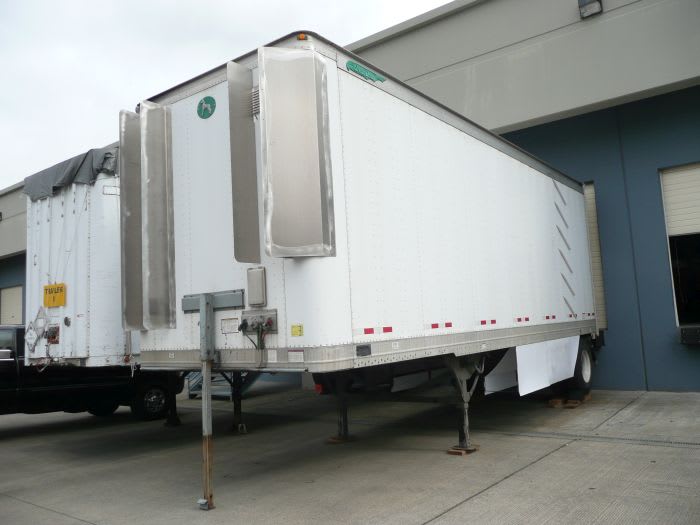
For the first time, the GHG Phase 2 rule regulated trailers in its effort to reduce greenhouse gas emissions. But now the government is revisiting those regulations. Photo: Tom Berg
5 min to read
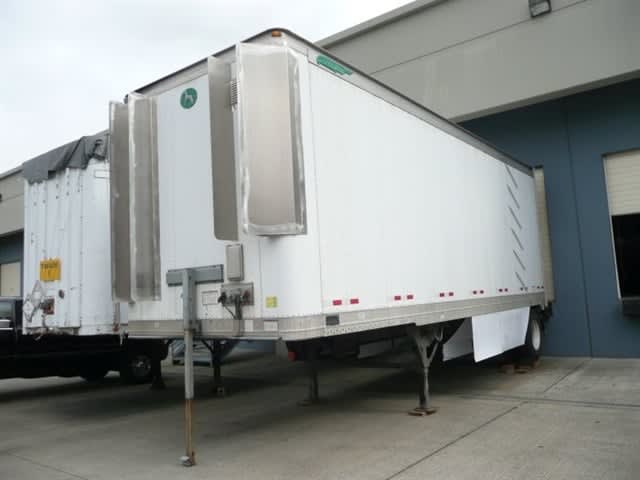
For the first time, the GHG Phase 2 rule regulated trailers in its effort to reduce greenhouse gas emissions. But now the government is revisiting those regulations. Photo: Tom Berg
[UPDATE: As of Oct. 27, a court approved a stay on the rule's implementation while the EPA goes through a new rulemaking process on the trailer provisions, in response to a lawsuit filed by the Truck Trailer Manufacturers Association. Read more here.]
Business people hate uncertainty, but that’s what they got when the Environmental Protection Agency announced it would reconsider the trailer and glider kit provisions of its Phase 2 greenhouse gas and fuel efficiency rules. The move is a direct result of President Donald Trump’s promise to repeal onerous regulations put in force by previous administrations.
The object of the lengthy rules, jointly written with the National Highway Traffic Safety Administration and finalized only last October, is to reduce emissions of carbon dioxide and other gases believed to cause climate change. Phase 2 follows previously issued Phase 1 rules now in effect.
As it now stands, Phase 2 will begin affecting trailers this January and began limiting production of glider kits last January. And it specifies designs for other vehicles over the next 10 years. Emissions reduction is to be accomplished by cutting the amount of fuel burned — a win for both truck owners and clean-air advocates — and eliminating older, dirty diesels (which is why EPA and NHTSA targeted glider kits).
In August, the agencies announced that they will reconsider rules pertaining primarily to box-type trailers, which means dry freight and refrigerated vans, and glider kits, which are new trucks powered by used, rebuilt or remanufactured engines and drivetrain components. It did not say what changes might be made, but did say that a review would proceed deliberately, probably pushing it well into 2018. So, to be prudent and practical, manufacturers must proceed as though the current Phase 2 rules will stay the same.
Mixed feelings from trailer makers
The industry’s mixed reaction was summed up by comments from Great Dane Trailer: “We are encouraged by the EPA’s decision to reconsider the trailer provision in the GHG2 regulation,” said Rick Mullininx, executive vice president of engineering. “Great Dane earnestly supports making trailers more fuel efficient… but the current EPA regulation for trailers is flawed in that it takes a ‘one size fits all’ approach, which in some cases offers no fuel savings and arguably increases fuel consumption, and even puts some fleets at a disadvantage.”
EPA’s move pleased the Truck Trailer Manufacturers Association, which had petitioned against Phase 2. It argued that the rule requires aerodynamic enhancers on all box-type trailers, whether or not they would provide cost-effective benefits. Also required are special tires and tire-pressure-monitoring systems on many types of trailers. The association pointed out that trailers operating at low average speeds and sitting a lot while loading and unloading would gain next to nothing in fuel savings and GHG reduction.
However, some builders complained that an initial deadline of Jan. 1 is looming for trailers to meet the Phase 2 rules as now written, and they, their suppliers and their customers need to know soon which way any changes will go. Utility Trailer Manufacturing, which during a comment period unsuccessfully argued that EPA and NHTSA lacked authority to regulate non-powered vehicles, said customers order new trailers months in advance. And not knowing what equipment to include or not include puts them in a very difficult position.
California steps in
Meanwhile, American Trucking Associations warned that a rollback of the Phase 2 rules could upset national uniformity, with California authorities substituting their own regs for what EPA might abandon. President and CEO Chris Spear noted that ATA supported the federal rules, “but by reopening the rule to reexamine trailers and glider kits, EPA has opened the door to California taking the lead, and a more aggressive track, in setting trailer standards.
“As representatives of an interstate industry,” Spear said, “ATA believes a single national standard, set by federal regulators, is preferable to at worst, a patchwork of state standards or at best, a de facto national standard that is set without the appropriate opportunity for the entire regulated community – many members of which are not based in California – to weigh in.”
The California Air Resources Board will definitely react, agrees Ben Sharpe, a senior researcher at the International Council on Clean Transportation, which has analyzed the Phase 2 rules. “CARB will definitely finalize its regulations next year… If EPA looks to significantly reschedule what it requires for trailers, our intelligence is that CARB will push even further on trailers… It’s going to be a very interesting early part of next year.”
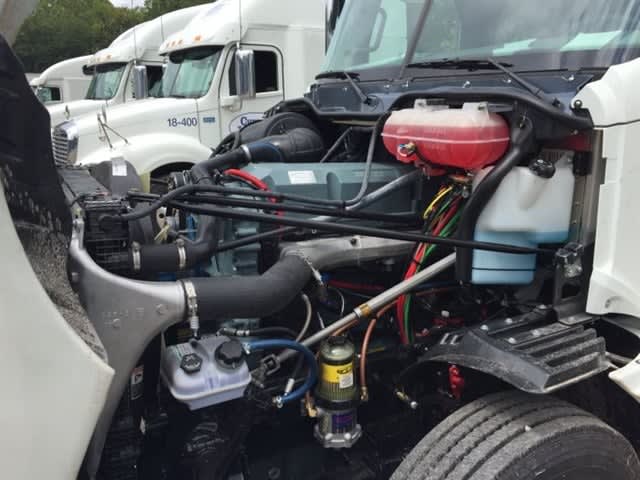
Glider kits, like this brand-new Freightliner kit with a pre-emissions Detroit Diesel engine, are being severely curtailed under the rules as they currently stand. Photo: Deborah Lockridge
Reprieve for gliders?
Because reusing engines and driveline components saves money, glider kits have become somewhat popular with users of common highway tractors as well as operators of specialty trucks, like forward-discharge concrete mixers. However, under the GHG rules as they currently stand, starting in January of 2021, they’ll be allowed only for their original purpose, which was reclaiming powertrains from wrecked trucks.
Though a small percentage of total new truck sales, gliders’ older diesels produce far more exhaust emissions, the EPA contended. The agency became concerned at a surge in sales, from a few hundred per year 10 to 20 years ago to more than 20,000 in 2015. Most of those were highway tractors, and were undisguised efforts to get around modern emissions limits and the expensive engines needed to meet them, the agency said. Under Phase 2, glider production is already restricted, and will be more so starting this January.
If EPA relents on its trailer enhancement and anti-glider rules, clean-air advocates are likely to protest, which could drag out any changes far beyond any publication or effective dates. So uncertainty is certain to plague what at first blush seemed a break for the trucking industry.
Subscribe to Our Newsletter
More Fuel Smarts

How Volvo Updated Its D13 for EPA 2027 [Watch]
Volvo’s updated D13 promises lower emissions without sacrificing performance or fuel economy. Take a closer look at what changed inside the engine in this HDT Spotlight video.
Read More →
Diesel Price Spike Shortens Payback for Natural Gas Trucks, Report Says
Energy Vision estimates fleets could recover the higher purchase price of an RNG-fueled Class 8 tractor in 1.3 to 2.8 years under current fuel-price scenarios.
Read More →
Calstart Becomes Catalyst Mobility, Reflecting Broader Focus
Calstart is now Catalyst Mobility, reflecting the nonprofit’s growing national role in clean transportation, including zero-emission trucks, infrastructure and incentive programs.
Read More →

Record Diesel Prices Squeeze Trucking Fleets
Average U.S. diesel prices have climbed to nearly $6 a gallon, surpassing the 2022 record as tight refinery capacity and Middle East disruptions keep fuel costs elevated.
Read More →
Sponsored•September 9, 2026
How Fuel Delivery Shapes Engine Performance
Fuel delivery depends on more than what happens at the injector. For fleet, maintenance and technical professionals, looking at the full path from pump to injector can provide useful context for understanding engine performance.
Read More →
East Coast Port Launches $45M Electric Truck Push
The Port Authority of New York and New Jersey announced millions in incentives for zero-emission drayage trucks, yard tractors, and new charging hubs near the port.
Read More →
California Bill Could Shed Light on Electric Truck Prices
Why do battery-electric Class 8 trucks remain so expensive? A California bill headed to Gov. Gavin Newsom would give fleets and state agencies more visibility into what manufacturers charge.
Read More →
Detroit Opens Orders for EPA 2027 Engines
Detroit isn’t starting from scratch to meet EPA 2027 diesel emissions standards. Its Gen 6 DD13 and DD15 engines keep much of today’s platform while updating the fuel and aftertreatment systems.
Read More →
Zero-Emission Truck Corridor Planned for West Coast
California, Oregon, Washington, British Columbia and Baja California are coordinating plans for truck charging and hydrogen fueling from Canada to Mexico.
Read More →
A Closer Look at Kenworth’s Electric T880E Vocational Truck [Video]
Learn more about Kenworth's T880E battery-electric vocational truck at the Paccar Technical Center, including its range, applications, upfitting considerations, and PTO options, in this HDT Spotlight video.
Read More →