




Saving Fuel at the Wheel End
Wheel ends are often overlooked in the quest for better fuel economy. But Stemco's Joshua Kucera warns that neglecting them can reduce fuel economy and increase maintenance headaches.
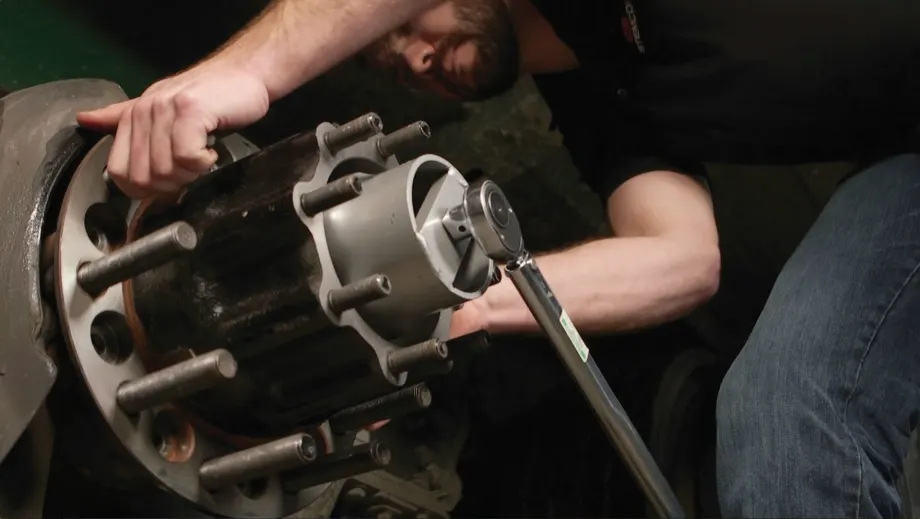
Wheel bearings are just like Goldilock's porridge. They need to be 'just right' to ensure optimal fuel efficiency.
Stemco
When it comes to fuel efficiency in trucking, factors like aerodynamics and driving habits are often highlighted. But some of the most consistent efficiency losses start at the wheel end.
As trucks accumulate miles, small increases in friction and heat inside the hub can slowly reduce miles per gallon and drive up operating costs. These issues are not always obvious, but they can be preventable.
Paying close attention to bearing adjustments, seal integrity, lubrication condition, and temperature is a good practice to adopt. That way, technicians can identify early warning signs and make routine maintenance decisions that will protect both performance and fuel efficiency.
Where Fuel Efficiency Breaks Down
At Stemco, we consistently see the same patterns in the field, where small issues at the wheel end can quickly impact efficiency.
Tire pressure and improper bearing adjustment are among the most frequent contributors. Both increase resistance and force the vehicle to work harder to maintain speed.
Improper bearing adjustment also stands out for its long-term impact. Whether set too loose or too tight, it creates internal resistance that generates heat and accelerates wear. Over time, that added friction not only reduces efficiency but can also shorten the life of bearings and spindles.
Seal failures and lubrication issues also play a significant role. A compromised seal can allow lubricant to escape or contaminants to enter the system, both of which increase drag.
Low, degraded, or contaminated lubrication reduces the system’s ability to manage friction, further compounding the problem.
How Bearing Adjustment Impacts Efficiency
Bearing adjustment directly affects the resistance at the hub. When bearings are too loose, excess movement within the assembly leads to instability and uneven contact between components. When they are too tight, increased pressure creates additional friction. In either case, surfaces interact in ways they were not designed to, generating heat and increasing the energy required to keep the vehicle moving.
In real-world conditions, improper bearing adjustment is often identified through elevated hub temperatures, unusual noise, or visible lubricant leakage. Because bearing settings also influence how the seal operates, an out-of-spec adjustment can quickly lead to additional issues within the assembly.
Seal Integrity and Early Warning Signs
Seal issues are often one of the earliest visible indicators of a developing wheel-end problem.
Technicians should watch for signs of lubricants leaking onto the wheel, tire, or surrounding components, as well as dirt buildup around the seal area. These conditions point to a loss of sealing integrity, which can lead to contamination or reduced lubrication if left unaddressed.
Routine walkarounds and inspections play an important role here. Catching a leaking or failing seal early helps prevent bigger issues and more costly repairs down the road.
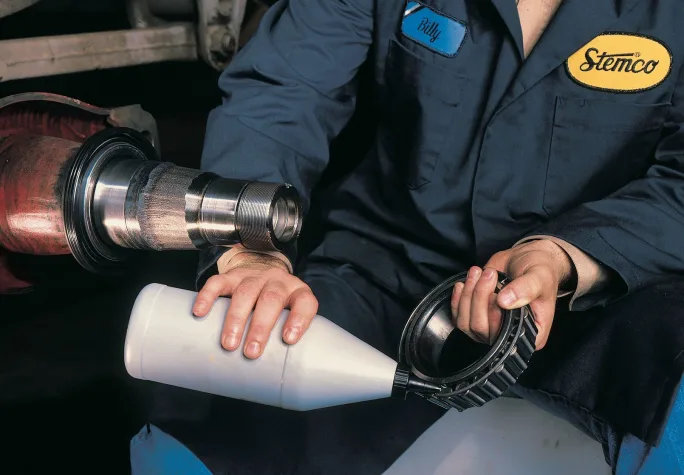
A compromised seal can allow lubricant to escape or contaminants to enter the system, both of which increase drag.
Stemco
Heat and Lubrication Breakdown
Heat is unique in that it acts as both a symptom and a driver of reduced efficiency at the wheel end.
As temperatures rise, lubrication begins to lose viscosity and can oxidize, reducing its ability to protect components. This leads to higher friction and additional heat generation.
If left unchecked, this cycle accelerates wear and further reduces efficiency. What begins as a small temperature increase can quickly develop into a larger performance issue if the underlying cause is not addressed.
What Temperature Is Telling You
Hub temperature is one of the most practical indicators technicians can monitor during routine maintenance.
Under normal operating conditions, hub temperatures typically fall below 200 degrees, although this can vary depending on factors such as braking frequency and ambient conditions.
A useful guideline is to monitor for temperatures approaching 100 degrees above ambient, which can indicate excessive friction or another underlying issue.
Consistency matters. Comparing temperatures across wheel positions on the same axle can help identify outliers early. A single hub running noticeably hotter than others is often a sign that something is out of spec and warrants a closer look.
Why Summer Makes It Worse
Higher ambient temperatures are problematic because they raise baseline operating conditions across the wheel end. As heat builds, lubrication performance declines, and components operating near their limits can move out of spec more quickly.
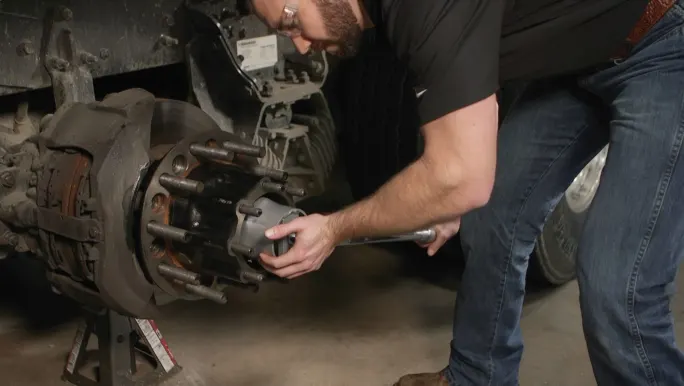
Bearing adjustment directly affects how much resistance exists at the hub.
Stemco
Issues that may not be obvious in cooler conditions often become more evident in the summer months, increasing the risk of both efficiency loss and component damage. This makes routine inspection and temperature monitoring especially important during periods of sustained high temperatures.
Maintenance Priorities That Protect MPG
Routine maintenance decisions play a direct role in controlling fuel efficiency at the wheel end. Three areas should remain a consistent focus:
- Maintaining appropriate tire pressure helps reduce rolling resistance and supports overall efficiency.
- Verifying proper bearing adjustment limits internal friction and helps control operating temperatures.
- Ensuring adequate lubrication levels and quality, including addressing any seal issues, allows the system to function as designed.
Staying consistent in these areas not only reduces heat buildup and friction but also helps to maintain your fleet’s performance over time.
Connecting Wheel-End Maintenance to Fuel Cost
Even small increases in friction and resistance can reduce fuel mileage. While the impact may seem minor at a single wheel position, those losses add up across miles and especially across an entire fleet.
Addressing wheel-end issues early helps control fuel costs and reduce the risk of more significant component damage over time. In that sense, routine maintenance is key to ensuring reliability while effectively managing operating expenses.
Fuel efficiency is not only influenced by how a truck is driven or designed. It is also shaped by the condition of the components that keep it moving.
At the wheel end, managing heat, friction, and lubrication through routine maintenance helps protect both performance and cost. Over time, staying consistent with the details is your best bet for keeping your bottom line in check.

Joshua Kucera
Stemco
About the author:Joshua Kucera is a product manager at Stemco with a background in wheel end product engineering. He began his career developing, testing, and launching new wheel end solutions. Today, he applies that technical foundation to product management, helping customers solve problems wth practical solutions.
This article was authored and edited according to Heavy Duty Trucking’s editorial standards and style to provide useful information to our readers. Opinions expressed may not reflect those of HDT.
More Maintenance

Mack Expands Extended Coverage With Four Chassis System Plans
Mack Trucks' new system-specific coverage options allow heavy-duty fleets to select protection for driveline, cab, HVAC, electronics, and advanced safety components.
Read More →
What an Out-of-Service Order Really Costs, and How to Plan for One
The repair invoice is the first number you see — and often one of the smallest. Here’s what else an out-of-service order can cost a fleet, and how planning can reduce the damage.
Read More →
International Launches Online Truck Parts Store
Fleetrite.com lets fleets and repair shops find OEM and all-makes parts, check prices and availability, and order without calling a parts counter.
Read More →

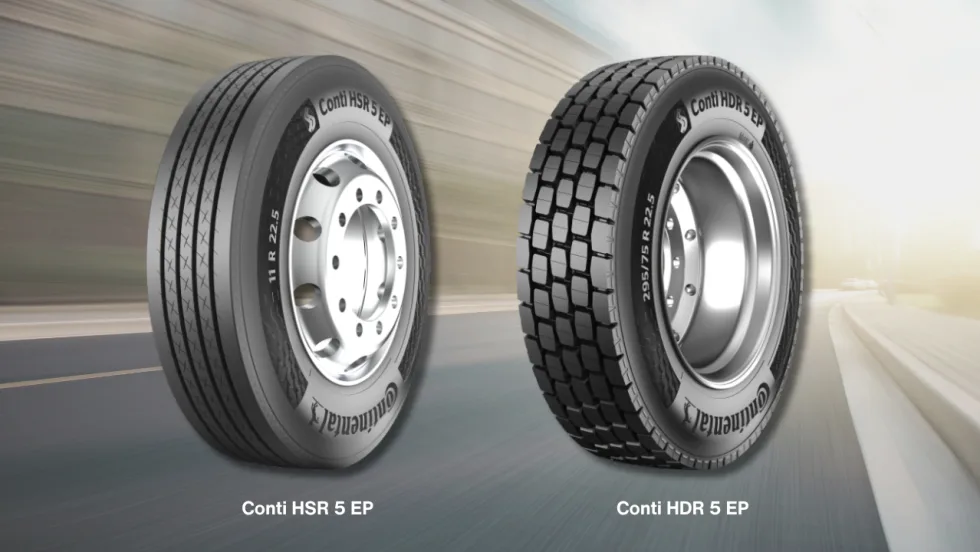
Continental Introduces New Regional Truck Tires
Continental says its new Generation 5 steer and drive tires for regional operations offer longer tread life, with estimated mileage gains of 22% and 19%, respectively.
Read More →
How AI Can Help Your Techs’ Efficiency
The technician shortage isn't going away, and no single fix can close the gap on its own. Trent Broberg makes the case that AI's real job in the shop is protecting the billable hours and job satisfaction of the techs you already have, not asking them to work faster.
Read More →
Color Match Smarter: Tools That Restore & Perform
For fleet managers and collision repair professionals keeping heavy-duty trucks on the road, getting the color right the first time isn't just about appearance — it's about efficiency, turnaround time, and bottom-line results. Discover how today's digital color tools are transforming the repair process from guesswork to precision.
Read More →
Wrong Repair Prompts Recall of Freightliner, Western Star 4x2 Trucks
DTNA is recalling more than 2,400 trucks that received an incompatible software fix instead of the hardware repair required to address brake valve corrosion.
Read More →
Truck Drivers Need More Than Another Alert
Fleets have more visibility into truck health, safety events, and driver activity than ever. The next challenge is turning all that information into useful guidance for the person who has to decide what to do next.
Read More →
The Maintenance Checks Trucking Fleets Should Prioritize Before Fall Freight Picks Up
Making it through August isn’t the same as being ready for the next several months of operation. Find out what systems may have suffered from summer heat and need to be checked out before fall.
Read More →
What Three Fleets Are Doing Differently When Buying Truck Parts in 2026
With freight improving but costs still climbing, fleet maintenance executives explain how they're balancing price, quality, and supplier relationships.
Read More →