




Why Do Wheels Come Loose?
Investigations into hundreds of wheel separation incidents reveals that whether it was loosened wheel fasteners or failed bearings due to improper installation or loss of lubricant, better maintenance could have prevented all but a few of the incidents.

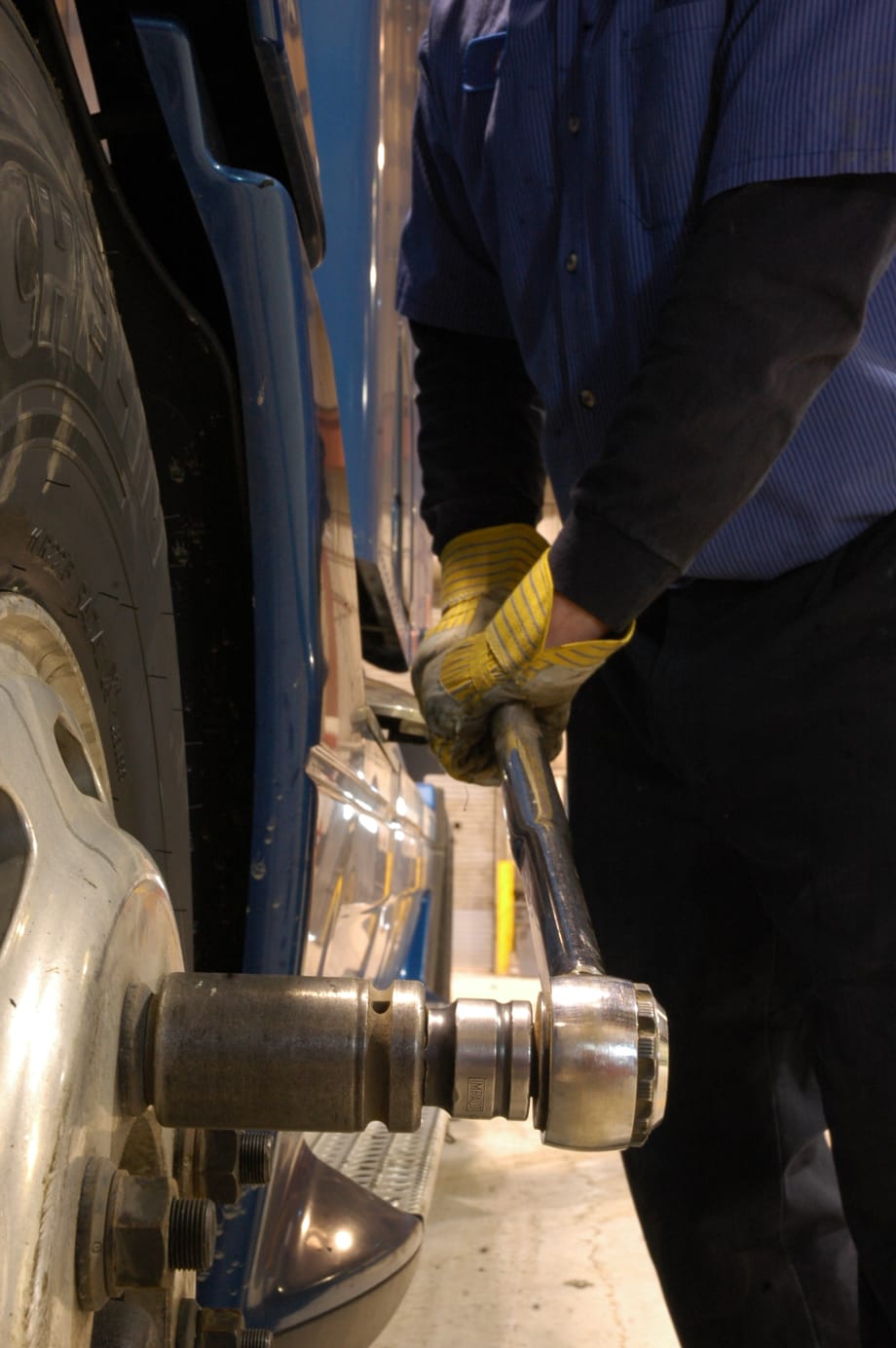
Impact wrenches are fine for running wheel nuts up onto the studs, but a torque wrenches must be used to set the nuts. Retorqueing is highly recommended, but few, apparently, get around to it.
Impact wrenches are fine for running wheel nuts up onto the studs, but a torque wrenches must be used to set the nuts. Retorqueing is highly recommended, but few, apparently, get around to it.
Investigations into hundreds of wheel separation incidents reveals that whether it was loosened wheel fasteners or failed bearings due to improper installation or loss of lubricant, better maintenance could have prevented all but a few of the incidents.
In 643 incidents reported between 2000 and 2003, loose wheel fasteners were to blame 65% of the time while wheel bearings were the cause in 26% of the cases. The remainder were a mix of axle and/or suspension structural failures and other causes.
One Canadian report revealed that 83% of the incident reports noted that repairs or maintenance had been performed on the suspect wheels just a short time prior to the separation.
Wheel-end failures result from over- or under-tightened bearings or lack of lubrication. Under-tightening (excessive endplay) can cause the wheel to wobble on the spindle, damaging the seal, which can lead to a loss of lubricant and eventual failure of the bearings. Over-tightening (excessive preload) can damage the bearing causing overheating, seal failure and lubricant loss.
Where fasteners are to blame, several factors can cause nuts to work loose. Excess paint, rust, scale or dirt between mating areas of wheel end components will lead to low clamping force. Failure to follow the manufacturer’s instructions for specified torque, the correct tightening sequence, and routine in-service torque checks have all be cited as causes for loss of clamping force on wheel nuts.
Improper use of impact wrenches and non-calibrated tools have resulted in wheel studs being stretched beyond their yield point. Fractured or worn out nuts with deformed threads have also been linked to loss of sufficient clamping force at the nut flange.
You might think that trailers would fare worse than tractors, since they are typically in the shop less frequently. But the percentage split between tractor and trailer incidents is about even, with trailers representing about 6% more than trucks.
Read more about how to prevent wheel-offs in the December issue of HDT.
More Maintenance

Color Match Smarter: Tools That Restore & Perform
For fleet managers and collision repair professionals keeping heavy-duty trucks on the road, getting the color right the first time isn't just about appearance — it's about efficiency, turnaround time, and bottom-line results. Discover how today's digital color tools are transforming the repair process from guesswork to precision.
Read More →
Wrong Repair Prompts Recall of Freightliner, Western Star 4x2 Trucks
DTNA is recalling more than 2,400 trucks that received an incompatible software fix instead of the hardware repair required to address brake valve corrosion.
Read More →
Truck Drivers Need More Than Another Alert
Fleets have more visibility into truck health, safety events, and driver activity than ever. The next challenge is turning all that information into useful guidance for the person who has to decide what to do next.
Read More →
The Maintenance Checks Trucking Fleets Should Prioritize Before Fall Freight Picks Up
Making it through August isn’t the same as being ready for the next several months of operation. Find out what systems may have suffered from summer heat and need to be checked out before fall.
Read More →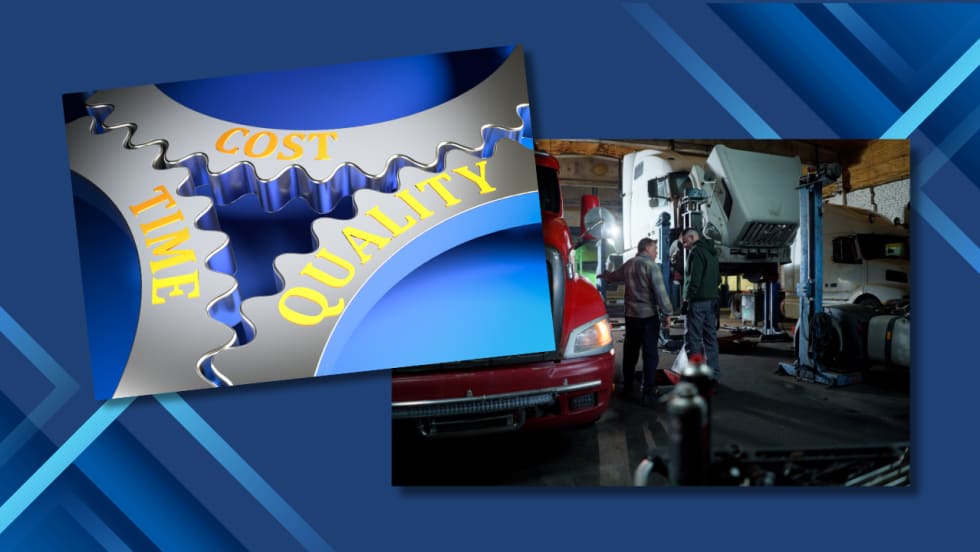
What Three Fleets Are Doing Differently When Buying Truck Parts in 2026
With freight improving but costs still climbing, fleet maintenance executives explain how they're balancing price, quality, and supplier relationships.
Read More →
Paccar Recalls 2027 Trucks Built This Summer for Possible Electrical Problem
The nearly 6,000 Kenworth and Peterbilt trucks in the recall could potentially lose engine power, among other things.
Read More →
Will API PC-12 Oil Change Trucking Fleet Maintenance?
The new API PC-12 heavy-duty engine oil category reflects the changing demands of modern diesel engines. But fleets like Foodliner are looking to getting their own data before making decisions on adopting the new oils and questions such as extending oil drain intervals.
Read More →
Brake Safety Week to Focus on Drums and Rotors
Commercial vehicle inspectors are focusing on truck brakes during CVSA's Brake Safety Week, August 23-29.
Read More →Possible Battery-Cable Fires Prompt Recall of 15,000+ International MV and HV Trucks
On the recalled vehicles, manufacturing variations can cause the battery interconnect cable to contact the auxiliary stud and hold down the bracket.
Read More →
Rush, MCT Team Up to Grow Refrigeration Service Network
The joint venture will operate MCT's network of Carrier Transicold dealerships and mobile service locations, with the companies promising greater service capacity and uptime for refrigerated fleets.
Read More →