




Save Fuel, Increase Profit, Save the Planet
Is this a case of win-win? Do the new regulations limiting greenhouse gas emissions help both the environment and truck operators’ bottom lines? So it seems.

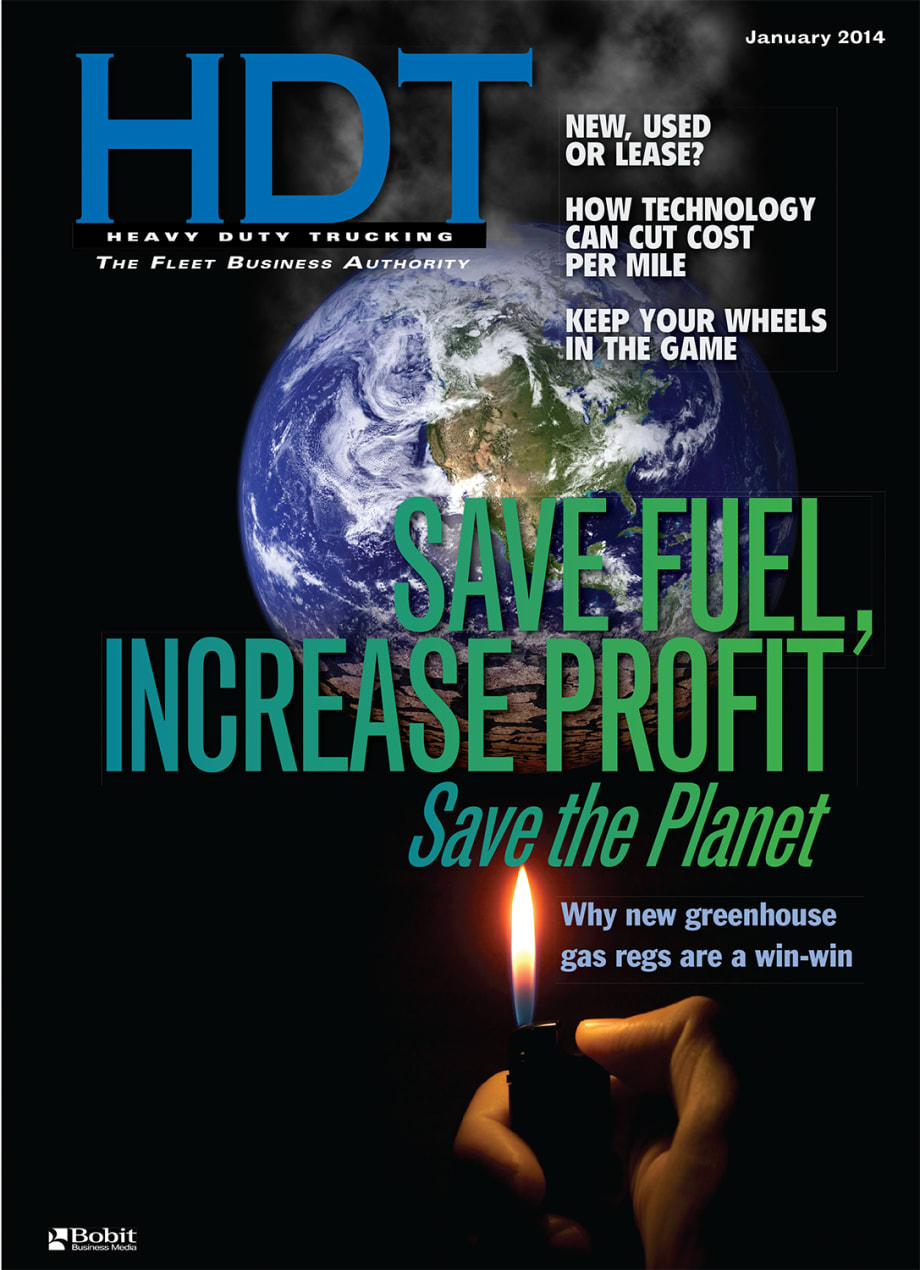

Is this a case of win-win? Do the new regulations limiting greenhouse gas emissions help both the environment and truck operators’ bottom lines?
So it seems. The regs, written by the Environmental Protection Agency and the National Highway Traffic Safety Administration, are formally titled “Greenhouse Gas Emissions Standards and Fuel Efficiency Standards for Medium- and Heavy-Duty Engines and Vehicles.”
They were effective Jan. 1. As the title suggests, lowering emissions of greenhouse gas, primarily carbon dioxide, is tied to fuel economy. The less fuel a truck burns, the lower its GHG output. Controlling GHGs could help slow down global warming with its rising seas and weather extremes.
Here and now, trucks meeting the 2014 GHG limits are built to use less fuel. Although their purchase prices have increased, it’s not by nearly as much as previous emissions mandates have caused.
The details
The regulations cover many types of trucks, from pickups and midrange work trucks to Class 8 road tractors. Exhaustive discussions describe freight and how it’s carried within the U.S., and the shipping involved. The regs also list technologies that have been used to increase efficiencies in the various truck types, and might be used to meet the rules.
In practical terms, buyers of new trucks need not sharpen their spec’ing skills, because obeying the regulations is the responsibility of the original equipment manufacturers. OE engineers and designers have been preparing their vehicles to meet the current mandate. Some were way ahead of the game, announcing back in 2012 that they already met GHG 2014 regs.
They are working to comply with another round of limits in 2017. They’ve also begun compliance activities, which include computations to earn credits under the regulatory system and reports to the government agencies.
“Tracking and reporting is an OEM internal activity, completely transparent to the customer,” says Roy Horton, Mack Truck’s powertrain product marketing manager.
“Basically, an OEM would use the EPA-provided Greenhouse Emissions Model to calculate the carbon dioxide emissions in grams/ton-mile for a specific vehicle.” Inputs to this model include the vehicle aerodynamic value, steer-tire rolling resistance, drive-tire rolling resistance, vehicle speed limiters, idle reduction and weight reduction values.
This output is then compared against the EPA-defined industry standard, he explained. “Greater or lesser GEM values for a specific truck model, multiplied by the yearly sales volume and useful life value, create the debits or credits.”
The powertrain
OEMs say they’re achieving the goals. Volvo Trucks, for instance, announced that its 2014 diesels would be 0.5% to 2% more fuel efficient, offering a significant return on investment for fleets and owner-operators.
“Volvo trucks equipped with 2014 engine technology will deliver substantial fuel efficiency benefits, while also providing the power and performance customers expect from a Volvo powertrain,” says Göran Nyberg, president of Volvo Trucks North American Sales & Marketing.
Advancements over previous Volvo engine models include smoother surfaces on pistons and liners for lower friction; seven-hole injectors that better atomize and distribute fuel within cylinders; a crankcase ventilation system that filters more oil from blowby gases before they leave the engine while lowering backpressure for better performance; and a clutched air compressor that completely disengages from the engine to cut parasitic loads.
Mack Truck, which obtains its engines from Volvo Powertrain, lists similar improvements.
“Downspeeding” is being emphasized by Volvo and Mack, which have introduced packages using low-rpm cruising speeds with automated mechanical transmissions. Volvo calls it XE, for exceptional efficiency, and Mack names it Super Econodyne. Fuel efficiency improves by about 1.5% for every 100 rpm of downspeeding, so customers spec’ing the XE package can expect up to a 3% improvement compared to an overdrive manual transmission in a similar operation, Volvo says.
Freightliner has begun pushing its proprietary 12-speed Detroit DT12 automated transmission to better control gear shifting and engine speed. When used in conjunction with the Detroit brand engines and axles, it can offer even further fuel economy improvements. Freightliner also offers Eaton’s UltraShift Plus AMTs.
Kenworth and Peterbilt have been working with Eaton to improve operation of the UltraShifts, and now upshifts occur sooner to avoid high engine revs. The Paccar brands also have tweaked their Paccar MX-13 diesel to use less fuel.
Navistar International also is using downspeeding, and to achieve it offers several products that, like Volvo and Mack, take gearbox operation out of driver’s hands: the Cummins-Eaton Smart Advantage powertrain, which claims to save 3% to 6%; an exclusive-to-International 16-speed direct-drive UltraShift Plus LSE, for a 6% fuel savings; and Allison’s TC10 10-speed torque-converter automatic, which Allison says averages 5% better economy over manual transmissions.
“For fuel efficiency, improvement efforts are always ongoing – they aren’t ‘light-switch’ events,” says spokesperson Elissa Maurer. “One of the key areas of focus for this phase of GHG was the transition to SCR emissions technology. Our heavy-duty SCR product transition was completed in October and is moving forward, and we’ll look to reduce some of the added componentry that was needed for EGR. We expect that process will reduce some weight and also lead to further fuel economy improvements.”
SCR – selective catalytic reduction – uses urea injection to break down nitrogen oxide in the exhaust. This takes strain off the engine and allows it to breathe easier, cutting fuel consumption. Competitors have been reporting fuel-economy gains since they began using SCR in 2010, but Navistar switched over last year.
Aerodynamics and more
All OEMs say they have further polished their current models’ aerodynamic performance. For example, Freightliner has plugged gaps between forward-facing body panels on its Cascadia Evolution model, which was already designed to move smoothly through the air. The antenna, for instance, has disappeared, built into the body of the truck.
Volvo’s streamlined VN highway models have gotten mirror heads with aerodynamic shrouds and arms, redesigned hood mirrors that also increase visibility, and additional ground effect features below the bumper and side fairings.
Kenworth and Peterbilt have introduced new highway and vocational models that are more streamlined as well as more roomy and comfortable.
Idle shutdown timers eliminate fuel burn and fumes, and setting one at five minutes or less gets a positive score from the EPA, Kenworth engineer Zach Slaton says.
Lowering a truck’s top road speed is very effective at saving fuel and reducing emissions, so the OEMs are encouraging customers to simply slow down. They’ll try to get customers to agree to set the electronic road-speed limiter to a lower number – for instance, from 70 mph to 65, or 65 mph to 62. Once set, this parameter is not supposed to be changed upward, and dealers are likely to discourage customer requests for a reset. This brings up the question of how the new GHG regulations will be enforced, which is a story in itself. (See Will Truck Owners Face GHG Enforcement article.)
Other tools include lower vehicle tare weight, often by using smaller engines and more aluminum components; and low-rolling-resistance tires, which might appear on vocational trucks as well as highway tractors.
Special equipment such as bunk heaters and auxiliary power units will avoid engine idling during driver breaks and overnight sleep periods. These concepts are not new, but they’ve become more important and you might hear more about them as you go truck shopping.
What’s next
The next phase of the regulations goes into effect in 2017. Landon Sproull, chief engineer at Peterbilt, says we’ll see “another step change in 2017 with the engine side” of the regulations.
The next stage also prompted the industry to ask the American Petroleum Institute to develop a new engine oil classification, currently known as PC-11, setting standards for the lower-viscosity oils the engines will need to meet the regs. It’s due to be ready by January 2016.
Last summer, President Obama announced that the EPA will develop new fuel economy and greenhouse gas standards for post-2018 model year trucks. While it’s too early to spell out details, EPA and truck and engine makers who have been working with the agency say the next generation of regs will likely consider trailers as well as new engine and transmission technologies.
“In terms of 2019 regulations, the vehicle portion will likely drive increased proliferation of low rolling resistance tires and aerodynamic features, like fairings,” says Wade Long, Volvo Trucks’ director of product marketing.
Expect truck and engine makers to find new ways to reduce parasitic losses – energy used by parts such as fans and pumps, for instance. DTNA recently introduced a variable speed water pump that does just that, using less energy when the engine needs less coolant flow. Waste heat recovery is also being explored.
Much of the low-hanging fruit has already been picked, said Bill Kahn, manager of advanced concepts for Peterbilt, during a panel discussion last fall. “It’s pretty funny that we’re sitting here talking about the efficiency of water pumps.”
Peterbilt’s Sproull believes the focus in the next round of GHG regs will be “heavily powertrain, not just engine, but including transmission and axles. And of course they will also make a step change in terms of aerodynamics.” To do that, he says, the regs will need to take into account the tractor-trailer as a unit.
“It’s going to be difficult to squeeze out more aerodynamics specific to the tractor itself. I think as you look out five to 10 years there’s some way the trailer has to be integrated.”
Editor in Chief Deborah Lockridge and Washington Editor Oliver B. Patton contributed to this article.
More Fuel Smarts
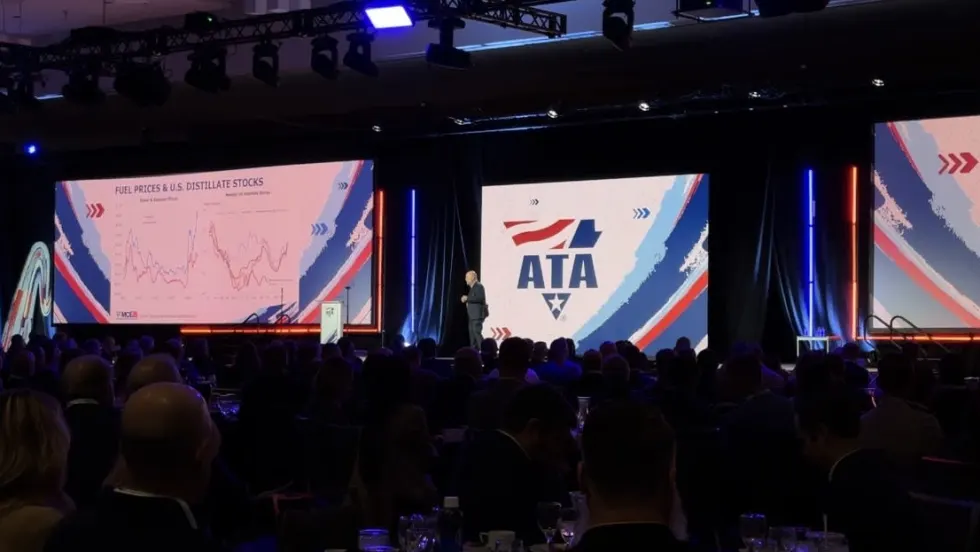
Trucking’s Diesel Squeeze Isn’t Letting Up
With diesel topping $6 a gallon nationally, ATA's Bob Costello explains why fleets should prepare for continued pressure at the pump.
Read More →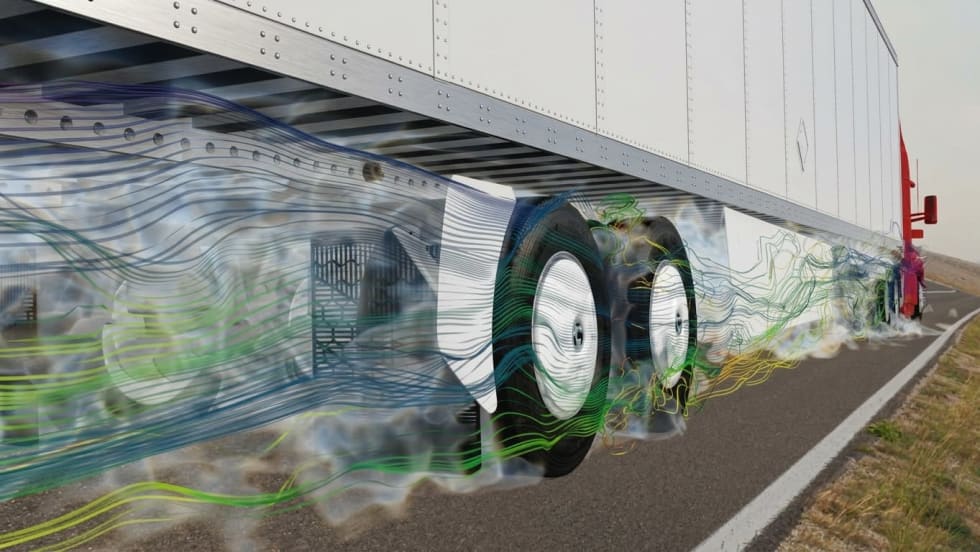
FlowBelow Redesigns Trailer AeroSlider to Cut Fuel Use
The lighter trailer aerodynamic system installs in less than 45 minutes, according to the company, with potential payback in under a year depending on fuel prices and trailer mileage.
Read More →
Why Diesel Price Relief Efforts May Fall Short
Diesel prices have eased from September’s record high, but doubts about additional Russian supply and limits on dyed-diesel tax relief mean trucking fleets still face expensive fuel. And prices could go higher.
Read More →
Why Small Fuel Savings Matter in Trucking
Can better fuel economy help pay for driver raises? In this podcast, GP Transco explains how small efficiency gains create room to reinvest in its people.
Read More →
How GP Transco Cuts Trucking Fuel Costs, a Tenth of a Gallon at a Time
What’s another tenth of a mile per gallon worth? GP Transco shares how equipment upgrades and driver coaching turn small gains into meaningful fuel savings.
Read More →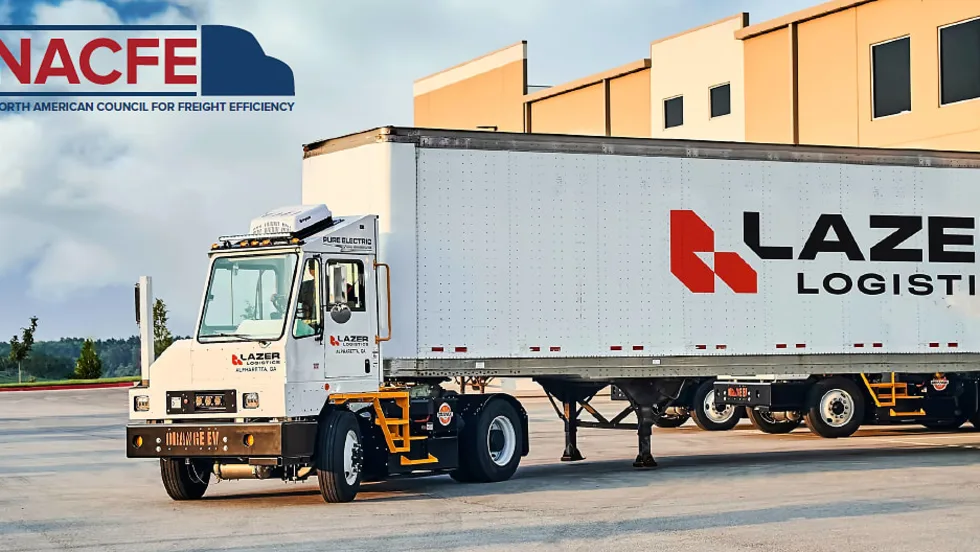
Electric Yard Tractors Move Beyond Pilots
Operating-cost savings have overtaken sustainability goals as the leading reason surveyed fleets are adopting battery-electric terminal tractors, according to new NACFE research.
Read More →
Geotab Links Fleet Card to Vehicle Data
The new card combines fuel discounts with telematics-based purchase controls. Geotab’s analysis also points to potential savings from choosing lower-priced fuel stops.
Read More →
Fleet Economics Shape Electric Truck Outlook
ACT Research expects costs, charging infrastructure, and technology improvements to drive zero-emission commercial vehicle adoption as federal regulations and incentives retreat.
Read More →
Wex Adds Cardless Fuel Payments for Over-the-Road Customers
A new fuel card feature for Wex customers offers convenience and security.
Read More →
New California Law Could Shed Light on Electric Truck Prices
Why do battery-electric Class 8 trucks remain so expensive? A California bill signed by Gov. Gavin Newsom would give fleets and state agencies more visibility into what manufacturers charge.
Read More →