




Retread Your Way to Prosperity
Despite success stories reported by successful fleets, some misconceptions about retreads still exist. These myths are often based on bad, and sometimes severely outdated, information.

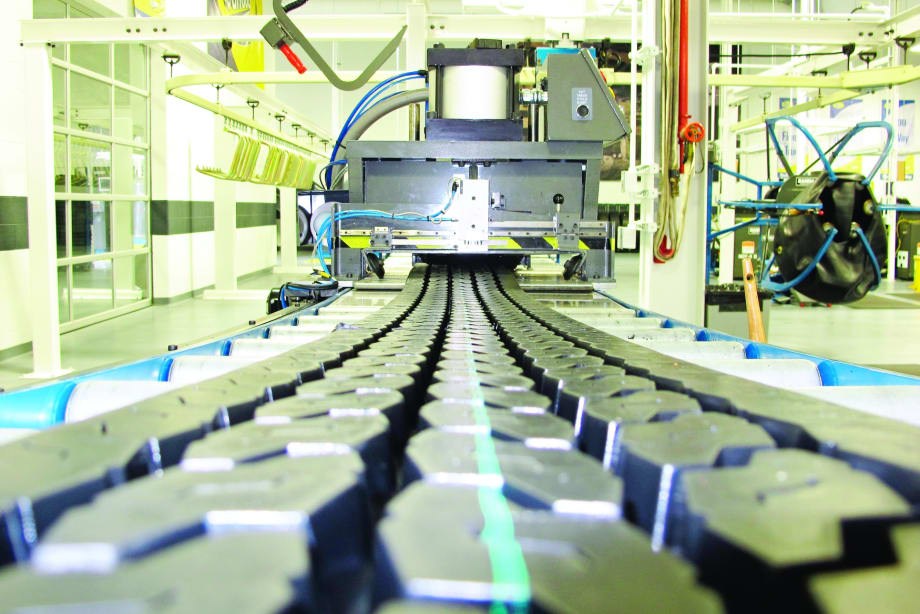
Imagine the frustration of a retread tire vendor. He or she has proven money-saving products, yet half the industry won’t even look at them because of a bad experience they had 20 years ago with maybe a poor quality and probably poorly maintained retreaded tire. What if some of the largest and most sophisticated fleets in the country took that approach? Can you imagine UPS or Ryder, for example, not using retreads?
Scott Perry, vice president of supply management and fleet management solutions at Ryder System, says the company has about 1.25 million tires on the road on any given day, and a significant portion of those are retreads.
“In a full-service lease, we carry the burden of all the maintenance costs including the tires,” Perry says. “It’s our call all the way, so we try to optimize uptime and reliability as well as the best possible operating expense so we can be as competitive as possible in the marketplace. Retreads allow us to do that in the right application.”
Perry has probably had a few bad experiences with retreads over the years, but the same could be said for new tires. For him, the reliability and value of retreads are no longer in question.
“We have a vested interest in providing our customer with reliable tires,” he says. “We’re careful not to undermine those objectives with questionable tires. We don’t take any shortcuts there.”
Despite success stories like that reported by Ryder, some misconceptions about retreads still exist. These myths are often based on bad, and sometimes severely outdated, information, says Todd Labbe, general manager, commercial retread, Goodyear.
“In the past, there might have been a perception among some fleets that retreads are ‘low-quality’ options,” he points out. “Retreads are more technically advanced than ever, and that goes for both tread rubber and the retreading process itself. Goodyear’s retread technology evolves with our new truck tire technology.”
With today’s sensitivity to rolling resistance, tread compounding has really come into its own. About 60% of a tire’s rolling resistance comes from the casing, about 40% from the tread. Retreaders can’t do much about the casings they have to work with, but, according to Guy Walenga, Bridgestone’s director of engineering for commercial products and technologies, rubber compounding is where the magic is today.
“When we’re building a new tire, we’re using maybe 14 different compounds together, and that has to be molded and cured, and comes out as a viable tire,” Walenga says. “With retreads, you’re able to isolate just the tread and just its performance requirements, so you can use different compounds to get similar performance. There is also a different set of technical specifications required for compounds on a retread versus compounds that need to blend overall on a new tire.”
And the other advantage to a retreaded low-rolling-resistance tire is the tread tends to be a couple of 32nd’s shallower than a comparable new tire.
“That’s gives you a bit of an advantage right from day one,” Walenga notes. “The tread may look the same; for example, our Ecopia M835 has the identical tread pattern as the Bandag B835, but the compounding will be different. Along with the shallower tread, you’re going to see improved fuel economy sooner than with the thicker tread on a new tire.”
Can Small Fleets Play, Too?
There’s a perception, perhaps grounded in some fact, that retreading isn’t popular with small fleets. David Stevens, managing director of the Tire Retread & Repair Information Bureau, thinks that in the absence of data, smaller fleets and independent drivers tend to hold onto some of the old misconceptions and myths about retreaded tires.
“Larger fleets often have set up sophisticated tire management programs and have carefully measured the benefits that retreaded tires bring to them in terms of overall lower cost per mile. But, as one attendee at this year’s Mid-America Trucking Show told me about larger fleets and testing, ‘I can’t do all the testing they do on tires, but I can sure learn from the testing they’ve done and apply it to my business.’”
One thing that could be keeping some small fleets out of the retread game is a casing inventory. The big fleets can ship a truckload of casings to a retreader at one time. Small fleets need a place to store them, they can ill-afford to have dozens of non-utilized assets sitting around, and the prospect of getting a decent credit for their casings could also be a factor.
“All fleets, regardless of size, are looking for ways to save money and retreads still offer that opportunity,” says Philip Boarts, Michelin's retread product category manager. "For some very small fleets that don’t have a tire/retread inventory, due to the shortage of casings during the past couple years, availability of caps and casings has been limited, which might have forced these fleets into buying more new tires.”
Each fleet has its specific requirements of what it is looking for in a retread, Boarts adds. “It depends on the fleet’s type of operation, casing management ability, turnaround time, level of dealer service, on-line reporting needs, and fleet location. There’s a lot to consider when determining what part of a fleet’s replacement program will be in the retread area.”
In addition to the tires themselves, retreaders are constantly improving their procedures and adding services, including automated tracking systems to simplify tire management.
“Goodyear’s GTracs system, which is available through the Goodyear Authorized Retread network, uses bar codes to track the progress of a casing through the retread process,” says Labbe. “After a tire has been retreaded, GTracs provides fleets with data about their retreads in the form of easy-to-understand reports.”
Ironically, this is just the kind of tracking capability some smaller fleets lack that would help them prove the ROI of a retreading program.
“The larger fleets know retreads will save at least 50% over the acquisition cost of new tires,” says Harvey Brodsky, managing director of the Retread Tire Association. “On top of that, when you have an adjustment rate as good as or better than that of a new tire, they’d have to be out of their minds not to use retreads.”
But old stereotypes are hard to kill, including that of crummy retreads, which probably dates back to World War II when rubber was in very short supply and retreaders had little to work with but the dregs.
Today’s adjustment rates are comparable to new tires. Treads are available in so many patterns and compounds that fleets can literally spec their tires by wheel position and application. And just like new tires, one of the only threats to the product’s ROI is underinflation. In fact, tire management skill may be one of the few advantages big fleets have over the small ones when it comes to retreads — heck, tires in general. They probably have someone on the payroll looking after that.
More Maintenance

Color Match Smarter: Tools That Restore & Perform
For fleet managers and collision repair professionals keeping heavy-duty trucks on the road, getting the color right the first time isn't just about appearance — it's about efficiency, turnaround time, and bottom-line results. Discover how today's digital color tools are transforming the repair process from guesswork to precision.
Read More →
Wrong Repair Prompts Recall of Freightliner, Western Star 4x2 Trucks
DTNA is recalling more than 2,400 trucks that received an incompatible software fix instead of the hardware repair required to address brake valve corrosion.
Read More →
Truck Drivers Need More Than Another Alert
Fleets have more visibility into truck health, safety events, and driver activity than ever. The next challenge is turning all that information into useful guidance for the person who has to decide what to do next.
Read More →
The Maintenance Checks Trucking Fleets Should Prioritize Before Fall Freight Picks Up
Making it through August isn’t the same as being ready for the next several months of operation. Find out what systems may have suffered from summer heat and need to be checked out before fall.
Read More →
What Three Fleets Are Doing Differently When Buying Truck Parts in 2026
With freight improving but costs still climbing, fleet maintenance executives explain how they're balancing price, quality, and supplier relationships.
Read More →
Paccar Recalls 2027 Trucks Built This Summer for Possible Electrical Problem
The nearly 6,000 Kenworth and Peterbilt trucks in the recall could potentially lose engine power, among other things.
Read More →
Will API PC-12 Oil Change Trucking Fleet Maintenance?
The new API PC-12 heavy-duty engine oil category reflects the changing demands of modern diesel engines. But fleets like Foodliner are looking to getting their own data before making decisions on adopting the new oils and questions such as extending oil drain intervals.
Read More →
Brake Safety Week to Focus on Drums and Rotors
Commercial vehicle inspectors are focusing on truck brakes during CVSA's Brake Safety Week, August 23-29.
Read More →Possible Battery-Cable Fires Prompt Recall of 15,000+ International MV and HV Trucks
On the recalled vehicles, manufacturing variations can cause the battery interconnect cable to contact the auxiliary stud and hold down the bracket.
Read More →
Rush, MCT Team Up to Grow Refrigeration Service Network
The joint venture will operate MCT's network of Carrier Transicold dealerships and mobile service locations, with the companies promising greater service capacity and uptime for refrigerated fleets.
Read More →