




Is Renewable Diesel Trucking's Fuel of the Future?
Like biodiesel, renewable diesel uses feedstocks, soybean oil, waste cooking oils and greases as its base ingredient. Unlike biodiesel, it is actually a refined fuel — just like conventional diesel fuel.

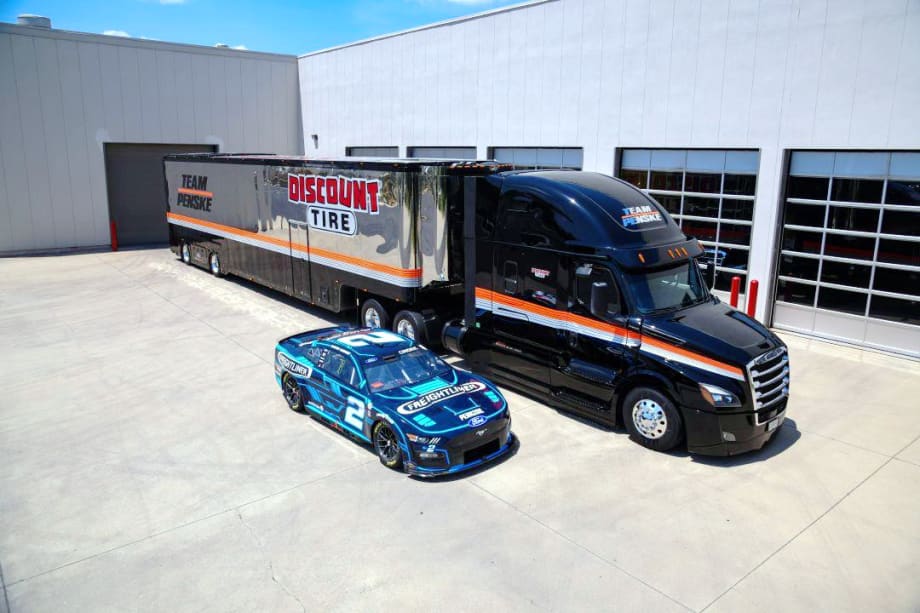
Penske has started using renewable diesel in all its racing team trucks as they tour the country.
Photo: Penske
After You’ve probably heard of renewable diesel fuel. You might have assumed it was some sort of biodiesel variant that comes with all of the shortcomings of that fuel blend. But renewable diesel is, in fact, a completely new and different version of diesel fuel.
Like biodiesel, renewable diesel uses feedstocks, soybean oil, waste cooking oils and greases as its base ingredient. Unlike biodiesel, it is actually a refined fuel — just like conventional diesel fuel.
Moreover, renewable diesel has none of the performance or maintenance concerns that biodiesel does, according to advocates. Overall, it performs almost exactly like conventional diesel. In fact, in some respects, it even outperforms conventional diesel fuel.
What is Renewable Diesel?
“Renewable diesel is a 100% renewable, biomass-based fuel,” says Scott Fenwick, technical director of the Clean Fuels Alliance, a trade association representing the entire biodiesel, renewable diesel and sustainable aviation fuel supply chain.
He explains that renewable diesel is “refined by an entirely different processing technology [than biodiesel] that gives it performance characteristics that are virtually identical to conventional diesel fuel.”
Unlike conventional diesel fuel, which is manufactured from crude oil, renewable diesel is highly refined by hydrotreating this feedstock, explains Selda Gunsel, president of Shell Global Solutions and vice president, fuels and lubricants technology. This process makes it physically and chemically very similar to conventional diesel. It also produces more consistent, uniform molecules of a paraffinic nature when compared to conventional crude oil refining, she says.
That means renewable diesel has improved combustion properties inside diesel engines, according to Gunsel, which helps reduce emissions of air pollutants. It is also free of unwanted components such as sulfur, metals, and aromatics, making it non-toxic and less harmful to the environment.
Biodiesel undergoes a different manufacturing process, called transesterification, which does not result in the enhanced properties of renewable diesel. This is why biodiesel is typically only used in diesel blends up to 20%.
“Both are ‘renewable’ fuels,” Fenwick says. “Both fuels offer greenhouse gas emission reductions. And both offer benefits in the battle against climate change. Biodiesel is somewhat easier and simpler to manufacture, which means it’s a little bit more cost-effective to produce than renewable diesel.
“What is neat about the two fuels is that they are not mutually exclusive,” Fenwick says. “You can blend them together without any problem. And you can blend then with conventional diesel fuel without any problem.”
Neste is a renewable diesel producer and manufacturer that has been selling the fuel in the U.S. since 2006.
“So, [renewable diesel is] not really the new kid on the block, even though many people are just now starting to learn about it,” says Carrie Song, vice president, renewable road transportation, Americas, for Neste. “And this fuel has been doing a great job for two decades now.”
If you’re a fleet operator, she says it is important to know that renewable diesel is fully approved by all diesel truck and engine OEMs.
“That includes Caterpillar, Cummins, Detroit and Volvo, just to name a few,” Song says. “It works well in every application you can think of. We have fleet users, as well as off-highway, marine, mining and even refrigerated transport customers. And many of these customers tell us they have no issues with the fuel. In fact, many of them tell us they see reduced maintenance and longer service intervals when using renewable diesel.”
Emissions Reductions for Trucks New and Old
The reason renewable diesel is attracting so much interest is because it is an inherently cleaner-burning diesel alternative resulting in less tailpipe emissions compared to conventional biodiesel.
It also reduces greenhouse gas emissions by approximately 65% on a life cycle basis when compared to conventional diesel using life cycle emissions data from the California Air Resources Board Low Carbon Fuel Standard.
The benefits of renewable diesel are more holistic than simply reducing tailpipe emissions, Fenwick notes. “There are some tailpipe benefits,” he says. “But that really depends on how old the engine is.”
In pre-2010 diesel engines without modern exhaust aftertreatment systems, the tailpipe benefits of renewable diesel are substantial, Fenwick says.
“With those legacy engines, you see reductions in particulate matter — smoke out of the stack — as well as reductions in greenhouse gas and CO2 emissions,” he explains. “But in 2010 to 2027 engines, the choice of fuel has very little impact on emissions in the exhaust stream.”
Renewable Diesel’s ‘Well-to-Wheel’ Environmental Benefits
For modern diesel engines with selective catalytic reduction exhaust aftertreatment systems, the environmental benefits are of a more holistic, “well to wheel” nature, explains Bill Combs, vice president of sustainability development and strategy for Penske Transportation Solutions.
He says that’s because the overall emissions generated during the renewable diesel manufacturing process are vastly reduced when compared to conventional diesel and biodiesel.
“There are a lot of variables in this,” he cautions. “It depends on a lot of factors, such as how sustainably the crops and food stocks that are used to create the fuel are grown and transported. And then, how sustainably the finished fuel is transported from the refinery to fueling stations.
“But depending on those factors, you’re looking at anywhere from 60% to 80% in emissions reductions compared to other types of diesel fuel.”
Song says the carbon reduction benefits of the fuel are outstanding from both perspectives, compared to other diesel fuels.
“Older trucks see about a 33% reduction in NOx tailpipe emissions,” she says. “But that is not the whole picture.
“The beauty of renewable diesel is that with sustainable methods used to collect cooking oil and other food stocks, transportation to the refinery and back to the terminal, that whole sustainability cycle can easily deliver a 75% in emissions reductions in a fuel that, in many ways, outperforms conventional diesel fuel.”
Minor Maintenance Trade-Offs
One of the most compelling reasons to consider wider use of renewable diesel in North America is that, in some respects, it actually performs better than diesel blends widely in use today.
“It’s really a 100% drop-in-and-go fuel for fleets,” Fenwick says. “But there are maintenance considerations in older engines that have to be taken into account.”
That’s because older diesel engines — particularly pre-2000 models — used natural rubber O-rings and gaskets. Fenwick explains that unlike conventional diesel, renewable diesel lacks compounds called “aromatics” in its makeup.
“That lack of aromatics improves emissions, because aromatics contain carcinogens,” he says. “But aromatics also cause natural rubber to swell while the engine is hot — and losing that ability can cause leaks.
“On the other hand, renewable diesel is perfectly compatible with all diesel blends,” he says, meaning running a 50/50 blend of petroleum diesel and renewable diesel can address the problems with natural-rubber gaskets.
Most trucks built after 2015 use synthetic gasket and O-ring materials that do not swell or contract when they react with fuel, meaning leaks aren’t an issue with renewable diesel, notes Johan Agebrand, director, product marketing, Volvo Trucks North America.
As with any bio fuel, renewable diesel can have issues with clouding, Agebrand says.
“Of course, there is always water in diesel fuel. So, you can have more clouding and solids in the fuel. And there is an increased chance of icing in cold weather. But these things can easily be handled with heated fuel filters and fuel tanks.”
“The performance of renewable diesel is on par with traditional diesel fuel,” says Josh Tippin, vice president of energy and fuel services, Penske Transportation Solutions. “It does all the things you expect traditional diesel to do — and some things even better. It has a cetane number of 65, compared to 50 in traditional diesel blends, so you get a little more starting power in the trucks, which the drivers like.
“And, at least on newer diesel engines, there’s no maintenance downside,” Tippin adds. “It’s a much cleaner-burning fuel. So, you don’t have as many SCR regens or have to change out diesel particulate filters as often.”

Photo: Neste Corp.
Neste commercial fueling sites provide renewable diesel fuel in northern and central California.
Photo: Neste Corp.
Cleaner But More Costly
So, if renewable diesel is so great, why aren’t more fleets using it?
Right now, renewable diesel is more expensive than conventional or biodiesel blends. And although the fuel has been common in Europe for several years, in the U.S. its use is largely concentrated in West Coast states where regulations and incentives support it, with the vast majority of the fuel going to California.
The fuel is mandated for use in all state diesel-powered vehicles in California. Non-government fleets can get incentives from the state via the California Low-Carbon Fuel Standard and the Renewable Fuel Standard. Other West Coast states have similar programs.
All of these programs help bring the cost of renewable diesel down on par with biodiesel and conventional diesel fuel — in those states.
“It’s just more expensive because there’s just less of it out there in the U.S.,” says Penske’s Combs. “The challenge is going to getting it into more fuel tanks around the country to drive prices down. Once the demand is there, I think the price of renewable diesel will be comparable to regular diesel without incentives.”
Increasing Renewable Diesel Availability
Neste projects the U.S. market for renewable diesel will be 18 million tons by 2030, according to Song. “And even today, the U.S. is the largest market for this fuel, worldwide.”
Song says more refineries around the country are being converted to produce renewable diesel. However, she says, it takes time to not only build or refurbish refineries, but also to train people how to manufacture the fuel.
“But the more fleets that begin to use renewable diesel, the more supply and availability will increase, and prices will decrease,” she says.
California is on track to burn 3 billion gallons of renewable diesel this year, according to Penske’s Tippin. Projections are that figure will increase to 5 billion gallons in 2024.
Tippin tells fleets that are considering renewable diesel know their current fuel blend to get a true apples-to-apples assessment of its performance in the fleet’s vehicles.
“I always suggest isolating a unit and running it for a comparison that will show you the fuel’s attributes,” he says.
If you’re not on the West Coast, Tippin says there are things you can do to help increase the availability of renewable diesel.
“I always tell those fleets to reach out to their local and state lawmakers to make the case for the fuel,” he says. “Ask them to fund subsidies to help you purchase and use the fuel. You kind of control your own destiny when it comes to renewable diesel. But you have to push your local representatives to make it happen.”
Combs is also enthusiastic about renewable diesel based on Penske’s experience with the fuel.
“I think it’s a great alternative to conventional diesel for years to come,” he says. “This is a green, sustainable and renewable diesel fuel that allows us to continue to run millions of heavy-duty vehicles on the road in a sustainable way. Even better, all the testing today shows us that renewable diesel is as good or better as a clean fuel for our vehicles. To be honest, it’s really a better fuel for our vehicles all the way around in terms of performance and maintenance.”
Even a casual industry observer knows that diesel fuel will be the primary fuel powering commercial vehicles for many years to come. But renewable diesel could be a fuel that allows fleets to continue to use a fuel they know and love while still helping reduce emissions and clean up the environment.
More Fuel Smarts

Wex Adds Cardless Fuel Payments for Over-the-Road Customers
A new fuel card feature for Wex customers offers convenience and security.
Read More →
New California Law Could Shed Light on Electric Truck Prices
Why do battery-electric Class 8 trucks remain so expensive? A California bill signed by Gov. Gavin Newsom would give fleets and state agencies more visibility into what manufacturers charge.
Read More →
How Volvo Updated Its D13 for EPA 2027 [Watch]
Volvo’s updated D13 promises lower emissions without sacrificing performance or fuel economy. Take a closer look at what changed inside the engine in this HDT Spotlight video.
Read More →

Diesel Price Spike Shortens Payback for Natural Gas Trucks, Report Says
Energy Vision estimates fleets could recover the higher purchase price of an RNG-fueled Class 8 tractor in 1.3 to 2.8 years under current fuel-price scenarios.
Read More →
Calstart Becomes Catalyst Mobility, Reflecting Broader Focus
Calstart is now Catalyst Mobility, reflecting the nonprofit’s growing national role in clean transportation, including zero-emission trucks, infrastructure and incentive programs.
Read More →
Record Diesel Prices Squeeze Trucking Fleets
Average U.S. diesel prices have climbed to nearly $6 a gallon, surpassing the 2022 record as tight refinery capacity and Middle East disruptions keep fuel costs elevated.
Read More →
How Fuel Delivery Shapes Engine Performance
Fuel delivery depends on more than what happens at the injector. For fleet, maintenance and technical professionals, looking at the full path from pump to injector can provide useful context for understanding engine performance.
Read More →
East Coast Port Launches $45M Electric Truck Push
The Port Authority of New York and New Jersey announced millions in incentives for zero-emission drayage trucks, yard tractors, and new charging hubs near the port.
Read More →
Detroit Opens Orders for EPA 2027 Engines
Detroit isn’t starting from scratch to meet EPA 2027 diesel emissions standards. Its Gen 6 DD13 and DD15 engines keep much of today’s platform while updating the fuel and aftertreatment systems.
Read More →
Zero-Emission Truck Corridor Planned for West Coast
California, Oregon, Washington, British Columbia and Baja California are coordinating plans for truck charging and hydrogen fueling from Canada to Mexico.
Read More →