





Dig Deeper: Making the Case for Renewable Fuels in Trucking
Neste, PetroCard Expand Access to Renewable Diesel in Pacific Northwest
Neste has partnered with PetroCard, a fleet fuel management solutions provider, to grow the accessibility of Neste MY Renewable Diesel in the Pacific Northwest.
May 11, 2023
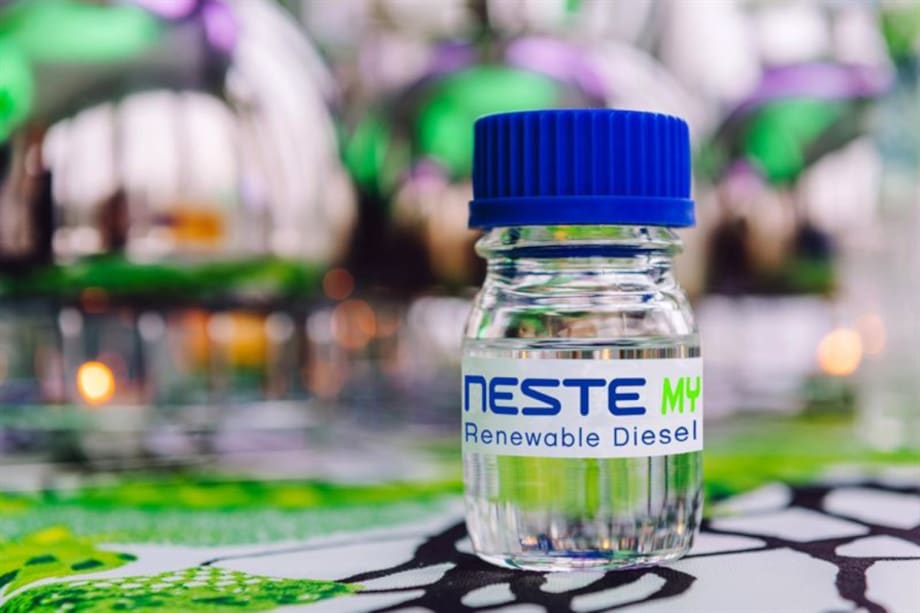
Neste MY Renewable Diesel will be available at key locations in PetroCard’s network of commercial fuel stations in Oregon.
Photo: Neste
2 min to read
Fleets in the Pacific Northwest will get more access to renewable diesel thanks to a new partnership between Neste and PetroCard.
This partnership expands the availability of Neste MY Renewable Diesel into key locations in PetroCard’s network of commercial fuel stations in Oregon. Renewable diesel offers commercial, state, and municipal fleet customers access to a lower-carbon alternative to fossil diesel.
“We are working hard to bring more renewable diesel to the market to help cut greenhouse gas emissions from the transportation sector immediately,” said Carrie Song, vice president of renewable road transport Americas at Neste.
In 2021, about 46.82 billion gallons of diesel fuel were consumed in the U.S. transportation sector, resulting in the emission of 472 million metric tons of carbon dioxide.
The use of Neste MY Renewable Diesel, made from sustainably sourced, 100% renewable raw materials, results in up to 75% reduced greenhouse gas emissions over its life cycle compared to fossil diesel and when used in its neat form, according to the company.
Since renewable diesel has a similar chemical composition to fossil diesel, it can be used as a drop-in solution without investments in new vehicle fleets, or modifications to the engines or the fuel distribution infrastructure. This helps municipalities and businesses achieve their sustainability goals.
“Our commitment to provide our customers access to innovative fuel solutions that create value and efficiency unequivocally includes offering products and solutions that contribute to a better, more sustainable tomorrow,” said Laura Yellig, president and CEO of PetroCard.
While this drop-in, more sustainable fuel solution will initially be offered at selected locations, Yellig anticipates that the preference and demand for renewable diesel will quickly resonate with fleets.
Neste was one of the first companies to introduce renewable diesel into Oregon after the state adopted its Clean Fuels Program and is positioned to supply renewable diesel to Washington and beyond.
In addition to GHG reductions, Neste MY Renewable Diesel also delivers strong performance, especially in cold weather, according to the company. Because it does not contain sulfur, oxygen, or aromatic compounds, it combusts more cleanly. As a result, Neste says vehicles that run on renewable diesel may require less maintenance.
Neste's current annual production capacity totals 1.14 billion gallons of renewable products globally. The recent start-up of Neste’s expansion of its Singapore refinery and a joint venture with Marathon in Martinez, California, will increase the total production capacity of renewable products to 1.9 billion gallons by the end of 2023.
For more information about Neste MY Renewable Diesel, visit nestemy.com.
More Fuel Smarts

How Volvo Updated Its D13 for EPA 2027 [Watch]
Volvo’s updated D13 promises lower emissions without sacrificing performance or fuel economy. Take a closer look at what changed inside the engine in this HDT Spotlight video.
Read More →
Diesel Price Spike Shortens Payback for Natural Gas Trucks, Report Says
Energy Vision estimates fleets could recover the higher purchase price of an RNG-fueled Class 8 tractor in 1.3 to 2.8 years under current fuel-price scenarios.
Read More →
Calstart Becomes Catalyst Mobility, Reflecting Broader Focus
Calstart is now Catalyst Mobility, reflecting the nonprofit’s growing national role in clean transportation, including zero-emission trucks, infrastructure and incentive programs.
Read More →

Record Diesel Prices Squeeze Trucking Fleets
Average U.S. diesel prices have climbed to nearly $6 a gallon, surpassing the 2022 record as tight refinery capacity and Middle East disruptions keep fuel costs elevated.
Read More →
Sponsored•September 9, 2026
How Fuel Delivery Shapes Engine Performance
Fuel delivery depends on more than what happens at the injector. For fleet, maintenance and technical professionals, looking at the full path from pump to injector can provide useful context for understanding engine performance.
Read More →
East Coast Port Launches $45M Electric Truck Push
The Port Authority of New York and New Jersey announced millions in incentives for zero-emission drayage trucks, yard tractors, and new charging hubs near the port.
Read More →
California Bill Could Shed Light on Electric Truck Prices
Why do battery-electric Class 8 trucks remain so expensive? A California bill headed to Gov. Gavin Newsom would give fleets and state agencies more visibility into what manufacturers charge.
Read More →
Detroit Opens Orders for EPA 2027 Engines
Detroit isn’t starting from scratch to meet EPA 2027 diesel emissions standards. Its Gen 6 DD13 and DD15 engines keep much of today’s platform while updating the fuel and aftertreatment systems.
Read More →
Zero-Emission Truck Corridor Planned for West Coast
California, Oregon, Washington, British Columbia and Baja California are coordinating plans for truck charging and hydrogen fueling from Canada to Mexico.
Read More →
A Closer Look at Kenworth’s Electric T880E Vocational Truck [Video]
Learn more about Kenworth's T880E battery-electric vocational truck at the Paccar Technical Center, including its range, applications, upfitting considerations, and PTO options, in this HDT Spotlight video.
Read More →