




About the Author: Scott Fisher is senior vice president of Voltera, which sites, builds, owns, and operates strategically located charging facilities to enable EV deployment and operation at scale. He can be reached at sfisher@volterapower.com.
How a SoCal Warehouse Emission Rule Could Affect Truck Fleets
A local rule requires warehouse operators in Southern California to track truck trips to their facility and prepare to pay hefty annual fees for total diesel truck visits to their docks.
by Scott Fisher, Voltera
February 27, 2023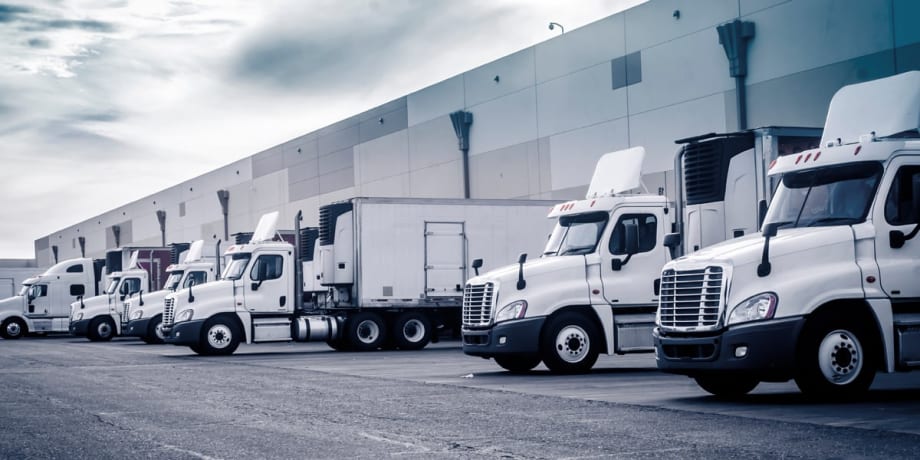
The Warehouse Indirect Source Rule (ISR), enacted by the South Coast Air Quality Management District, is part of an emission-reduction plan in areas where the high density of warehouses is impacting air quality in communities.
Photo: Adobe Stock courtesy of GNA
4 min to read
As state and national regulatory changes continue to impact heavy-duty transportation, one local rule that has not received as much attention requires warehouse operators in Southern California to track truck trips to their facility and prepare to pay hefty annual fees for total diesel truck visits to their docks.
The Warehouse Indirect Source Rule (ISR), enacted by the South Coast Air Quality Management District, is part of an emission-reduction plan in areas where the high density of warehouses is impacting air quality in communities. Large and mid-sized warehouses in Los Angeles, Orange, Riverside, and San Bernadino counties are now obligated to track the “indirect” emissions coming from the trucks that frequent their sites.
Last year, the largest warehouses of 250,000 square feet and above were subject to the rule. But starting this year, many more warehouses are obligated to comply as the rule expands to mid-sized facilities of 150,000 square feet and above. Starting next year, warehouses of just 100,000 square feet will also need to comply.
Every diesel truck visit counts against the warehouse operator in a points-based system. On the other side of the balance sheet, warehouse owners/operators can offset those diesel truck trips and reduce fees by taking certain emission-reducing actions and adding zero-emission truck trips to the site.
What ISR Means for Visiting Fleets
What does this mean for trucking fleets that frequent these warehouses? Simply put, diesel truck trips are becoming more expensive for warehouse owners and operators. This cost pressure could trickle down in the form of fees passed on to diesel fleets visiting warehouses — one of the many ways that operating a diesel truck is becoming more expensive, complicated, and increasingly regulated.
For Southern California warehouse owners and operators, a zero-emission truck will soon be preferred over a diesel truck, as it represents a money-saving opportunity versus a reoccurring cost.
How to Reduce Fees with On-Site Infrastructure
South Coast AQMD’s goal is to incentivize warehouses to favor zero-emission trucks, although there are other ways to offset fees, through earning WAIRE (Warehouse Actions and Investments to Reduce Emissions) points.
The points-based system allows warehouse operators to reduce fees with a menu of optional projects including:
- On-site solar installation
- Energy efficiency upgrades
- Electric vehicle charging infrastructure installation
Adding charging infrastructure itself offsets South Coast AQMD fees and supports zero-emission truck trips to the facility, which further offsets those fees on an annual, recurring basis.
Securing an Early Competitive Advantage
Warehouse owners and operators are becoming aware that EV charging infrastructure not only earns “good” points with South Coast AQMD and supports battery-electric trucks that are starting to visit warehouses, but also that charging infrastructure is now a prime consideration for tenants and fleet operators that need to find warehouse partners supporting their transition to battery-electric fleets. That’s because fleets are increasingly impacted by both sustainability goals and zero-emission regulations, especially with the Advanced Clean Fleets rule slated for enactment this year.
In short, warehouses are poised to create significant competitive advantage by joining the early wave of facilities that build and offer battery-electric truck charging.
And it is a race, due in part to the pace of regulation and the capacity constraints of local utilities. Power requirements are already stalling some proposed charging depots, depending on local grid capacity. Those who secure the energy capacity from their utility first will be better positioned to install charging infrastructure sooner.
A New Approach to the Infrastructure Challenge
Many warehouse operators will weigh the cost of adding charging infrastructure against the cost of South Coast AQMD fees, but there is another approach entirely.
Thanks to the new concept of “charging infrastructure as a service,” warehouse operators can partner with third-party solutions providers to build charging facilities at or near the facility. This effectively eliminates the capital investment and complexity of construction for the warehouse owner or operator and enables them to claim the project as an offset to significantly reduce South Coast AQMD fee obligations for diesel truck trips to the warehouse.
With new regulations come new challenges, but the market is responding to help warehouse operators sort this out with the infrastructure-as-a-service model. And while the AQMD rule focuses on four counties in California, progress that occurs under this rule will likely lead to innovation opportunities for warehouse owners and operators at other locations across the nation.
This article was authored and edited according to HDT editorial standards and style to provide useful information to our readers. Opinions expressed may not reflect those of HDT.
Subscribe to Our Newsletter
More Fuel Smarts

How Volvo Updated Its D13 for EPA 2027 [Watch]
Volvo’s updated D13 promises lower emissions without sacrificing performance or fuel economy. Take a closer look at what changed inside the engine in this HDT Spotlight video.
Read More →
Diesel Price Spike Shortens Payback for Natural Gas Trucks, Report Says
Energy Vision estimates fleets could recover the higher purchase price of an RNG-fueled Class 8 tractor in 1.3 to 2.8 years under current fuel-price scenarios.
Read More →
Calstart Becomes Catalyst Mobility, Reflecting Broader Focus
Calstart is now Catalyst Mobility, reflecting the nonprofit’s growing national role in clean transportation, including zero-emission trucks, infrastructure and incentive programs.
Read More →

Record Diesel Prices Squeeze Trucking Fleets
Average U.S. diesel prices have climbed to nearly $6 a gallon, surpassing the 2022 record as tight refinery capacity and Middle East disruptions keep fuel costs elevated.
Read More →
Sponsored•September 9, 2026
How Fuel Delivery Shapes Engine Performance
Fuel delivery depends on more than what happens at the injector. For fleet, maintenance and technical professionals, looking at the full path from pump to injector can provide useful context for understanding engine performance.
Read More →
East Coast Port Launches $45M Electric Truck Push
The Port Authority of New York and New Jersey announced millions in incentives for zero-emission drayage trucks, yard tractors, and new charging hubs near the port.
Read More →
California Bill Could Shed Light on Electric Truck Prices
Why do battery-electric Class 8 trucks remain so expensive? A California bill headed to Gov. Gavin Newsom would give fleets and state agencies more visibility into what manufacturers charge.
Read More →
Detroit Opens Orders for EPA 2027 Engines
Detroit isn’t starting from scratch to meet EPA 2027 diesel emissions standards. Its Gen 6 DD13 and DD15 engines keep much of today’s platform while updating the fuel and aftertreatment systems.
Read More →
Zero-Emission Truck Corridor Planned for West Coast
California, Oregon, Washington, British Columbia and Baja California are coordinating plans for truck charging and hydrogen fueling from Canada to Mexico.
Read More →
A Closer Look at Kenworth’s Electric T880E Vocational Truck [Video]
Learn more about Kenworth's T880E battery-electric vocational truck at the Paccar Technical Center, including its range, applications, upfitting considerations, and PTO options, in this HDT Spotlight video.
Read More →