Deaths on U.S. roads soared to a 16-year high in 2021, according to the National Highway Traffic Safety Administration’s estimate of traffic fatalities. An estimated 42,915 people died in motor vehicle traffic crashes last year, a 10.5% increase from 2020 and the highest number of fatalities since 2005. And fatalities in crashes involving at least one large truck were up 13% over 2020. (Note: NHTSA defines “large trucks” as those over 10,000 pounds.)
The Department of Transportation unveiled its first-ever National Roadway Safety Strategy. And there are calls for a paradigm shift to the Safe System Approach, which takes a holistic view of the entire highway system, from planning to design to use, to improve the safety of all road users. There’s increased emphasis on protecting “vulnerable road users” — pedestrians, cyclists and motorcyclists.
Only about one-fourth of survey respondents had taken advantage of the FMCSA’s Crash Preventability Determination Program, a relatively new option that allows carriers to submit a request to remove non-preventable accidents from their safety score calculations. When asked what percentage of crashes were ruled at fault during 2021, the average was only 17% — so there appears to be a missed opportunity for many fleets.
Source: HDT/Work Truck Safety Survey 2022
Trucking Regulations
Trucking-specific safety regulations continue to go into effect and new (or reincarnated) proposals unveiled:
New entry-level driver training requirements went into effect Feb. 7.
The National Highway Traffic Safety Administration completed a final rule upgrading requirements for rear underride guards — and is turning its attention to side underride guards.
The DOT proposed oral fluid testing as an alternative to urine testing for required drug and alcohol testing, but similar rules for hair-testing remain in limbo.
A proposal to mandate speed limiters recently wrapped up its comment period.
It’s no wonder nearly half of fleet professionals surveyed in the second annual HDT/Work Truck fleet safety survey said they sometimes feel overwhelmed trying to keep up with all the safety regulations being introduced (43%) — and with trying to keep up with all the safety solutions being introduced (46%).
In this article, we highlight survey results, including insights into how they compared to last year, key safety strategies, and safety technologies used.
Safety Technology
Our inbox at HDT (and no doubt of fleet safety professionals across the country) is full of announcements of the latest enhancements to advanced safety technologies, in-cab cameras, and artificial-intelligence-powered solutions.
When HDT broke out in-cab cameras this year as a separate choice instead of including it in “advanced safety technologies,” use of advanced technologies dropped from No. 6 to No. 9 on the top 10 fleet safety strategy list. Larger fleets are far more likely to use advanced safety technologies than smaller fleets. Smaller fleets depend more on keeping their vehicles well-maintained than other safety strategies. For larger fleets, written safety policies and procedures and driver training are key.
Source: HDT/Work Truck Safety Survey 2022
We asked our survey-takers about current safety technologies and what they’re planning to adopt. Nearly half already use speed limiters, and nearly one-fifth plan to implement backup cameras in the next year.
While air disc brakes topped the list of current safety technologies used by respondents both this year and last year, compared to the 2021 survey, speed limiters jumped from fourth to second place, driven primarily by fleets with 50 to 249 vehicles. The largest fleets, 250 vehicles and over, cited lane departure warning most commonly, at 75%, followed closely by forward collision warning and side-blindspot monitoring at 67% each. Among the smallest fleets, under 10 vehicles, the most common was air disc brakes at 43%, followed by adaptive cruise control at 29%.
Source: HDT/Work Truck Safety Survey 2022
Just How Limited Should Truck Speed Limiters Be?
The FMCSA recently opened a rulemaking on mandatory speed limiters. When asked what speed would make the most sense as a federal maximum, the overwhelming choice was 68-70 mph.
Source: HDT/Work Truck Safety Survey 2022
In last year’s survey, forward-facing in-cab cameras were the most commonly cited technology fleets planned to adopt in the coming year, followed by backup cameras and dual-facing in-cab cameras. This year, backup cameras moved to No. 1, followed by air disc brakes, with in-cab cameras falling to third. Among fleets with Class 8 trucks, side blindspot monitoring and adaptive cruise control move up into the third and fourth spots above in-cab cameras, and collision mitigation with active emergency braking is out of the top 10 altogether at No. 14. For nearly every safety technology, private fleets are more likely to be planning to invest in the next year. The only exceptions were fatigue monitoring and rollover prevention. More than a quarter of respondents didn’t know or weren’t sure about their safety technology implementation plans for the coming year.
Source: HDT/Work Truck Safety Survey 2022
Nearly half of survey respondents have seen their vehicle and liability insurance costs increase between 1% and 25% in the past year. We hear a lot about “nuclear verdicts” driving up those costs, but it’s not just the big verdicts at fault. The smaller claims — the ones that happen thousands of times a day and result in non-catastrophic injuries such as neck, back and shoulder problems and soft-tissue injuries — are now costing the industry more money than ever before.
After the COVID-19 pandemic forced the use of far more offsite compliance reviews in 2020, some believed we would see greater use of this tool going forward, pushing total audits for 2021 well over the numbers seen in 2017 and 2018. However, it appears that the use of onsite audits, especially focused audits, were coming back in 2021, while the number of offsite audits actually dropped slightly from 2020.
Source: FMCSA’s Motor Carrier Management Information System (MCMIS) data snapshot
Some fleets invest in safety technology to help them defend themselves when a crash is not their fault, in addition to the goal of preventing accidents in the first place. And insurance companies are looking to telematics data to help them write policies for motor carriers.
Positive drug tests account for 82% of the total violations reported. Positive marijuana and cocaine tests were up slightly in 2021 compared to the previous year, while positive tests for amphetamines and opioids dropped slightly.
Source: FMCSA Drug & Alcohol Testing Clearinghouse
Most commercial drivers with a drug or alcohol testing violation haven't even started the return to duty process, and most of those probably will find another career. As of May 1, 2022 (the most recent report available), more than 124,000 commercial driver’s license or commercial learner’s permit holders had been reported to the clearinghouse as having at least one violation. Close to 92,800 of those were still in prohibited status as of May 1. Nearly 70,000, 56% of those with reported violations, had not started the return-to-duty process. Only 31,375 had been cleared as no longer prohibited from performing safety-sensitive duties after a negative RTD test – just 25% of the total drivers with violations.
Source: FMCSA Drug & Alcohol Testing Clearinghouse
More About the Survey
For the second year, HDT conducted a joint safety survey with sister publication Work Truck. The median fleet size of those responding was 75, and 81% had Class 8 trucks. 40% of respondents were private fleets, 37% were for-hire fleets, and 15% were government fleets. The most common industries represented were general freight, construction/mining, and manufacturing.
This data and analysis first appeared in the August 2022 special Fact Book issue of Heavy Duty Trucking.
2022 Fact Book
The Trucking Industry Numbers Impacting the Bottom Line
Heavy Duty Trucking’s annual Fact Book is designed to provide a snapshot of the current state of the industry, where it’s been, and where it’s going. 2022 is the eighth year for the HDT Fact Book. Dive into the other topics: (Coming Soon...)
Can trucking’s standard seven-way connector handle more cameras and trailer data? Grote’s Adam Slade shows HDT how the company is using new technology with its 4See trailer system, not only to add a new backup camera but also to expand other capabilities — without adding another connection.
PrePass Intelligence helps fleets measure bypass savings, flag potential toll overcharges, and spot suspicious transactions by combining data from separate systems.
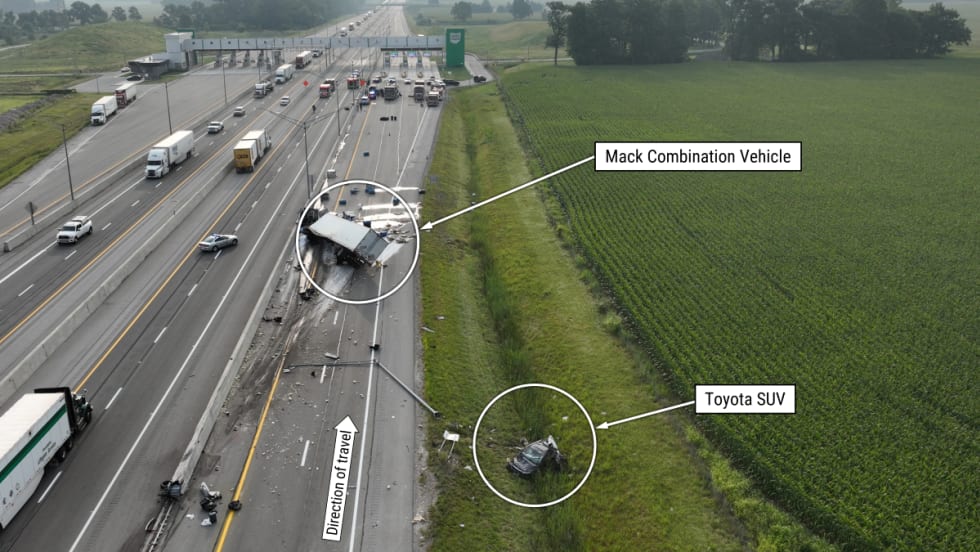
An NTSB investigation found that last-minute lane changes and large speed differences at an Ohio toll plaza created a hazard the truck driver couldn't avoid in time.
English language proficiency rules for commercial drivers aren’t new, but renewed out-of-service enforcement has raised the stakes. Here’s what carriers need to know before a driver reaches a roadside inspection.
Marijuana is getting stronger, laws are changing, and drug tests still can’t reliably establish impairment. What does that mean for truck drivers and the fleets that employ them?
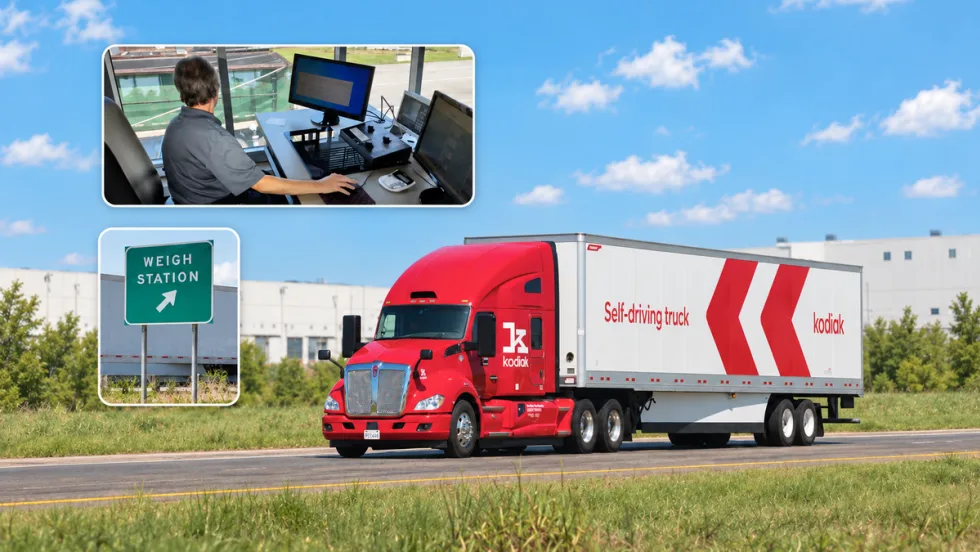
The system will allow enforcement agencies to verify Enhanced Inspection information and decide whether Kodiak’s autonomous trucks can bypass roadside screening sites.
After three decades in trucking, Harold Perry shares what he's learned about driver safety, mentorship, and helping the next generation build confidence behind the wheel.
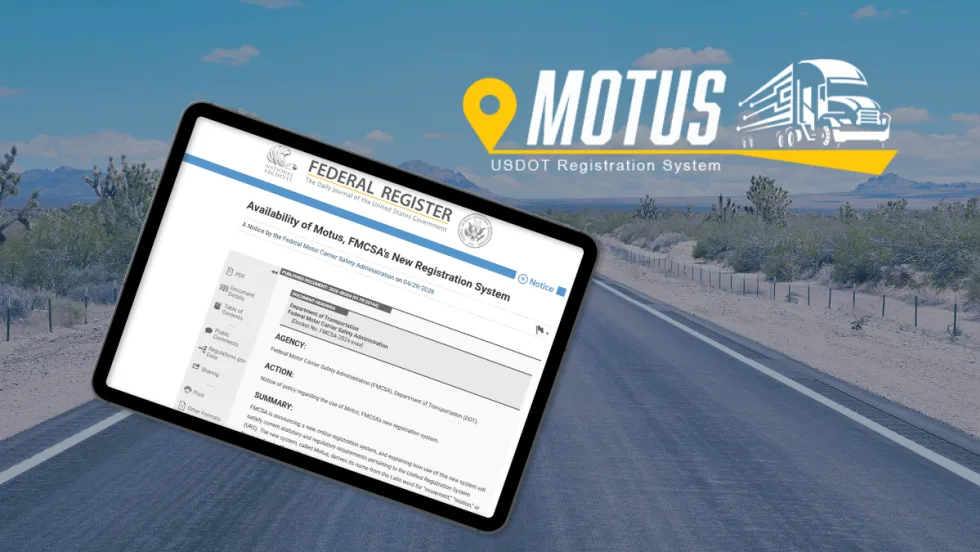
Carriers whose updates were due on or after June 1 have more time, while FMCSA works to stabilize its new registration system and warns of phishing sites impersonating its new carrier registration system, Motus.