




Don't Miss This Critical Step in ELD Implementation
There’s more to complying with the electronic logging device mandate than putting the devices in your trucks. Will your new ELD policies and procedures pass FMCSA’s scrutiny as adequate safety management controls?

Photo: J.J. Keller & Associates
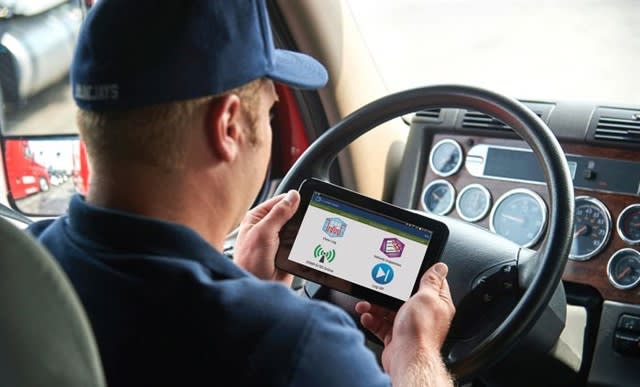
Photo: J.J. Keller & Associates
Unless your drivers are exempt from logging their hours of service, your fleet must transition to operating with electronic logging devices (ELDs) or automatic on-board recording devices (AOBRDs) by Dec. 18, 2017.
The path to operating with ELDs should include retraining drivers and supervisors on the hours-of-service limits, tightening up hours-of-service compliance and auditing, developing and training on ELD policies and procedures, and training on the ELD system itself. Will your new policies and procedures pass FMCSA’s scrutiny as adequate safety management controls — not the least of which is detecting and correcting any cheating of the system?
A step that can’t be overlooked is creating effective policies and procedures for the new operating environment. Remember, to minimize stress and uncertainty, the best policies are ones that are easily understood, provide a measurement mechanism, and have clear consequences for noncompliance. However, coming up with policies for a new way of operating and for sustaining a different culture can be hard to do.
When developing the new policies, your goal should not be to explain every possible situation. You are aligning policies with regulations, stating expectations regarding what you will and will not allow, and clearly outlining what will happen if the policy is not followed. One example of a clear policy is to state that “compliance with the hours-of-service regulations is a condition of employment.” The details and the different situations that might come up can reside in the procedures that support the policy.
To support compliance with the electronic logging-related policies, you must develop procedures. Here is a list of core procedures you would want to consider:
Define how and when drivers are to be trained on hours-of-service regulations and the operation of the ELD initially, and on an ongoing basis.
Document who will have authority to do which actions within the ELD back-office system, including account maintenance, log auditing, and reviewing unassigned-driving events.
Provide specific guidance on auditing logs to detect the new methods of falsification.
Limit supporting documents to eight per driver per duty day, within the five categories of allowed documents — per the ELD final rule.
Outline how and when drivers are to be counseled, retrained, and disciplined when violations, improper edits, tampering, or falsification occurs.
Require supervisors to consider the driver’s available hours and level of fatigue when assigning a movement — include actions to take when a driver’s hours are insufficient for a movement.
Prohibit harassment and coercion of drivers by anyone in the organization, as well as define each and the difference between the two. Authorize dispatch to allow drivers to go to the closest safe location to park if they are being forced to leave a shipper, even after designated carrier representative attempts to gain approval to park at the shipper. The driver must feel safe to drive and the ELD record should be annotated with details.
The hours-of-service policy must prohibit engaging in the most common ways drivers may try to falsify their electronic logs. You may need to incorporate the detailed procedures for your particular ELD system. For absolute clarity, the policy should require, at a minimum, that drivers:
Log in and out at the appropriate time.
Log in using their own credentials.
Edit only to correct errors or omissions.
Provide examples of actions considered to be falsification, such as logging in after a driver has started his/her on-duty time for the day and logging out before driving is completed for the day. Drivers must know that these actions will generate unassigned events that must be reviewed and correctly assigned or annotated. It is highly recommended to require a daily review of unassigned events to avoid an unmanageable backlog. A zero-tolerance policy should be considered for intentional falsification.
Other operational issues to consider covering in your new policies and procedures:
Require drivers to properly handle ELD malfunctions and to transfer/display data for roadside inspections. If the driver cannot or will not do this, a violation will be written, which will affect both the driver and the carrier.
Define the requirements to use the “Personal Use” or “personal conveyance” (off-duty driving) option, which is typically when drivers take the truck from the terminal to their home and back to the terminal, or when the truck is used for purely personal short trips.
Define the requirements to use the “Yard Move” option, which drivers and company mechanics can choose if they move trucks on private property that is restricted from public access. ELDs must automatically record drive time at 5 mph or greater as “on-duty driving,” so this is an option to reduce unassigned drive time events.
Determine whether each company mechanic will have an ELD account to reduce unassigned driving events when operating a truck. It is not required to have ELD accounts for most company mechanics because they stay within a radius (100 or 150 air-miles) considered to be exempt from logging. For truck repair vendors, do not create an account. The back-office personnel will need to annotate the vendor-generated unassigned events.
Determine if you will have drivers use a portable ELD to plug into a rental truck, or if your rental company will provide the ELD. The data generated on an ELD that is not interoperable with your system may be a recordkeeping complication you want to avoid.
Determine whether you will require your owner-operators to lease an ELD of your choosing or theirs, and whether you would charge the owner-operator. Consult legal counsel on this one.
After the policies and procedures are developed and/or updated, ask the question, “Have we provided simple and clear guidance to improve our safety and compliance in the electronic logging world?”
You may discover gaps in your new/updated policies and procedures due to unanticipated situations or changes in regulations. Periodically review and revise these “living” documents to keep them relevant, accurate, and compliant, as well as aligned with your safety vision and culture.
Mark Schedler is senior editor at J.J. Keller & Associates with more than a 25-year career in transportation/logistics. This article was authored under the guidance and editorial standards of HDT’s editors to provide useful information to our readers.
More Drivers

From One Generation to the Next: How Mentorship Builds Safer Truck Drivers
After three decades in trucking, Harold Perry shares what he's learned about driver safety, mentorship, and helping the next generation build confidence behind the wheel.
Read More →
Truck Drivers Need More Than Another Alert
Fleets have more visibility into truck health, safety events, and driver activity than ever. The next challenge is turning all that information into useful guidance for the person who has to decide what to do next.
Read More →
FMCSA Removes 110 Truck Driver Training Schools from Certified ELDT List
Federal regulators also are targeting more than 160 additional training providers and launching a nationwide audit of third-party CDL skills testers as part of a broader crackdown on trucking fraud.
Read More →
Hours of Service Pilot Programs: FMCSA Readies for 2027 Rollout
Two pilot programs could eventually reshape hours-of-service rules, giving truck drivers options to pause their 14-hour clock or use longer split sleeper rest periods.
Read More →
Medical Cards, English Proficiency Reshape Roadcheck Violations
Medical-card violations jumped to the top of the driver out-of-service list during CVSA’s 2026 International Roadcheck, while English-language proficiency violations appeared among the leading violations for the first time.
Read More →
Driver Trust Can Make or Break the Success of Fleet Safety Technology
New Teletrac Navman research suggests that onboarding, transparency about driver data, and positive feedback can play a significant role in how commercial drivers respond to safety and coaching technology.
Read More →
EEOC Sues KLLM Over Alleged Sex Discrimination in Driver Training
KLLM is facing a federal sex-discrimination lawsuit over policies the EEOC alleges put female truck driver trainees at a disadvantage.
Read More →
FMCSA Moves to Codify English Language Requirements for Commercial Drivers
By changing regulations on English-language proficiency requirements for commercial drivers, rather than relying on a guidance memo, the FMCSA said future administrations won't be able to walk back the Trump administration's stricter enforcement with just a memo.
Read More →
Drivers Put Western Star Trucks to the Test at Star Nation Experience
Watch to get an inside look at the Western Star trucks, technology, and community behind the Star Nation Experience 2026!
Read More →
Trump Administration Looks to Put More Veterans Behind the Wheel
The Freedom Haulers program pulls together existing and expanded programs at several federal agencies to recruit veterans to drive commercial heavy-duty trucks and cut the red tape for them to get a CDL, training, and employment.
Read More →